This guide covers the complete tub bath procedure — from supply preparation through post-bath documentation — with accurate clinical context, regulatory grounding, and practical safety guidance for CNAs working in long-term care settings.
Key Takeaways
- The tub bath follows a strict clean-to-dirty washing sequence: face first, upper body, lower body, perineal care last
- Water temperature must be verified with a thermometer — touch alone is not reliable or acceptable
- Resident transfers require the correct assistive device based on individual assessment, not convenience
- CNAs must never leave a resident with limited mobility unattended in the tub
- Bathing refusals must be respected, documented, and reported to the supervising nurse
- Post-bath documentation and skin-change reporting are legal obligations for CNAs
What Is the Tub Bath Procedure?
The tub bath procedure is a supervised, full-body hygiene activity in which a CNA assists a resident into a tub of water, provides thorough cleansing from head to toe, and safely transfers the resident back out. Throughout the process, the CNA maintains the resident's dignity, follows infection control protocols, and monitors for physical comfort.
The procedure serves several clinical and personal care goals:
- Removal of bacteria, dead skin cells, and odor
- Full skin inspection for wounds, redness, or changes
- Temporary relief from muscle tension and joint stiffness through warm water immersion
- Promotion of emotional well-being and personal dignity
How it differs from other bathing methods:
| Method | Description | Best Suited For |
|---|---|---|
| Tub bath | Full immersion in still water | Residents who can safely transfer; therapeutic immersion indicated |
| Shower | Flowing water; seated or standing | Residents who can weight-bear or sit on a shower chair |
| Bed bath | Performed entirely in bed | Non-ambulatory residents; immersion contraindicated |
The individual care plan determines the correct bathing method for each resident. CNAs follow that plan rather than making this call on their own.
Why Tub Baths Are Performed in Long-Term Care Settings
Regulatory Foundation
Federal regulations under 42 CFR 483.24 require facilities to provide necessary hygiene and bathing assistance — but they do not set a fixed weekly frequency. Bathing schedules must reflect the resident's individual needs and preferences, not staff convenience. Several CMS F-tags govern different aspects of the bathing encounter:
- F550 — Resident dignity during personal care
- F561 — Resident choices, including preferred bathing method and schedule
- F676 — Maintaining ADL ability, which includes bathing
- F677 — Providing necessary services when a resident cannot bathe independently
- F689 — Maintaining an environment free of accident hazards during bathing and transfers
Under 42 CFR 483.10(c)(6), residents have the right to refuse or discontinue any treatment, including bathing. Refusal must be documented and investigated — particularly for residents with dementia, where behavioral distress during bathing may indicate unmet needs rather than simple noncompliance.
Clinical Rationale
Warm water immersion supports muscle relaxation and provides comfort for residents with joint stiffness, with benefits that increase when combined with therapeutic movement. For CNAs, however, the most immediate clinical value of a tub bath is the structured opportunity to assess a resident's full body surface during routine care.
That assessment matters. A 2019 review found pressure injury prevalence in long-term care ranging from 3.4% to 32.4% across facilities. Routine bathing creates a reliable checkpoint for catching skin changes before they become serious wounds.
CNAs can use each tub bath to screen for:
- New or worsening redness over bony prominences
- Skin tears, bruising, or signs of trauma
- Moisture-associated skin damage in skin folds
- Changes in muscle tone or range of motion
The equipment used matters, too. Institutional bathing systems built for long-term care — Penner Bathing's line is one example — include fast-fill reservoirs and automatic disinfection between residents. These features directly reduce both staff injury risk and cross-contamination exposure.
The Complete Tub Bath Procedure: Step by Step
The tub bath procedure divides into three phases: preparation, bathing, and post-bath care. Skipping or rushing any phase creates risk.
Phase 1 — Preparation: Gather Supplies and Set Up the Environment
Gather all supplies before entering the bathroom. Leaving to retrieve forgotten items means leaving the resident unattended, which is never acceptable once the bath has begun.
Required supplies:
- Soap, shampoo, and conditioner (per resident preference)
- Minimum four washcloths and four towels
- Lotion
- Gloves and barrier
- Clean clothing or gown
- Linen bag
- Bath thermometer
Environmental safety checks:
- Confirm the bathroom is warm enough to prevent chilling
- Remove any fall hazards from the floor
- Place non-slip mats in the tub
- Verify grab bars or safety supports are secure
- Fill the tub before bringing the resident in
Water temperature must be verified with a thermometer, not by feel. Missouri's long-term care guidance specifies a 105–120°F range; no federal CMS standard establishes a universal maximum, so CNAs should follow their facility's written policy. Once the thermometer confirms an acceptable temperature, let the resident test the water with their fingers before entry.
Pre-procedure communication:
- Knock on the resident's door
- Perform hand hygiene
- Introduce yourself and identify the resident per facility protocol
- Explain the procedure clearly
- Close the door or curtain for privacy
- Obtain resident consent and cooperation
Phase 2 — During the Bath: Transfer, Washing, and Monitoring
Safe transfer into the tub depends on the resident's assessed mobility level. OSHA guidelines and NIOSH safe-handling recommendations emphasize that device selection must match weight-bearing ability and cooperation level. No single transfer method works for every resident:
- Gait belt: Appropriate for weight-bearing residents who can assist
- Stand-assist device: For residents needing more support
- Full mechanical lift: Indicated when manual transfer is unsafe
Position supplies within arm's reach before the resident enters. Kneel on a cushioned mat to stay at the resident's level and protect your back across a full shift of bathing assignments.
Correct washing order (clean-to-dirty):
- Face — clean washcloth, no soap; wipe from nose outward toward ears
- Neck and upper body — soap on a fresh washcloth; include underarms
- Lower body and legs — lift and wash all skin-fold areas, between fingers and toes
- Perineal care — always last; front to back; dedicated washcloths only
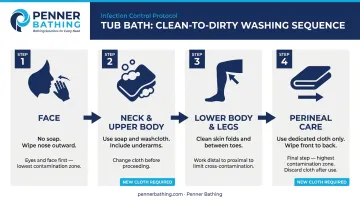
Indiana's nurse aide curriculum and California's Project Firstline both support this clean-to-dirty sequence. Using a separate cloth when one becomes soiled is required infection control practice.
Continuous monitoring throughout the bath:
- Check water temperature periodically, as it cools during the procedure
- Watch for dizziness, nausea, pallor, or expressed fatigue
- A 10-minute soak at 40°C has been shown to lower systolic pressure from an average of 144 to 122 mmHg in adults with treated hypertension, so residents on blood pressure medications need close observation
- Never leave a mobility-limited resident unattended. For independent residents who prefer privacy, check every five minutes
Phase 3 — Post-Bath: Drying, Dressing, and Documentation
Exiting the tub:
- Drain and turn off the water before beginning the exit transfer
- Cover the resident immediately with a warm towel to prevent chilling
- Use the gait belt and safety supports throughout the transfer out
Once the resident is out of the tub, thorough drying is as important as the bath itself. A direct observation study of 100 residents across 8 nursing homes found incomplete towel drying in 94% of observed showers. Moisture retained in skin folds, the perineal area, and between toes creates conditions for fungal infection and skin breakdown.
Post-procedure checklist:
- Apply lotion if desired; assist with dressing
- Place non-skid footwear on the resident
- Assist to preferred surface
- Sanitize the tub per facility disinfection protocol
- Remove and dispose of gloves; perform hand hygiene
- Ensure the call light is within the resident's reach
- Document completion in the care record
- Report immediately to the supervising nurse: any new redness, skin breakdown, wound changes, or behavioral observations
Key Factors That Affect Safety and Quality
Water Temperature and Cardiovascular Risk
Hot water causes vasodilation — blood vessels expand, blood pressure drops, and the resident may feel dizzy or faint. This effect is amplified in residents taking diuretics, ACE inhibitors, calcium-channel blockers, or beta-blockers. Check temperature at the start and periodically throughout, since water cools as the bath progresses.
Resident Mobility and Condition
The care plan specifies the required level of assistance. CNAs must adapt the procedure — and the equipment used — based on:
- Physical strength and weight-bearing ability
- Cognitive status (dementia residents may resist bathing; person-centered approaches like explaining each step reduce verbal aggression and shorten bath duration, per a randomized study of 400 nursing home residents)
- Specific diagnoses: Parkinson's disease, post-stroke paralysis, and similar conditions require individualized equipment and technique guidance from therapy and nursing staff
Skin Condition and Infection Control
Open wounds, rashes, or skin breakdown may change how the procedure is performed. The CDC notes that hydrotherapy can be appropriate for some wounds when infection-control protocols are followed — blanket prohibition is not always correct. Follow wound care orders and facility policy.
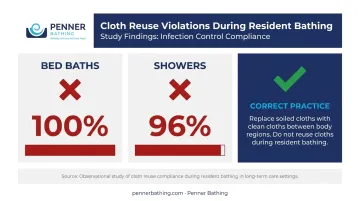
A separate observation study found cloth or wipe reuse in 100% of observed bed baths and 96% of showers. Replacing a soiled cloth rather than reusing it is a basic infection control requirement supported by CDPH guidance.
Equipment and Facility Environment
The type of bathing system available directly affects procedure safety. Institutional systems designed for patient transfer handle specific CNA and resident needs that standard tubs cannot.
Penner Bathing's Premier Transfer and Cascade models, for example, include:
- Height-adjustable transfer posts and rail-free three-point access
- Built-in BioCote antimicrobial surface protection
- Automatic disinfection between residents
These features reduce manual lifting demand on CNAs and lower cross-contamination risk between bathing sessions.
When a Tub Bath Is Not Appropriate
Some situations require stopping, substituting, or deferring the tub bath entirely.
Do not proceed with tub bath immersion when:
- The resident has unstable cardiovascular status (recent MI, ischemic heart failure, severe orthostatic hypotension)
- Safe transfer cannot be completed with available equipment
- The resident has open wounds that cannot be submerged per current wound care orders
- Functioning safety equipment (grab bars, transfer supports) is absent
- The resident refuses — refusal is a protected right under 42 CFR 483.10 and must be respected unconditionally
When a tub bath is not appropriate, CNAs must:
- Stop or decline to begin the procedure
- Notify the supervising nurse
- Document the reason (including resident refusal)
- Offer an alternative — bed bath, partial bath, or preferred alternative method
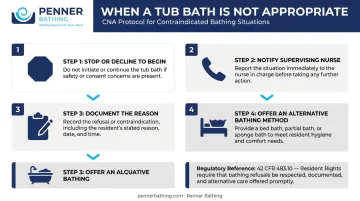
Proceeding despite a contraindication, even at a resident's informal request, falls outside CNA scope of practice and creates clinical and legal liability for both the CNA and the facility.
Frequently Asked Questions
How do CNAs bathe patients?
CNAs follow a structured procedure: gather all supplies, prepare the environment and verify water temperature, safely transfer the resident using the appropriate assistive device, wash in clean-to-dirty order per the care plan, and complete documentation and reporting after the bath.
What is the correct order to take a bath?
The standard sequence is face first (no soap), then upper body, then lower body and legs, with perineal care performed last using separate washcloths. This clean-to-dirty order prevents cross-contamination between body areas.
Are baths good for cortisol?
Warm water immersion is associated with relaxation responses, and some research suggests a link to reduced stress. However, no studies specific to elderly residents in long-term care have confirmed cortisol reduction from routine tub baths. The comfort and muscle-relaxation benefits are real; the cortisol claim is not well-established in this population.
What is the maximum safe water temperature for a tub bath?
There is no single federal maximum. Missouri's guidance specifies 105–120°F; CMS has not established a universal numeric limit. Always verify with a thermometer and follow your facility's written policy. Have the resident test the water before entry.
How long should a tub bath last for elderly patients?
Duration depends on the resident's tolerance and condition. No federal regulation sets a universal time limit, so monitor continuously for fatigue or cardiovascular stress and end the bath at the first sign of distress.
What supplies does a nursing assistant need for a tub bath?
Required supplies include soap, shampoo and conditioner, lotion, at minimum four washcloths and four towels, gloves, a barrier, clean clothing or gown, a linen bag, and a bath thermometer — all gathered before the procedure begins.