Introduction
Caregivers — whether nursing home staff managing a full wing of residents or a family member coordinating a loved one's post-discharge medications — communicate constantly. With patients. With families. With nurses, physicians, and pharmacists. Yet many report feeling unheard, underprepared, or unsure how to navigate conversations that genuinely matter.
The stakes are real. Candello's 2025 analysis of more than 64,000 malpractice cases found communication factors in 40% of asserted medical professional liability cases, with provider-to-patient and family breakdowns appearing in 63% of those communication-related cases.
A separate 12-center readmission study found that among potentially preventable readmissions, 18.6% involved patients not knowing who to contact after discharge and 10.4% involved misunderstanding of discharge medication regimens.
This guide covers why communication has measurable clinical consequences, the specific skills that work, the barriers that get in the way, and practical steps any caregiver can take, whether in a long-term care facility or at home.
Key Takeaways
- Effective caregiver communication directly improves medication adherence, patient satisfaction, and reduces preventable errors
- Active listening — not just hearing words, but understanding intent — builds the trust patients need to speak honestly
- Addressing emotional, cultural, and literacy barriers takes deliberate awareness — but it's achievable with the right approach
- Communication must work across three relationships: patient, family, and the broader healthcare team
- Physical care environments shape whether patients feel safe enough to speak honestly
Why Effective Caregiver Communication Matters
Communication is not a soft skill in caregiving. It has measurable clinical consequences.
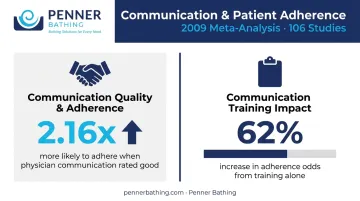
A 2009 meta-analysis covering 106 correlational studies and more than 45,000 patients found that patients were 2.16 times more likely to adhere to treatment when physician communication was rated as good. Across 21 intervention studies, communication training alone raised adherence odds by 62% compared to no training. Better communication also correlates with improved patient satisfaction scores and reduced malpractice exposure.
The Family Caregiver's Role
AARP and the National Alliance for Caregiving estimate that 63 million Americans (roughly one in four adults) are currently providing ongoing care to a family member. Many of these caregivers are thrust into semi-clinical roles they didn't train for: managing medication schedules, monitoring symptoms, and coordinating follow-up care after hospital discharge.
— leading to missed symptoms, delayed treatment, and avoidable complications.
For caregivers in long-term care settings, the stakes extend beyond clinical outcomes. When a caregiver is responsible for a resident's daily dignity and comfort, how staff communicate shapes whether that resident feels seen as a person or processed as a patient. In environments like nursing homes and assisted living facilities, that distinction matters every single day.
Core Communication Skills Every Caregiver Should Practice
Active Listening: More Than Just Being Quiet
Active listening is a two-part process: first, hearing a patient's words without interrupting; second, interpreting the emotional content and intended meaning behind what they're saying. Most caregivers are better at the first part than the second.
Research illustrates the gap starkly. A 1999 JAMA study by Marvel et al. found that physicians redirected patient opening statements after a mean of 23.1 seconds. A separate study by Langewitz et al. found that when patients were allowed to speak uninterrupted, their statements averaged 92 seconds — and 78% finished within two minutes.
That early interruption has a clinical cost: patients withhold information they would have volunteered on their own.
Practical tools for active listening:
- Restate what the patient said in your own words — "So what I'm hearing is that the pain is worse in the morning — is that right?" This catches misunderstandings before they compound.
- At the end of a conversation, briefly recap what was discussed and agreed upon. Especially useful during shift handoffs, this keeps continuity of care intact.
Questioning: Knowing What to Ask and How
Not all questions work equally in all situations. The distinction between closed and open-ended questions is simple but consequential:
| Question Type | Best For | Example |
|---|---|---|
| Closed | Clinical confirmation | "Are you experiencing any pain right now?" |
| Open-ended | Emotional sharing, fuller picture | "How are you feeling about starting this new treatment?" |
For residents or patients who seem withdrawn or reluctant to share, try these conversation openers:
- "What's been on your mind lately?"
- "Is there anything you were hoping we'd talk about today?"
- "What matters most to you right now?"
These questions don't assume a problem exists — they create space for one to be named.
Nonverbal Communication and Empathy
Body language communicates more than words do, especially to patients who are anxious or uncertain.
What builds trust nonverbally:
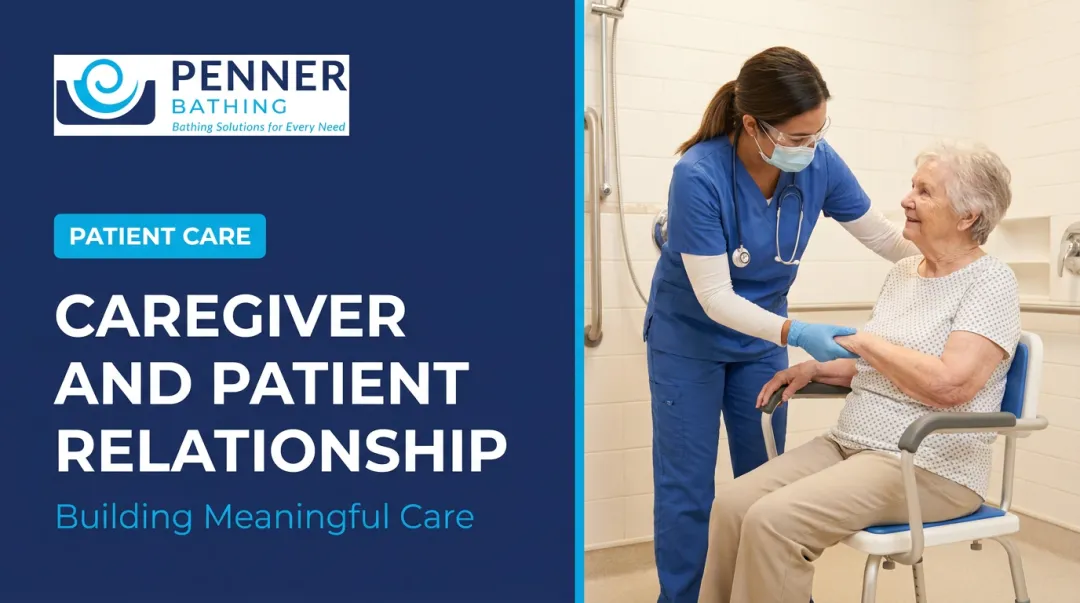
- Sitting at eye level rather than standing over the patient
- Facing the patient with an open posture
- Making consistent, warm eye contact
- Not appearing rushed — even if you are
The opposite signals disinterest just as clearly: standing by the door while speaking, checking a phone or chart mid-conversation, or looking past the patient rather than at them.
Acknowledging a patient's fear or frustration before jumping to clinical solutions increases their willingness to engage honestly. Empathy isn't passive — it's a skill that shows up in word choice, timing, and body language, and it can be practiced deliberately.
Common Barriers to Effective Healthcare Communication
Emotional and Psychological Barriers
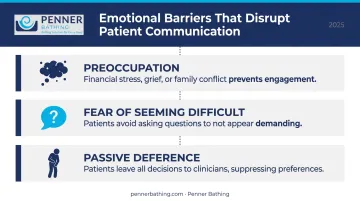
Patients arrive with more than medical concerns. Three emotional patterns consistently interfere with communication:
- Preoccupation — Patients distracted by financial stress, family conflict, or grief can't fully engage in clinical conversations.
- Fear of seeming difficult — Many patients, particularly older adults, worry that asking too many questions or expressing discomfort will make them appear demanding.
- Passive deference — Some patients leave all decisions to clinicians, not because they don't have preferences, but because they don't realize their perspective is wanted.
Caregivers can recognize these patterns and gently create space by reframing how they invite conversation. Rather than "Do you have any questions?" (the answer is almost always no), try normalizing it: "People often have concerns they haven't mentioned yet — is there anything like that for you?"
Caregivers face emotional barriers too. Burnout is widespread in long-term care: a U.S. study of 687 direct-care RNs in 540 nursing homes found that 30% met the clinical threshold for emotional exhaustion, and burned-out nurses had nearly five times higher odds of leaving necessary care tasks undone.
Time pressure and emotional depletion cause interactions to feel transactional rather than human. Patients notice that difference, even when they can't name it.
Literacy and Language Barriers
AHRQ's health literacy toolkit reports that 36% of U.S. adults have limited personal health literacy — meaning they struggle to understand and act on health information. Most won't say so, because admitting it feels embarrassing. Asking "Do you understand?" is almost useless; patients will say yes regardless.
Better approaches:
- Use teach-back: "Can you walk me through how you'll take this medication at home?"
- Offer demonstrations, not just instructions
- Back up all written materials with verbal explanation
- Eliminate medical acronyms and jargon with every patient — not just those you know have literacy challenges
Cultural Barriers
Cultural background shapes communication expectations in ways that caregivers often miss. In some cultural contexts, patients won't question a provider's recommendation not because they agree, but because challenging authority feels disrespectful. In others, care decisions are expected to involve family members before the patient speaks. Across the U.S., an estimated 39,584 nursing home residents required interpreter services in 2023, according to a national Minimum Data Set analysis.
That scale underscores why proactive cultural awareness matters. Practical steps:
- Learn general cultural values of your patient population — attitudes toward privacy, family involvement in decisions, and religious factors that shape health behavior
- Don't assume; ask: "Is there anyone you'd like to include in our conversation today?"
- Approach unfamiliar cultural norms with genuine curiosity — ask questions, listen carefully, and adjust your communication style based on what you learn
Communicating Across the Care Circle
With Patients
Person-centered communication gives patients a sense of agency in their own care. Key principles:
- Use "I" statements rather than "you" statements to avoid blame ("I want to make sure I understand what you're experiencing" vs. "You need to tell me when something hurts")
- Check in regularly rather than waiting for patients to volunteer concerns — many won't
- Involve patients in decisions, even small ones — it reinforces that their preferences matter
With Family Members
Family members are part of the care team. Treating them as obstacles creates fragmented communication and missed information.
- Designate one family contact for care updates to prevent conflicting information from spreading through multiple people
- Have difficult conversations in private (not hallways or waiting rooms) where family members can speak honestly
- Acknowledge family members' own stress; they're often managing fear, grief, and logistical complexity simultaneously
With the Healthcare Team
Family caregivers can dramatically improve their interactions with medical professionals through preparation:
- Keep a symptom log — Track the patient's pain levels, eating habits, sleep patterns, and medication responses between appointments
- Write questions before visits — Verbal environments are high-pressure; written questions ensure nothing important gets forgotten
- Repeat back what you've heard — Before leaving any clinical conversation, summarize what was discussed: "So the plan is X, and I should call if Y happens — did I get that right?"
A quick verbal confirmation costs 30 seconds and can prevent a week of confusion.
How the Physical Care Environment Shapes Communication
The physical setting of a care interaction isn't neutral. Private, calm spaces reduce anxiety and invite honest communication. Clinical, impersonal environments — overhead fluorescents, cluttered equipment, staff rushing past — all signal that this is a medical transaction, not a human interaction. That signal reaches patients whether anyone intends it or not.
Research from a 2024 study of long-term care residents in Seoul found that residents generally valued homelike features and privacy, but some reported significant dissatisfaction with acoustic privacy — environmental noise and staff interruptions disrupted both sleep and comfort. A 2022 Australian observational study found that interpersonal communication between residents and staff occupied 20.2% of observed time and was positively associated with quality of life.
The physical environment is an active factor in whether residents feel safe enough to speak honestly — not a neutral backdrop.
What This Looks Like in Practice
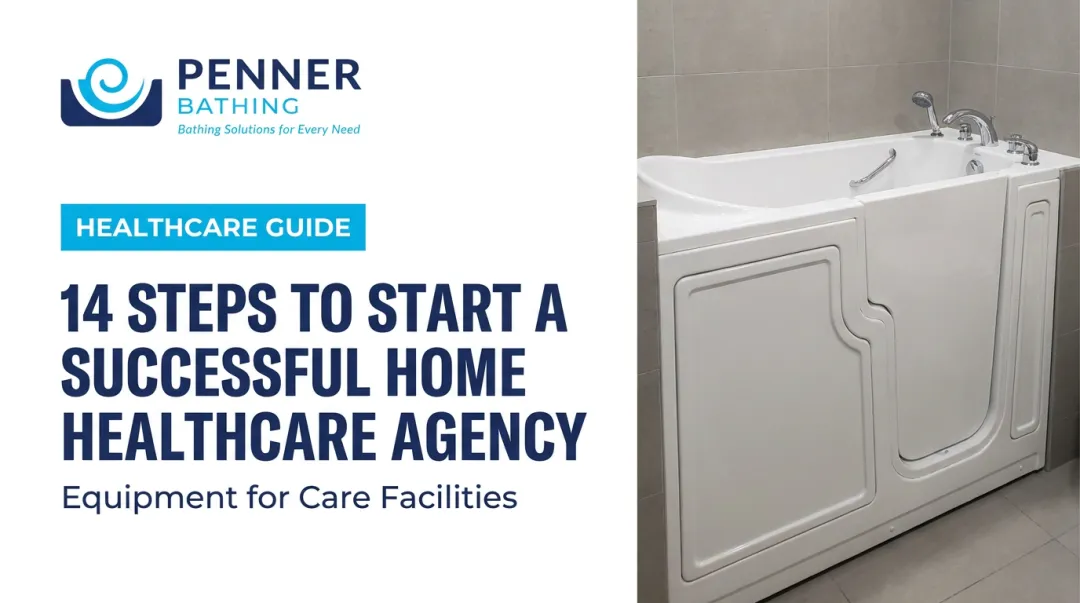
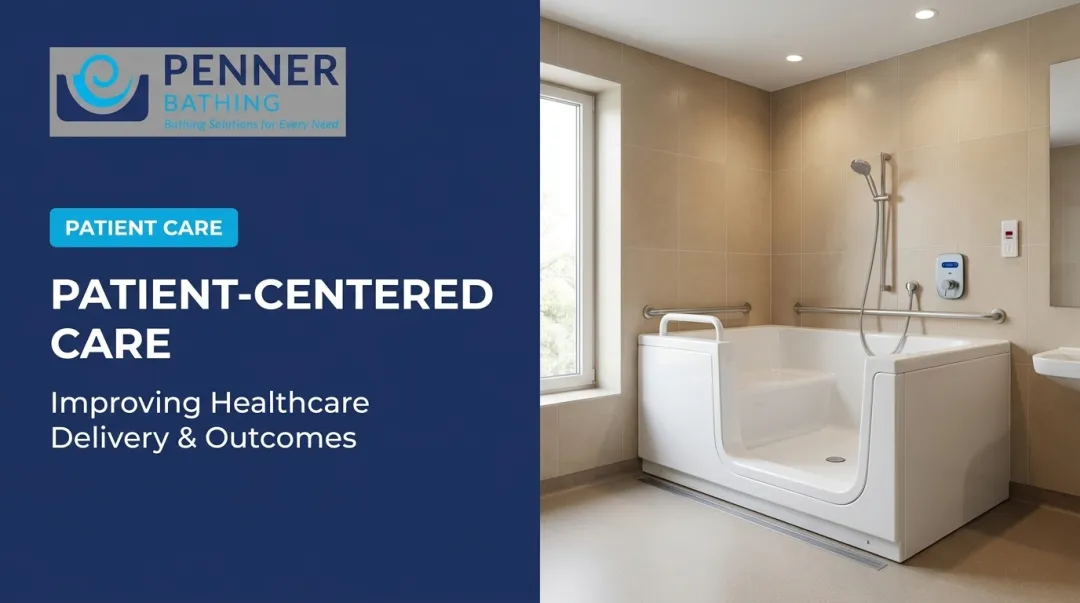
Long-term care facilities that prioritize a homelike bathing environment — warm color palettes, spa-like aesthetics, rail-free designs that feel less institutional — create daily moments where residents feel respected rather than processed. Penner Bathing's healthcare systems, used in nursing homes and assisted living facilities across North America, incorporate specific features oriented toward this goal:
- Warm, neutral finishes (sand, beige, soft gray) replace clinical white and shift the mood of the space
- The Premier model's flat-screen TV/CD/DVD cabinet turns bath time into something residents can look forward to rather than dread
- Rail-free, forward-facing designs preserve dignity and shed the institutional look of traditional medical equipment
- Fast-fill reservoir systems reduce the time residents spend waiting, undressed and vulnerable
- Automatic disinfection keeps the environment consistently hygienic without adding delays between residents
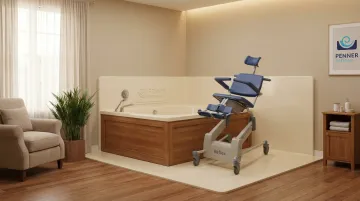
For staff, height-adjustable components and intuitive controls mean less mental effort on equipment operation — which means more attention available for the resident sitting in front of them. More attentive interactions, repeated across every bath, are how caregivers earn the kind of trust that makes residents willing to speak up about what they need.
Facility administrators should evaluate not just clinical rooms, but every space where meaningful conversations happen — common areas, personal care settings, dining rooms — and ask honestly: does this environment feel welcoming or intimidating to the people in our care?
Frequently Asked Questions
How can a caregiver communicate appropriately with patients?
Use plain, jargon-free language, practice active listening by paraphrasing what patients say, and ask open-ended questions that invite fuller responses. Avoid blocking behaviors — interrupting, minimizing concerns, or redirecting conversations — that signal a patient's input doesn't matter.
What do caregivers need most?
Caregivers need recognition as genuine members of the care team, along with timely information, access to training, and reliable communication channels with clinical staff. Family caregivers benefit most from formal discharge instructions and a designated point of contact on the clinical team.
What are the most common barriers to healthcare communication?
Patient-side barriers include fear of seeming difficult, passive deference, health literacy gaps, and cultural differences. Time pressure and caregiver burnout compound these, making interactions feel rushed when they need to be thorough.
How does active listening improve patient care outcomes?
Active listening catches misunderstandings before they become errors and helps caregivers spot warning signs patients might not name outright. That trust also makes patients more likely to follow through on treatment and report problems honestly.
How can caregivers communicate more effectively with healthcare professionals?
Log symptoms, medications, eating, and sleep patterns, and write questions down before appointments. Designate one family member as the primary contact to avoid conflicting information, and always repeat back what you've heard to confirm understanding before leaving.
Why does the physical environment matter for caregiver-patient communication?
Private, calm, homelike environments reduce patient anxiety and signal that their comfort and dignity matter — not just their medical status. Residents in environments designed with these principles in mind are more likely to open up, express concerns, and engage honestly with the caregivers around them.