Key Takeaways
- The IHI Framework centers on three interconnected domains: leadership, culture, and the learning system
- Safety is the foundation — without it, all other quality dimensions are compromised
- A historical HHS OIG study found 59% of adverse events in SNF settings were preventable
- Just culture redirects accountability toward system design, reducing blame and improving outcomes
- Physical equipment such as bathing systems is part of the safety infrastructure, not an afterthought
What Is the Framework for Safe, Reliable, and Effective Care?
Published in 2017, the IHI white paper by Frankel, Haraden, Federico, and Lenoci-Edwards emerged from a straightforward but uncomfortable observation: individual competence is not enough. Skilled, well-intentioned staff working within poorly designed systems will produce inconsistent outcomes. The framework gives organizations a concrete structure to address that gap.
Its architecture rests on two foundational domains — culture and the learning system — containing nine interrelated components, with patient and family engagement at the center. Leadership holds both domains together, activating the system and sustaining it over time.
That architecture doesn't exist in isolation — it maps directly onto broader quality standards.
Alignment with Quality Aims
The framework aligns with the IOM's six aims for quality care — safe, effective, patient-centered, timely, efficient, and equitable — established in Crossing the Quality Chasm. Safety sits at the base. Compromise it, and the other five aims become aspirational rather than achievable.
What "Reliability" Actually Means Here
IHI defines reliability as failure-free operation over time. Their design levels — approximately 90%, 99%, and 99.9% success rates — represent process targets, not performance benchmarks any facility has necessarily reached. The goal is to reduce variation so that safe outcomes don't depend on which staff member is working a given shift.
Why Long-Term Care Is a Different Problem
In acute settings, patient stays are measured in days. In nursing homes and assisted living communities, residents may live in the facility for years. The US had 14,700 nursing homes with 1.2 million residents and 32,200 residential care communities with nearly 1 million residents as of 2022.
That scale — combined with the complexity of long-term settings — creates pressures that training programs alone can't address:
- Extended resident stays require safety systems that hold up across months and years, not just days
- Diverse acuity levels mean staff must handle widely varying care needs within the same shift
- Regulatory scrutiny from CMS and The Joint Commission demands documented, repeatable processes
- High staff turnover makes outcome consistency dependent on system design, not individual memory
Domain 1: Leadership — Setting the Foundation for Safety
Leadership in this framework is defined by behavior. Specifically, whether leaders consistently model the safety-supporting practices they expect from their teams.
What the Framework Expects from Leaders
The IHI's Leadership Guide to Patient Safety recommends making patient safety a top-three strategic priority — not delegating it to a committee, but actively participating in safety rounds and reviews. IHI recommends that senior executives conduct leadership walk rounds at minimum weekly.
When leaders treat safety as a genuine operational priority, staff notice. When they don't, staff notice that too.
Key leadership behaviors the framework calls for:
- Prioritize safety in how time and resources are actually allocated, not just in mission statements
- Join safety rounds directly rather than delegating them entirely
- Respond to reported near-misses and errors with system review, not blame
- Share progress on improvement initiatives openly, not just final outcomes
The Complacency Risk
One of the more honest observations in the IHI framework concerns what happens after an organization completes a safety initiative. Teams feel they've "done the work." Leaders stop treating safety as urgent. Without active reinforcement, the same gaps that enabled harm tend to reappear. The organizations that sustain safety gains are those whose leaders keep it on the agenda after the initiative ends.
Practical Habits for Long-Term Care Administrators
- Review incident reports alongside frontline staff, not just in isolation
- Hold brief weekly safety briefings that surface emerging concerns before they become incidents
- Acknowledge and act on near-miss reports publicly enough that staff believe reporting matters
Domain 2: Culture — Building an Environment Where Safety Thrives
A safety culture is not an absence of errors. It's an organizational environment where staff feel safe to ask questions, raise concerns, stop an unsafe action, and report mistakes without fear of retaliation.
Psychological Safety as a Precondition
When nurses, CNAs, and care staff fear punishment or embarrassment for speaking up, near-misses go unreported. Errors cascade. The organization loses its ability to learn. A 2021 concept analysis links psychological safety to speaking-up behaviors, learning behavior, and reporting — all of which are prerequisites for a functioning safety system.
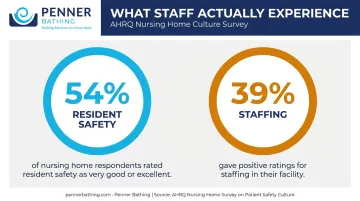
AHRQ data gives this real weight: only 54% of nursing home respondents rated resident safety as very good or excellent, and just 39% gave positive ratings for staffing. These aren't outcome measures — they're culture measures. And they tell a story about what staff actually experience day to day.
Just Culture: Shifting the First Question
When something goes wrong, the instinct is to ask "who did this?" Just culture asks a different first question: what in the system allowed this to happen?
This is not about removing individual accountability. It's about distinguishing between:
- Behaviors within an individual's control (where accountability is appropriate)
- System failures the individual did not design and could not prevent alone
That distinction shapes what happens next. If the answer is always blame, reporting stops. If the answer is always exoneration, accountability disappears. Just culture holds both.
Communication and Teamwork in Practice
In long-term care, a single resident might interact with CNAs, nurses, a physician, a therapist, and dietary staff in one day. Communication failures are a documented root cause of adverse events. Structured tools give those handoffs the consistency they need.
SBAR (Situation, Background, Assessment, Recommendation) is one proven framework. A published nursing-home quality-improvement project paired SBAR with Plan-Do-Study-Act cycles to improve communication around changes in resident condition — a concrete starting point for facilities ready to act.
Domain 3: The Learning System — Turning Mistakes into Progress
A learning system doesn't just respond to harm after it occurs. It actively hunts for risk before it reaches a resident.
Reactive vs. Proactive Learning
Most facilities have some form of incident reporting. Fewer have systematic processes for capturing near-misses — the events that almost caused harm — and both approaches matter:
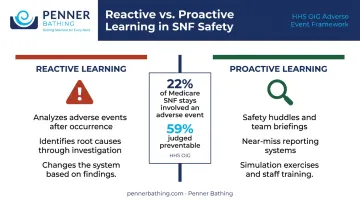
- Reactive learning: Analyzes what happened after an adverse event, identifies root causes, and changes the system
- Proactive learning: Uses safety huddles, near-miss reports, and simulation to surface risks before they reach residents
Long-term care facilities should invest in both. The HHS OIG's historical national study found that 22% of Medicare SNF stays involved an adverse event, with 59% of those events judged preventable. Preventable events are exactly what a learning system is designed to catch.
Standardization as a Safety Tool
Complexity is a source of error. Reducing unnecessary variation in care processes — through standardized medication administration protocols, clear disinfection procedures, or consistent handoff formats — directly reduces the opportunity for mistakes.
A 2024 systematic review of aged-care facilities found that educational interventions to standardize medication administration reduced errors with a pooled odds ratio of 0.37 (meaningfully fewer errors in facilities that addressed process variation deliberately).
The regulatory framework for this work already exists. 42 CFR 483.75 requires every covered long-term care facility to maintain a comprehensive, data-driven QAPI program covering five elements: design and scope, governance and leadership, data systems and monitoring, performance-improvement projects, and systematic analysis and action.
Applying the Framework in Long-Term Care Settings
Implementation in long-term care is harder than in acute settings — four structural factors explain why:
- High staff turnover: Executive turnover in nursing homes fell from 31.97% in 2024 to 22.12% in 2025 — improvement, but still significant. Total nursing turnover declined nearly 11% relative to mid-2022, though workforce challenges persist
- Resident complexity: CDC data shows 49.1% of nursing home residents have dementia, with many managing multiple co-occurring conditions
- Mixed workforce: Clinical and non-clinical staff operate side by side, with varying training levels
- Regulatory tension: Documentation compliance can crowd out genuine culture work if leaders don't actively protect both
These barriers don't make the framework unworkable — they make sequencing it correctly essential.
Where to Start
Administrators don't need to tackle everything at once. Starting narrow and building outward produces more durable results than sweeping rollouts:
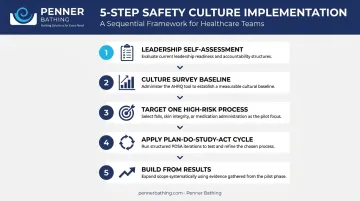
- Leadership self-assessment — honestly evaluate whether safety is in the top three priorities, and whether leadership behaviors match stated values
- Culture survey baseline — AHRQ's Nursing Home Survey on Patient Safety Culture provides a validated tool
- Target one high-risk process — falls, skin integrity, or medication administration are common starting points
- Apply a structured improvement model — the Plan-Do-Study-Act cycle is the standard approach and is explicitly referenced in QAPI guidance
- Build from results — document what worked, what didn't, and use those specifics to calibrate the next improvement cycle before expanding scope
How the Physical Care Environment Supports the Framework
Protocols and culture matter. So does equipment. Even a well-trained, psychologically safe team working within a learning system is exposed to preventable risk if the tools they use daily introduce unnecessary variability or complexity.
Bathing is a clear example. It's one of the highest-risk daily activities in long-term care — involving physical transfer, infection exposure, and resident dignity. CDC reports approximately 1 in 43 nursing home residents has at least one healthcare-associated infection on any given day, and a 2023 study documented extensive facility and training gaps specifically around nursing home bathing practices.
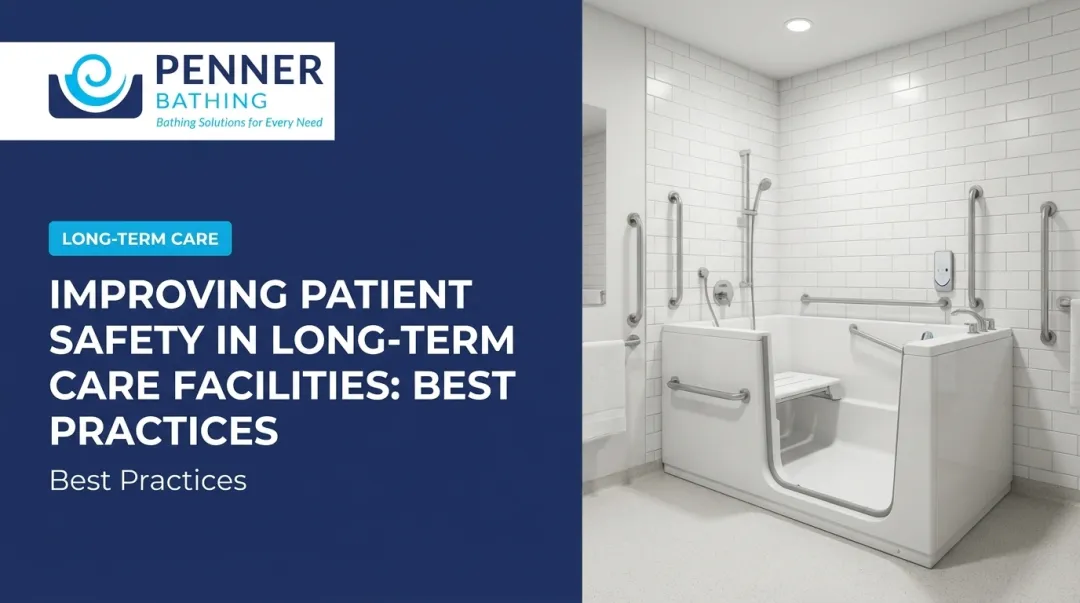
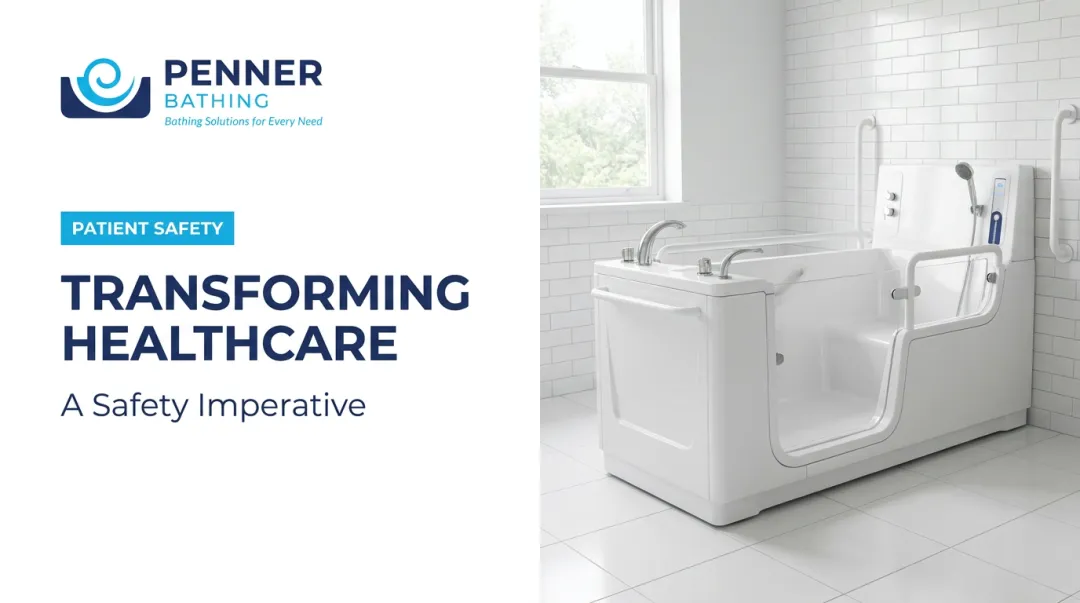
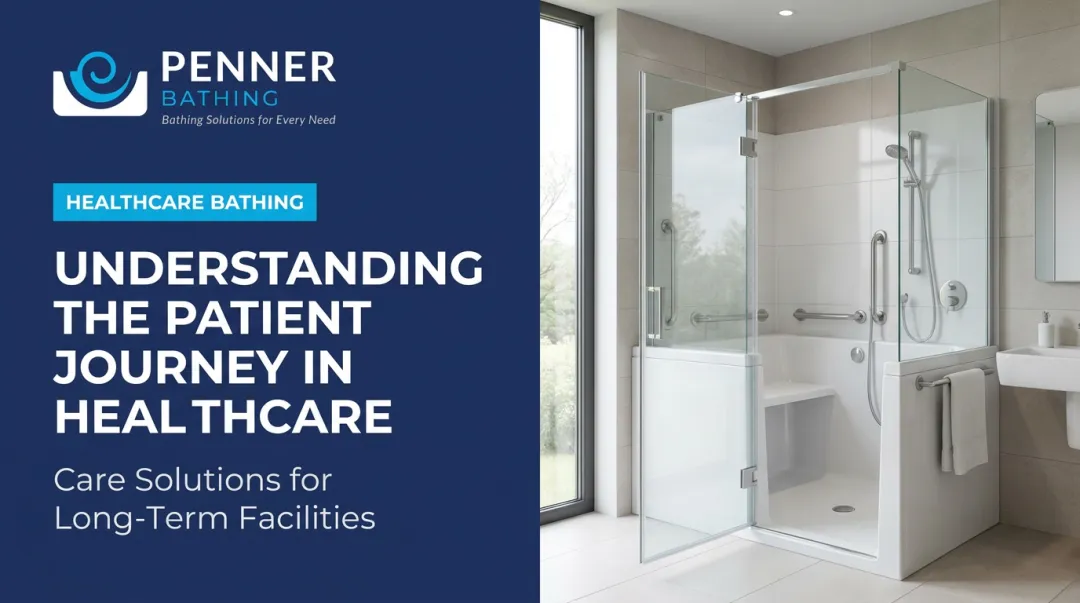
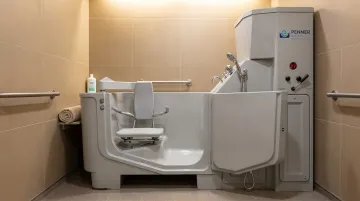
Facilities that invest in purpose-built bathing systems address this risk at the equipment level rather than relying entirely on staff behavior. Penner Bathing's healthcare systems — designed specifically for nursing homes, assisted living communities, and hospitals — include features that reduce process variability across staff members and shifts:
Facilities that invest in purpose-built bathing systems address this risk at the equipment level rather than relying entirely on staff behavior. Penner Bathing's healthcare systems — designed for nursing homes, assisted living communities, and hospitals — include features that support consistent, reliable execution regardless of who is working:
- Built-in BioCote antimicrobial protection active around the clock
- Automatic disinfection standard on all models
- Fast-fill reservoir that simplifies the bathing process and saves staff time
- Intuitive control panels that reduce variation across shifts and skill levels
With 38+ models covering bariatric configurations, multiple entry options, and integrated transfer systems, these systems are engineered specifically for institutional care — not adapted from residential products.
Frequently Asked Questions
What is the core framework for safe, reliable, and effective care?
It is the IHI framework published in 2017, built around three domains — leadership, culture, and the learning system. It moves organizations beyond relying on individual effort by designing the systems and culture that support consistently safe outcomes.
What is a safe and effective care environment?
One where policies, physical tools, team behaviors, and organizational culture collectively protect residents and staff from preventable harm. This includes infection control, equipment safety, communication practices, and psychological safety — all working together.
How do nurses provide safe and effective care?
Nurses coordinate care across disciplines, monitor residents for early deterioration, follow evidence-based protocols, and speak up when something feels unsafe. In practice, they execute the learning system, shape culture, and hold leadership accountable through what they observe and report.
What are the three domains of the Framework for Safe, Reliable, and Effective Care?
Leadership sets guiding behaviors and accountability structures. Culture encompasses psychological safety, just culture, and teamwork. The learning system drives continuous improvement through data, standardization, and proactive risk identification.
Why is psychological safety important in healthcare teams?
When staff feel safe to speak up without fear of blame, near-misses get reported and unsafe situations get stopped before harm occurs. Organizations that lack psychological safety lose the incident data they need to prevent the next failure.
How does leadership influence patient safety in long-term care?
How leaders prioritize safety, respond to incidents, and model accountability sets the cultural tone for the entire organization. When those behaviors are inconsistent, the framework exists as policy but rarely changes outcomes at the unit level.