

True skin hydration requires a layered approach that accounts for how your skin actually holds and loses water. Drinking more water helps overall health, but it won't fix a compromised skin barrier. What you apply — and how you apply it — matters far more.
This guide covers the fundamentals that actually move the needle: the difference between dry and dehydrated skin, which ingredients deliver real results, a step-by-step routine, and the daily habits — including bathing — that can make or break your skin's moisture levels.
Key Takeaways
- Dehydrated skin lacks water; dry skin lacks oil — each requires a different fix
- Humectants (hyaluronic acid, glycerin) attract water; ceramides and occlusives seal it in — you need both
- Apply products in order: cleanser → serum → moisturizer → SPF (AM) or overnight mask (PM)
- Apply to damp skin, not dry — timing your application after cleansing genuinely matters
- Bathing temperature, diet, and cleansing habits affect hydration as much as the products you use
Dry Skin vs. Dehydrated Skin: Know the Difference
These two conditions get lumped together constantly, but they have distinct causes and need different solutions.
Dry skin is a skin type — a long-term reduction in sebum (oil) production. It tends to feel rough, look flaky, and requires emollients and occlusives that restore the lipid barrier.
Dehydrated skin is a temporary condition caused by a lack of water in the skin. It responds best to humectants that draw water into the skin. Any skin type, including oily skin, can become dehydrated.
Many people need to address both at once: a humectant serum underneath a richer moisturizer covers both bases simultaneously.
Recognizing the Signs
Dehydrated skin often shows up as:
- Tight, rough texture that worsens after cleansing
- Dullness and lack of radiance
- More pronounced fine lines, particularly around the eyes
- Increased sensitivity or irritation
- Sunken or shadowed under-eye area
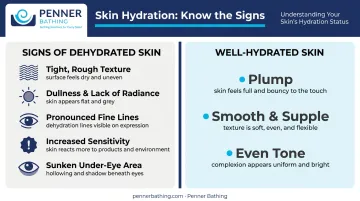
Well-hydrated skin looks plump, smooth, and supple with an even tone. The contrast is noticeable.
When oily skin becomes dehydrated, skipping moisturizer is a common instinct — and it usually makes things worse. Sebum levels and water content are independent, so an oily complexion offers no protection against dehydration.
The Hydration Heroes: Key Ingredients to Look For
Understanding what each ingredient actually does — and doesn't do — helps you build a routine that works instead of one that just sounds good on the label.
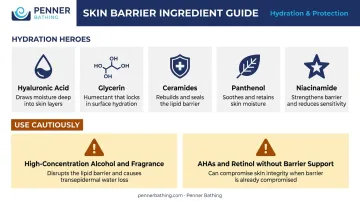
Hyaluronic Acid
Hyaluronic acid (HA) is a naturally occurring molecule in the skin that attracts and retains water, helping to plump and hydrate the surface. It comes in different molecular sizes, and that distinction matters. Research using Raman micro-imaging found that lower molecular weight HA (20–300 kDa) penetrated the stratum corneum. Larger molecules (1,000–1,400 kDa) remained on the surface. Products with a range of molecular weights can therefore work across multiple layers of the skin.
The commonly repeated "1,000 times its weight in water" claim isn't well-supported by measurement data. HA is genuinely effective — that figure just overstates what's been quantified.
Glycerin
Glycerin is an underrated humectant. Its smaller molecular size allows it to penetrate more deeply than most humectants, and it works well for all skin types, including oily and acne-prone skin. It's less heavily marketed than hyaluronic acid, but in terms of effectiveness and accessibility, it's a workhorse ingredient worth seeking out.
Ceramides
Ceramides are lipids that make up approximately 50% by weight of the stratum corneum's intercellular lipids — the structural glue of your skin barrier. They trap water inside the skin and reduce transepidermal water loss (TEWL). Clinical evidence shows ceramide-containing formulations improve stratum corneum hydration and barrier function, with TEWL suppression benefits in comparative studies. They work alongside humectants: humectants bring water in, ceramides keep it from escaping.
Panthenol (Pro-Vitamin B5)
Panthenol acts as both a humectant and a barrier-support ingredient. In controlled studies, formulations containing 1–5% panthenol significantly decreased TEWL after 30 days, with higher concentrations producing stronger hydration effects.
Niacinamide
Niacinamide stimulates ceramide and barrier-lipid synthesis. Research found that topical nicotinamide applied for four weeks improved permeability-barrier measures — meaning it helps the skin hold onto the moisture you put in.
Ingredients to Use Cautiously
- High concentrations of alcohol and fragrance — both strip moisture and disrupt barrier function
- AHAs and retinol without barrier support — valuable actives, but they increase sensitivity and TEWL if used without ceramide or humectant balance
Your Complete Step-by-Step Skincare Routine
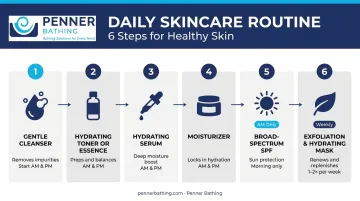
Step 1 — Gentle Cleanser
Start with a pH-balanced, non-stripping cleanser. Cream or oil-based formulas suit dry and dehydrated skin best. Harsh foaming cleansers, especially sulfate-heavy formulas, remove the natural lipids and proteins that protect the barrier. Cleanse no more than twice daily.
Step 2 — Hydrating Toner or Essence (Optional)
A hydrating toner or essence preps skin to absorb subsequent products. Look for hyaluronic acid, aloe vera, or panthenol. Apply while skin is still slightly damp for better absorption.
Step 3 — Hydrating Serum
This is the core hydration delivery step. Apply a humectant serum (hyaluronic acid, glycerin, or both) to damp skin. Humectants need ambient moisture to function properly; damp skin gives them something to work with.
Serums go before moisturizers because their thinner texture and higher active concentration let them absorb before the moisturizer seals everything in.
Step 4 — Moisturizer
The moisturizer acts as a protective layer that seals in everything underneath. Look for ceramides, squalane, fatty acids, and niacinamide.
Texture matters depending on when you're applying it:
- AM: Lighter formulas sit comfortably under makeup
- PM: A richer cream or sleeping mask supports deeper overnight repair
- Dry or mature skin: Layer a facial oil over your nighttime moisturizer for extra occlusion
Step 5 — Broad-Spectrum SPF (AM Only)
UV exposure is a direct barrier disruptor. Research in human subjects found that sun exposure increased basal TEWL and delayed barrier recovery, meaning unprotected skin loses moisture faster. The American Academy of Dermatology recommends broad-spectrum, water-resistant SPF 30 or higher — daily, even indoors.
Step 6 — Weekly: Exfoliation + Hydrating Mask
Limit exfoliation to 1–2 times per week. Choose gentle chemical exfoliants — lactic acid or low-concentration glycolic acid — over physical scrubs, which can create micro-tears and worsen dehydration. Follow immediately with a hydrating sheet or sleeping mask containing hyaluronic acid or ceramides for an intensive moisture boost. Exfoliation improves product absorption; the mask takes advantage of that.
Lifestyle and Bathing Habits That Support Skin Hydration
Diet
What you eat affects how your skin barrier functions from the inside out. The strongest direct evidence points to omega-3 fatty acids: a 2024 randomized trial found that 1–2g of krill oil daily for 12 weeks improved skin hydration and reduced TEWL compared to placebo. Foods rich in omega-3s include oily fish, walnuts, flaxseed, and avocado.
Alcohol has a measurable short-term effect on barrier function — research found increased TEWL on the forehead and forearm following a single oral ethanol dose. Processed, sugar-heavy diets are linked to collagen and elastin changes, though evidence connecting them directly to TEWL is less definitive.
The Water-Drinking Reality
Adequate hydration supports overall health, but skin hydration depends primarily on barrier function rather than water intake. A 2018 systematic review found only limited, low-quality evidence that extra water improves skin hydration — and the benefit appeared more relevant for people who were habitually under-hydrated rather than those already drinking adequately. Topical products and barrier health carry the most weight.
Bathing Habits
This is where routine has the most direct and underappreciated effect.
Research confirms that hot water produces greater increases in TEWL and skin-surface pH than cooler water, meaning hot showers actively damage the barrier. The AAD recommends warm — not hot — water, with sessions limited to 5–10 minutes. Applying moisturizer to still-damp skin immediately afterward helps lock in remaining surface moisture.
For seniors, those with mobility limitations, or anyone managing joint pain, following these guidelines consistently is harder in a standard tub. Controlling water temperature and minimizing fall risk both matter for making warm-water bathing a reliable habit.
Penner Bathing's walk-in bath systems — including the Dream Spa Walk-In Bath — include precise temperature controls and therapeutic jet options that address both concerns. Their PennAire Microbubble Technology has been shown to increase skin hydration by 46%, offering a gentler cleansing experience well-suited to aging or sensitive skin.

Environmental Factors
- Use a humidifier in winter or in heated and air-conditioned spaces — low indoor humidity accelerates moisture loss from the skin
- Seasonal changes — particularly drier winter air combined with indoor heating — are among the most common triggers for sudden dehydration flare-ups
Common Mistakes That Sabotage Skin Hydration
Over-Cleansing or Using Harsh Cleansers
Cleansing more than twice daily with sulfate-heavy formulas strips protective lipids and disrupts the barrier, increasing water loss. pH-balanced, gentle formulas are non-negotiable if hydration is a goal.
Skipping Moisturizer on Oily Skin
Oily skin can be dehydrated — the two conditions aren't mutually exclusive. Skipping moisturizer often compounds the problem. A lightweight, non-comedogenic moisturizer with hyaluronic acid works across all skin types without clogging pores.
Applying Products to Completely Dry Skin
Humectants work best when moisture is already present. Applying to fully dry skin gives them less to work with. Apply your serum and moisturizer within a few minutes of cleansing, while the skin still holds some surface dampness.
Frequently Asked Questions
What should I add to my skincare routine for hydration?
Start with a humectant serum (hyaluronic acid or glycerin), follow with a ceramide-rich moisturizer, and finish with a hydrating SPF in the morning. Apply each layer to damp skin for best results.
What is the 4-2-4 rule in skincare?
The 4-2-4 method involves massaging a cleansing oil into dry skin for 4 minutes, emulsifying with water for 2 minutes, then rinsing for 4 minutes. It's designed to remove impurities thoroughly without stripping the skin barrier.
Does drinking water really hydrate your skin?
Water intake supports overall health, but skin hydration depends far more on barrier function and topical products. Extra water intake makes the most difference for people who were already significantly under-hydrated — for everyone else, topical care carries more weight.
Can oily skin get dehydrated?
Yes. Oil production and water content are separate skin properties. Oily skin can have low water content, making lightweight humectant products important regardless of skin type.
How does bathing temperature affect skin hydration?
Hot water increases TEWL and disrupts the skin barrier more than lukewarm water. The AAD recommends shorter sessions (5–10 minutes) in warm water, followed immediately by moisturizer applied to damp skin, to preserve the barrier.