
What makes falls particularly devastating isn't just the immediate injury. A broken hip can trigger a cascade: hospitalization, loss of independence, fear of moving freely, inactivity, and — ironically — even greater fall risk. It's a cycle that's hard to break once it starts.
The good news: most falls are preventable. The right combination of physical habits, home modifications, and medical awareness can dramatically reduce risk. This guide covers exactly where to start.
Key Takeaways
- Falls are the leading cause of unintentional injury death among older adults — and most are preventable
- Muscle weakness, medication side effects, and vision changes are among the biggest risk factors
- Bathrooms and bedrooms account for nearly half of all home fall-related ER visits
- Exercise targeting balance and leg strength can cut fall rates by 23%
- Knowing how to recover safely after a fall is as critical as avoiding one
Why Seniors Are at Higher Risk of Falling
Fall risk builds gradually. Physical changes, health conditions, and environmental hazards each contribute — and when they overlap, the danger compounds quickly.
Physical and Health-Related Risk Factors
Muscle loss is a major contributor. Age-related muscle deterioration (sarcopenia) affects a significant portion of adults over 65 and is directly tied to higher fall odds. Research involving nearly 46,000 older adults found that sarcopenia was associated with 89% higher odds of falling in prospective studies. Weaker legs and a less stable core make it harder to recover from even a minor stumble.
Several health conditions compound that weakness:
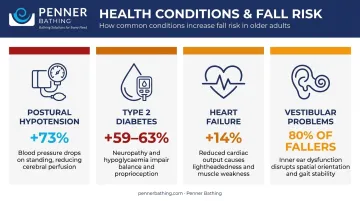
- Postural hypotension — blood pressure dropping when standing — raises fall odds by 73% compared to those without it
- Type 2 diabetes is associated with 59–63% higher fall risk in adults over 60
- Heart failure increases fall odds by 14% in community-dwelling seniors
- Inner ear and vestibular problems are found in 80% of older fallers, versus just 19% of age-matched non-fallers
Sensory decline is a serious multiplier. Vision impairment roughly doubles fall risk, and hearing loss triples it — even modest deficits affect spatial awareness and reaction time.
Medication use is also a significant, often overlooked risk. Seniors taking five or more drugs face a 21% higher fall rate than those on fewer. Common culprits include:
- Sedatives and sleep aids
- Antidepressants and antipsychotics
- Blood pressure medications
- Antihistamines and opioids
Each can cause dizziness, confusion, or drowsiness — especially in combination.
Environmental Risk Factors
Home is where most falls happen. Among older adults who visit the ER after a fall, nearly 80% fell at home, and over 70% fell indoors.
The most dangerous rooms, by share of home fall-related ER visits:
| Location | Share of Home Fall ER Visits |
|---|---|
| Bedroom | 25.0% |
| Stairs | 22.9% |
| Bathroom | 22.7% |
For adults 85 and older, bathroom falls account for 26% of home incidents — second only to bedrooms. The most common hazards driving these numbers: loose rugs, poor lighting, cluttered walkways, slippery floors, and missing handrails.
Lifestyle Changes That Significantly Reduce Fall Risk
Each strategy below is backed by clinical research — and most require no equipment, no prescription, and no waiting.
Exercise for Balance and Strength
A Cochrane review of 108 randomized trials — covering more than 23,000 older adults — found that exercise reduced the fall rate by 23% and the number of people who fell by 15%. Balance and functional exercises showed the clearest benefit; resistance training added further advantage.
Tai chi is especially well-supported. In a trial of 670 high-risk adults over 70, a six-month tai chi program produced a 58% lower fall rate than stretching and a 31% lower rate than multimodal exercise.
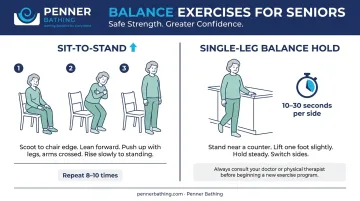
Two exercises seniors can start at home (after checking with a doctor or physical therapist):
- Sit-to-stand — Rise from a chair without using hands, then sit back slowly. Builds leg strength and trains the body mechanics most needed to recover from a misstep
- Single-leg balance holds — Stand on one foot near a wall or counter for support. Even 10–30 seconds per side, done daily, builds balance steadily over time
Medical and Vision Management
Schedule regular check-ups that include a fall risk assessment — and report any falls to your doctor, even those that caused no injury. Falls that seem minor often signal underlying issues worth addressing.
Annual vision and hearing exams matter more than most seniors expect. Correcting even a modest vision deficit can meaningfully lower fall risk. One practical note: allow time to adjust to new eyeglasses before walking in unfamiliar or outdoor spaces.
Have all medications reviewed at least once a year, with specific attention to any drugs causing drowsiness, dizziness, or confusion. A pharmacist can often flag interactions that even a busy physician might miss.
Footwear and Daily Habits
- Wear low-heeled shoes with nonslip rubber soles at all times — including indoors
- Avoid walking in socks, smooth-soled slippers, or backless shoes
- Stand up slowly after sitting or lying down; postural hypotension can cause a sudden drop in blood pressure and loss of balance within seconds of rising
- Keep hands free when navigating stairs or uneven terrain — use a bag or backpack instead of carrying items
Making Your Home Safer: A Room-by-Room Guide
The home environment is one of the most controllable fall risk factors, and many modifications are inexpensive.
Bathroom Safety (Highest-Risk Room)
The bathroom combines wet surfaces, balance-demanding transitions, and frequent nighttime use — a combination that makes it hazardous. Essential modifications:
- Grab bars near the toilet and inside and outside the shower or tub — not towel bars, which aren't designed to bear weight
- Nonslip mats on the tub floor and on wet tile surfaces
- **Shower chair or bench** to enable seated bathing
- Handheld showerhead to allow full-body washing without standing
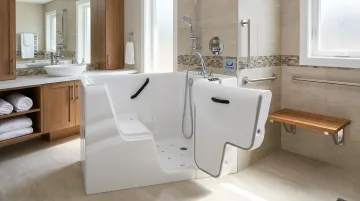
Standard bathtubs present a specific hazard: stepping over a high ledge while wet and off-balance. This is one of the most common triggers for bathroom falls. Walk-in baths eliminate this risk entirely by removing the step-over.
The Dream Spa Walk-In Bath by Penner Bathing addresses this directly: its swing-out door lets users sit on the edge first, then pivot their legs in — no high-leg lift, no precarious balance required. Safety features include a low-threshold entry, integrated grab bar, handheld shower wand, and a no-leak door seal. Starting at $5,950, it's built for seniors aging in place. See details at pennerbathing.com.
General Home Modifications
Bedroom:
- Place a lamp within arm's reach of the bed
- Install automatic night-lights for the path to the bathroom
Stairs:
- Install handrails on both sides
- Mark the top and bottom steps with high-contrast tape for low-light visibility
All rooms:
- Remove loose rugs or secure with double-sided tape
- Keep walkways clear of cords, boxes, and furniture
- Store frequently used items at reachable heights — no climbing or awkward stretching
- Improve lighting throughout, especially hallways and stairwells
- Keep a flashlight accessible for power outages
Common Fall Prevention Mistakes to Avoid
Three mistakes come up repeatedly — and each one raises fall risk in ways that are easy to miss:
- Past fall history doesn't predict future safety. Fall risk builds gradually through muscle loss, slow vision changes, and medication accumulation. Many seniors are at significant risk well before their first fall.
- Fear of falling often leads to inactivity — and that backfires. Reduced movement accelerates muscle weakness and balance decline. Staying gently active, even walking short distances daily, is protective. Rest feels safe, but it isn't.
- Unreported falls leave the real cause untreated. Medication interactions, undiagnosed vestibular problems, and blood pressure issues frequently go unaddressed when falls aren't mentioned to a doctor. The risk stays elevated, and the next fall becomes more likely.
What to Do If a Senior Falls
If a fall happens, the immediate priority is not getting up — it's assessing for injury.
If injured or unable to rise:
- Stay calm and call for help, or use a medical alert device
- Get into a comfortable position and stay warm while waiting
- Do not attempt to rise if there's pain in the head, neck, back, or hip
If uninjured and able to rise:
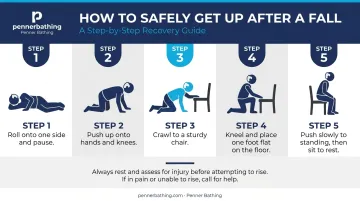
- Roll carefully onto one side
- Push up onto hands and knees
- Crawl to a sturdy chair
- Kneel at the chair and place one foot flat on the floor
- Push slowly to standing, then sit and rest
Research shows that 47% of noninjured fallers are unable to get up without help after at least one fall. Having a plan in place before a fall happens makes a real difference. Every senior should:
- Keep a charged mobile phone or medical alert device on their person at all times
- Arrange regular check-ins with a family member or neighbor
- Report any fall to a doctor, even with no apparent injury
Frequently Asked Questions
What should you do when an older person falls?
Stay calm and don't rush to stand up. First, take a breath and check for pain or injury before moving. If uninjured and able, follow a step-by-step recovery process (roll, crawl, kneel, stand); if injured or unable to rise, call for help and wait in a comfortable position.
How can you help an elderly person overcome fear of falling?
The most effective approach is staying physically active — inactivity actually worsens fall risk by accelerating muscle loss. Taking practical safety steps at home helps restore confidence, and working with a doctor or physical therapist provides both a supervised exercise program and reassurance grounded in real assessment.
What are the 5 P's of fall prevention?
The 5 P's are a care-setting rounding framework: Pain assessment, Personal Needs (toileting assistance), Positioning for comfort, Placement of belongings within reach, and Presence (checking whether anything else is needed). Each element addresses a specific factor that contributes to falls during routine care.
What medications increase fall risk in seniors?
Sedatives, blood pressure medications, antidepressants, antihistamines, antipsychotics, and diuretics are among the most common culprits. Seniors taking five or more medications of any kind face a measurably higher fall rate and should have their full medication list reviewed by a doctor or pharmacist.
What exercises help prevent falls in the elderly?
Tai chi, sit-to-stand repetitions, single-leg balance holds, and regular walking all have strong evidence behind them. A physical therapist can design a program matched to individual ability and specific risk factors, targeting the areas that matter most for each person.
What home modifications are most effective for fall prevention?
Bathroom grab bars, nonslip mats, improved lighting, stair handrails, and removing loose rugs offer the highest impact. For seniors with significant mobility limitations, raised toilet seats and walk-in baths (such as those from Penner Bathing) eliminate hazards that standard fixtures can't address.