Introduction
Most homeowners don't think much about their bathtub until water starts pooling on the floor or the surface looks beyond saving. By that point, what could have been a straightforward replacement has often turned into something more expensive — water damage, subfloor rot, or mold growing inside the walls.
Bathtubs don't last forever. Most last 15 to 30 years depending on material and upkeep, but wear shows up well before a tub fully fails. The warning signs range from obvious surface damage to subtler safety risks — ones that matter especially for older adults or anyone with limited mobility.
This article covers the key signs that it's time for a new tub, how to tell whether a repair might still be enough, and what to consider when choosing a replacement that actually fits your household's needs.
Key Takeaways
- Most bathtubs last 10–30 years depending on material and use — an aging tub showing any warning signs should be replaced, not repeatedly repaired.
- Persistent cracks, leaks, mold that keeps coming back, and stains that won't clean off all point toward replacement over repair.
- Difficulty getting in and out of a tub is a legitimate safety concern.
- Delaying replacement adds water damage, subfloor repair, and mold remediation costs on top of the tub price.
- Repair vs. replace hinges on damage type, tub age, and how many fixes have already been made.
How Long Should a Bathtub Last?
Lifespan varies significantly by material. According to Angi's bathtub lifespan guide, here's what to expect:
| Material | Typical Lifespan |
|---|---|
| Fiberglass | ~10 years |
| Acrylic | 10–15 years |
| Porcelain-enameled steel | Up to 20 years |
| Porcelain-enameled cast iron | 10–30 years |
| Cast iron | Up to 100 years (InterNACHI estimate) |
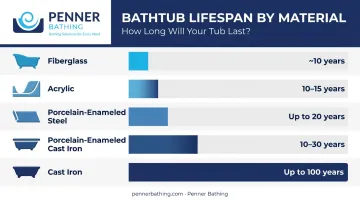
These ranges aren't hard expiration dates. A 20-year-old cast iron tub in good condition can last decades longer with proper care. That said, a tub approaching the end of its expected range and showing any of the warning signs below is worth replacing rather than patching.
Usage patterns also matter. A fiberglass tub in a lightly used guest bathroom will outlast an identical tub in a busy family home. Several factors can accelerate wear beyond what the table above indicates:
- Cleaning frequency and products used — abrasive cleaners strip surface coatings faster
- Water quality — hard water deposits and mineral buildup erode finishes over time
- Original installation quality — poor fitting or substrate prep shortens any tub's lifespan
Physical Signs Your Bathtub Needs Replacing
Stress Cracks in the Tub Floor or Walls
Not all cracks are equal. Surface scratches are cosmetic. Stress cracks that flex slightly when you press on them are structural failures. These indicate the tub shell itself has broken down, and refinishing won't fix them. If your fiberglass or acrylic tub has cracks that move underfoot, the tub needs to go.
Persistent Leaks at the Base or Drain
A leak that keeps returning after drain repairs is a red flag. If you're seeing peeling paint near the tub, soft spots in the flooring, or any sign of rot in adjacent walls, water has been getting behind the surround. The structural damage doesn't stop while you're waiting to see if the caulk holds.
Staining and Surface Degradation You Can't Clean Off
There's a meaningful difference between discoloration and surface failure. When a tub's finish wears down to the point of becoming porous, no amount of scrubbing restores it to a hygienic surface. If stains have soaked into the material itself, the finish is gone — and at that point, refinishing is only worth considering if the tub structure is otherwise sound. Most tubs at this stage need replacing.
Mold That Keeps Coming Back
Mold that returns within a few weeks of a thorough cleaning isn't a cleaning problem. It's a moisture problem. According to the CDC, mold exposure can cause:
- Nasal irritation, coughing, and wheezing
- Skin reactions and eye irritation
- More severe respiratory effects in people with asthma or compromised immune systems
Persistent mold near the tub typically means moisture is living behind the walls. The only way to properly address it is to remove the tub and assess what's underneath.
Visible Rust
Rust on a porcelain or enameled surface means the protective coating has been compromised and bare metal is exposed to water. Once rust appears, it spreads — and chipped enamel on older tubs creates an additional hazard. The EPA notes that deteriorating lead-containing fixtures can elevate lead levels in household water, which is particularly relevant in homes with young children.
Safety and Accessibility Signs It's Time for an Upgrade
The Fall Risk Is Real
A standard bathtub threshold sits 14–20 inches high. Stepping over that wall — especially when wet — is genuinely hazardous for anyone with balance issues, joint pain, or reduced strength. The CDC estimated 234,094 nonfatal bathroom injuries among U.S. adults in a single year, with 81.1% resulting from falls. Injury rates rose sharply with age.
For older adults, avoiding the tub entirely or gripping walls and towel bars not designed to bear weight are signs the current setup has become unsafe.
When the Tub No Longer Fits the User's Needs
A tub can be structurally sound and still be the wrong tub. If a family member:
- Has started avoiding baths due to difficulty getting in or out
- Relies on another person for bathing assistance
- Grips fixtures not rated for grab bar use
- Has recently had a fall, surgery, or mobility diagnosis
...the tub is a safety concern regardless of its surface condition.
Walk-In Baths as a Practical Replacement Option
For households caring for an aging parent or a family member with limited mobility, replacing a standard tub is an opportunity to choose something purpose-built for safety. The NCOA notes that walk-in tubs typically feature thresholds of just 3–7 inches compared to the 14–20 inches of a conventional tub, a significant drop that makes a real difference for unsteady users.
Penner Bathing's Dream Spa Walk-In Bath is designed specifically for this situation. Its wide swing-out door lets users sit on the edge and swing their legs in rather than stepping over a high wall. Standard features include:
- Heated seat and heated back support
- Handheld shower wand
- Aqua-Aire Jet System, which circulates water to soothe muscles and joints
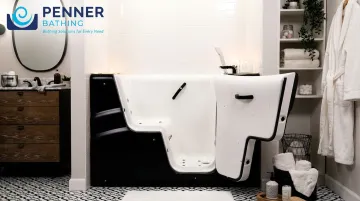
Starting at $5,950, it's priced well below most competing walk-in baths on the market — making it a practical option for families weighing the cost of a safe bathing solution.
Should You Repair or Replace?
The answer depends on four things: the type of damage, the tub's age, the cost of repair, and how many times you've already fixed the same problems.
When Repair Makes Sense
- Minor chips in porcelain or enamel that haven't led to rust or water infiltration
- Surface staining that responds to professional refinishing
- Leaks confirmed to originate from drain hardware rather than the tub structure
Professional refinishing typically costs $335–$630, adds 10–15 years to a sound tub, and is especially effective on cast iron and porcelain-steel. Get a refinishing quote alongside any replacement estimate — comparing both numbers gives you a clearer basis for the decision.
When Replacement Is the Better Call
- Stress cracks are present (refinishing cannot address structural failure)
- The tub has already been refinished and the coating is peeling again
- Moisture damage is visible in the subfloor or surrounding walls
- The tub is past the midpoint of its expected lifespan and repair costs are climbing
If repair costs are approaching half the price of a new installation, and the tub has multiple issues, replacement is the smarter long-term decision.
What Happens When You Wait Too Long
Delaying replacement after warning signs appear rarely saves money. A crack that allows water to seep through the tub base eventually reaches the subfloor. Subfloor rot spreads to framing. If the bathroom is on an upper floor, the ceiling below takes damage too. What started as a tub swap becomes a full bathroom gut.
The numbers make this concrete:
- Water damage restoration: $1,383–$6,379 on average
- Mold remediation: $1,125–$3,756
- Subfloor replacement: $3–$10 per square foot; floor joist repair can reach $12,000+
- Standard tub replacement: approximately $2,100–$9,730 total
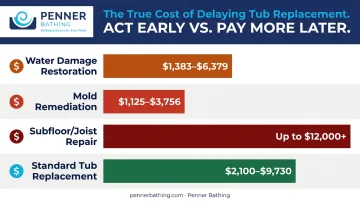
Replacing a tub at the first sign of trouble is consistently cheaper than repairing the cascade of damage that follows. The Insurance Information Institute specifically recommends immediate repair of leaks and regular inspection of caulking around tubs, noting water damage is among the most common and costly home losses.
The financial case is only part of it. For households with elderly residents or young children, delayed replacement carries real physical risk: degraded tub surfaces, unstable footing, and mold exposure are hazards that worsen over time.
Frequently Asked Questions
How long does a bathtub usually last?
Most bathtubs last between 10 and 30 years, depending on the material. Fiberglass tends toward the shorter end; cast iron can last much longer with proper care. Neglect and heavy use shorten that window considerably.
What type of bathtub can be expected to last 100 years?
Cast iron is the most durable option, with InterNACHI estimating a 100-year lifespan. Antique cast iron tubs from the early 20th century are still in regular use today.
Can a cracked bathtub be repaired, or does it need to be replaced?
It depends on the type of crack. Surface hairline cracks may be repairable with a patch kit or professional refinishing. Stress cracks — the kind that flex when pressure is applied — indicate structural failure and require replacement, not patching.
Is it worth refinishing a bathtub instead of replacing it?
Refinishing is worth it when the tub structure is sound, especially for cast iron or porcelain-enameled steel — it typically adds 10–15 years of life at a fraction of replacement cost. Skip refinishing if there are stress cracks, active leaks, or moisture damage beneath the surface.
What should I look for in a replacement tub if a family member has mobility issues?
Prioritize a low or zero-threshold entry, built-in seating, and a door that opens outward so users can sit before swinging their legs in. Walk-in baths are purpose-built for this situation and significantly reduce fall risk compared to standard tubs.
How do I know if my tub is leaking or if it's just condensation?
Fill the tub, seal the drain, and leave it for several hours. If the water level drops with the drain plugged, the problem is in the tub itself; if the level holds, the leak is further along the drain line. If results are unclear, a plumber can pinpoint the source.