For families evaluating nursing homes, the activity calendar is as revealing as the staffing ratios or inspection reports. A robust program signals that a facility views residents as whole people, not patients to be managed. A thin one suggests the opposite.
This guide covers 50+ activities across fitness, music, creative arts, cognitive engagement, and therapeutic programming—with practical advice on what separates a genuinely strong program from one that just looks good on paper.
Key Takeaways
- Modern nursing home programming spans fitness, creative arts, music, lifelong learning, and sensory activities—adapted for all mobility and cognitive levels
- Chronic loneliness is associated with a 50% higher risk of developing dementia in older adults, per the U.S. Surgeon General's advisory—making social programming a health priority, not an afterthought
- Effective programs tailor activities to each resident's interest history, mobility level, and cognitive ability
- When touring a facility, ask for the monthly activity calendar and confirm that programming runs daily—including weekends
Why Activities Matter in Nursing Homes
Activity programming delivers benefits across three interconnected areas:
- Physical health — maintained strength, balance, and circulation; reduced fall risk
- Cognitive health — memory stimulation, problem-solving, and delayed cognitive decline
- Emotional and social health — reduced loneliness, stronger friendships, and renewed sense of purpose
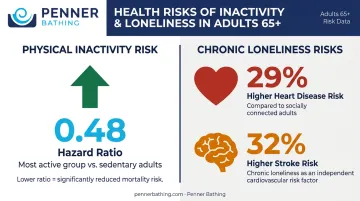
The stakes are significant. A prospective study of 3,633 adults age 65+ followed for 13 years found lower all-cause mortality at every activity level compared to sedentary behavior, with the most active group showing a hazard ratio of 0.48. Separately, the U.S. Surgeon General's advisory reports chronic loneliness is associated with 29% higher heart disease risk and 32% higher stroke risk in older adults.
Under federal regulations (42 CFR 483.24, F679), CMS requires nursing facilities to provide ongoing, individualized activity programs addressing physical, mental, and psychosocial well-being. That means group activities, individual sessions, and independent optionsrather than a single one-size-fits-all calendar.
Strong programs go beyond compliance. The most effective activity directors assess each resident's prior interests, cultural background, cognitive level, and mobility before building a personalized plan. A former teacher and a retired mechanic have different histories, preferences, and needs — their weekly schedules should reflect that.
Fitness and Physical Wellness Activities
Physical activity in a nursing home doesn't mean high-intensity workouts. It means maintaining the strength, flexibility, and circulation that support independence—through accessible, enjoyable movement that works for every mobility level.
Movement and Exercise Options
These activities are widely used in long-term care settings:
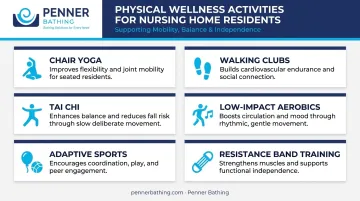
- Chair yoga and wheelchair yoga (WHOGA) — gentle stretching and breathing that improves flexibility and relaxation without requiring standing
- Walking clubs — structured group walks that combine light cardiovascular activity with social connection
- Tai chi and chair chi — a 2023 meta-analysis of 24 older-adult RCTs found tai chi associated with fewer falls (RR 0.76) and improved balance
- Low-impact aerobics and Zumba — rhythm-based movement adaptable to seated or standing participants
- Balloon volleyball and adaptive sports — cornhole, bocce ball, and ring toss keep residents active without joint stress
- Resistance band training — seated strength exercises targeting arms, legs, and core
Gardening and Horticultural Therapy
Gardening counts as physical activity—and its benefits go beyond movement. A 2019 review covering 23 studies and 552 participants found horticultural therapy associated with reduced agitation, greater activity engagement, and meaningful socialization in people with dementia. Whether it's a raised facility garden or small herb pots at a bedside, gardening adapts to virtually any mobility level.
Aquatic Exercise
Where facilities have pools, water aerobics and supervised swimming offer resistance-based exercise with reduced joint stress. A 2017 RCT in seven residential aged-care facilities found twice-weekly aquatic exercise helped preserve strength in residents with advanced dementia over 12 weeks.
Therapeutic Bathing as Wellness
For residents who can't participate in pool or group exercise, hydrotherapy offers a comparable restorative alternative. Whirlpool bathing systems—like those Penner Bathing designs specifically for long-term care facilities—deliver warm-water immersion that supports muscle relaxation, circulation, and sensory stimulation. A therapeutic bath can serve a meaningful physical wellness function for residents with limited mobility, bridging the gap between group activity and individual care.
Creative Arts, Music, and Social Activities
Creative and social programming does two things at once: it stimulates the mind and builds a sense of identity and community within the facility. Residents whose interests are reflected in what's offered report higher satisfaction and stronger engagement.
Creative Arts Activities
- Painting and drawing classes
- Arts and crafts: friendship bracelets, paper folding, floral arrangement
- Pottery and ceramics workshops
- Woodworking projects (adapted tools available for limited dexterity)
- Writing workshops and poetry readings
- Scrapbooking using personal photos and memorabilia
Music Activities
Music connects to memory and emotion in ways that other activities often can't—making it especially effective for residents with cognitive decline or limited mobility. Options include:
- Personalized playlists — music from a resident's formative years, curated to individual taste
- Sing-alongs and karaoke — low-barrier participation with strong mood benefits
- Resident choir clubs — regular rehearsals create routine and community
- Live concerts and musical performances — visiting musicians or staff-led sessions
- Dance nights — ballroom, line dancing, or seated movement to music
Research on personalized music programs shows conflicting results. A 2020 observational study of 4,107 residents in 265 nursing homes reported declines in aggressive behavior and psychotropic medication use following music personalization. However, a 2022 cluster-randomized trial of 976 residents across 54 nursing homes found no significant benefit for agitation or antipsychotic use. Offer music programs for quality-of-life benefits, not as a substitute for clinical intervention.
Social Events and Games
- Bingo, trivia nights, and Scrabble or chess clubs
- Card games: rummy, poker, casino nights
- Movie nights and themed happy hours
- Virtual reality games and simulators (now available in many newer facilities)
- Outdoor games: cornhole, ring toss, croquet
Community outings and intergenerational programs rank among the most impactful activities for reducing isolation. Visits from school children, family game nights, and trips to local restaurants or museums all create meaningful connection outside the facility's daily routine. One quasi-experimental study of 32 nursing home residents over six months found that structured contact with younger generations improved social participation and measurably reduced loneliness and depression.
Cognitive, Therapeutic, and Sensory Activities
Therapeutic activities are different from general recreation. They're intentionally designed to engage specific cognitive, sensory, or emotional functions—particularly important for residents with dementia or memory care needs.
Memory and Cognitive Activities
- Puzzles and brain games — crosswords, word searches, and Sudoku maintain problem-solving engagement
- Trivia and mental aerobics — riddles, category listing, and fill-in-the-blank exercises
- Book clubs and current events discussions — group reading and conversation support language and social cognition
- Guest lectures and lifelong learning workshops — topics tailored to resident backgrounds and interests
- Cooking and baking participation — multi-sensory activity that often triggers autobiographical memory
Sensory and Therapeutic Activities
For residents with dementia or significant cognitive impairment, low-pressure sensory activities help residents stay calm and feel grounded:
- Guided imagery: beach or nature visualizations, or concert recreations via video
- Tactile grounding: holding stones, fabric samples, or familiar objects
- Texture books and soft-material crafts
- Doll therapy — a 2024 scoping review of 12 care-home studies (including six RCTs) generally found reductions in behavioral symptoms and greater resident interaction, though outcomes varied and appropriate consent is essential
- Animal-assisted therapy — certified dogs, cats, and miniature horses provide visual and tactile stimulation; robotic animal alternatives serve residents with allergies or in memory care settings with positive early results in mood and social interaction (though evidence remains mixed)
- Aromatherapy is sometimes offered, but a 2020 Cochrane review of 13 RCTs found no convincing overall benefit for dementia symptoms. Facilities can include it as a comfort measure while being transparent about the limited evidence.
Spiritual and Mindfulness Activities
Residents' spiritual needs deserve the same intentional programming as physical or cognitive activities. Options worth including:
- Meditation circles and breathing exercises
- Coloring for relaxation and fine motor engagement
- Listening to music or nature soundscapes
- On-site religious services and chapel access
- Virtual services via Zoom connecting residents to their home congregations
A 2018 quasi-experimental study in nursing homes found that structured religious programming reduced depressive symptoms and improved quality of life among residents—though cultural context and study design limit how broadly the findings apply. Programming works best when it matches each resident's actual faith background, not a generic one-size-fits-all approach.
How to Evaluate a Nursing Home's Activity Program
When touring a facility, request the monthly activity calendar and ask to speak directly with the activities director. Look beyond the number of events listed.
Questions to Ask During a Tour
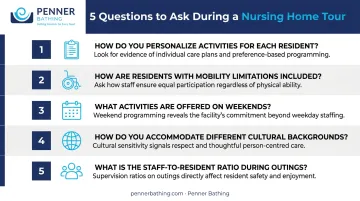
- How are activities individualized? Ask whether residents complete interest assessments on admission and whether those preferences are updated over time.
- How are bed-bound or low-mobility residents included? Strong programs bring activities to residents who can't attend group sessions.
- What happens on weekends? Activity gaps on Saturdays and Sundays are a red flag.
- How are cultural and religious backgrounds incorporated? Programming should reflect who actually lives there.
- What is the staff-to-resident ratio on outings? Safety during community trips depends on adequate supervision.
What to Look For
- Variety across categories: physical, creative, social, cognitive, and spiritual programming should all appear
- Multiple options daily: high-quality facilities don't leave residents with one choice per day
- Physical activity several times per week: the CDC recommends 150 minutes of moderate aerobic activity weekly for adults 65+; nursing home programs should work toward this target within each resident's physical capabilities
- Visible participation: during a tour, observe whether residents look engaged, or whether the common areas are mostly empty
CMS regulations (F679) require programming to stem from comprehensive assessments and individualized care plans. F680 further mandates that a qualified therapeutic-recreation or activities professional directs the program. When a facility meets both standards, it signals residents are receiving care tailored to their needs, not just a schedule built around convenience.
Frequently Asked Questions
What are good activities for nursing home residents?
The best activities match individual interests and abilities. Strong options span every category: chair yoga and walking clubs (fitness), painting and music (creative), bingo and trivia (social), and animal therapy and guided imagery (therapeutic). A well-rounded program ensures no resident is left without something that speaks to them.
What are the 7 activities of daily living?
ADL definitions vary by source. CMS identifies six: bathing, dressing, transferring, walking, toileting, and eating. These are functional tasks separate from recreational programming, though physical and cognitive activities help residents maintain the strength needed to perform ADLs more independently.
What activities are best for nursing home residents with dementia?
Low-pressure, sensory-based activities work best: personalized music playlists, guided imagery, tactile crafts, therapeutic cooking, and animal therapy. They engage emotion and memory directly, sidestepping complex cognitive demands — and research consistently links them to reduced agitation and improved mood.
How often should nursing home residents participate in activities?
Quality facilities offer multiple activity options daily, including weekends, with physical movement scheduled several times per week. For residents with dementia, consistent routine is especially important — predictability reduces anxiety and supports engagement.
Can family members take part in nursing home activities?
Most facilities actively encourage family involvement through designated event nights, intergenerational programming, and open invitations to join regular activities. Some also recruit family members as volunteers for specific programs.
What should I look for in a nursing home activity calendar?
Look for variety across activity types (physical, cognitive, social, creative, spiritual), programming every day of the week, options suited to different mobility and cognitive levels, and evidence that activities reflect residents' actual backgrounds and interests—not just a generic template.