Introduction
Patient safety errors aren't rare outliers — they're a systemic reality. According to the World Health Organization, around 1 in 10 patients is harmed in healthcare settings globally, more than 3 million deaths occur annually from unsafe care, and over 50% of that harm is preventable.
What separates facilities that consistently protect patients from those that don't isn't just a better checklist. It's culture.
A true patient safety culture means systems, leadership, communication, and staff behavior all work together to prevent harm. When these elements align, facilities see measurable reductions in adverse events — and when any one breaks down, the entire system becomes more vulnerable.
This article covers what patient safety culture actually means in nursing, its core components, actionable best practices for nurses and nurse leaders, and how the physical care environment — including bathing equipment — directly affects patient safety outcomes.
Key Takeaways
- Patient safety culture goes beyond protocols — it requires psychological safety, leadership accountability, and continuous learning from errors
- Communication failures drive more than 60% of hospital adverse events; structured tools like SBAR directly cut this risk
- Nurse burnout affects 30.7% of nurses on average and links directly to higher rates of medication errors and missed care
- Falls, HAIs, pressure injuries, and medication errors represent the highest-volume preventable harms in long-term care
- Physical environment choices, including bathing equipment, are direct components of a facility's safety culture
What Is Patient Safety Culture in Nursing?
Patient safety culture is the organizational mindset behind how care is delivered — the shared values, behaviors, and systems that collectively prioritize preventing avoidable harm. In practice, it shows up in how a unit actually behaves when no supervisor is present — not in what's written in a policy manual.
AHRQ defines safety culture as the extent to which an organization's culture supports and promotes patient safety through shared beliefs, values, and expected behaviors. That definition matters because it locates safety in the environment, not just the individual.
Safety Culture vs. Safety Practices
These two things are related but not the same:
- Safety practices are discrete actions — administering medication correctly, using proper PPE, completing a fall risk assessment
- Safety culture is what makes those practices happen consistently, even under pressure, even when staff are tired, even when no supervisor is present
The distinction is important: practices can be mandated; culture has to be built. A strong safety culture includes:
- Psychological safety for staff to report errors without fear of punishment
- Leadership that models and prioritizes safe behaviors
- Systems that learn from near-misses rather than bury them
The Institute of Medicine's foundational framework identifies six dimensions of quality care: safe, effective, patient-centered, timely, efficient, and equitable. Safety anchors all six — when it erodes, the remaining dimensions follow.
Why Patient Safety Culture Matters: The Scale of the Problem
The WHO estimates that 1 in 10 patients experiences harm in healthcare settings — but in long-term care, that risk compounds. Elderly, cognitively impaired, and high-acuity residents carry multiple overlapping vulnerabilities that standard acute-care benchmarks don't capture.
An OIG national study of Medicare SNF residents found that 22% experienced an adverse event during stays of 35 days or less, with another 11% experiencing temporary harm. Critically, 59% of those events were clearly or likely preventable — and medication-related incidents accounted for 37% of all identified harm.
The resident population in these settings is particularly vulnerable:
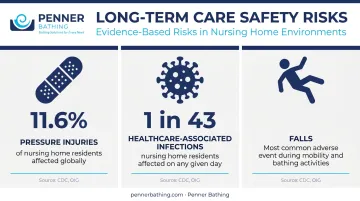
- Pressure injuries affect an estimated 11.6% of nursing home residents globally
- On any given day, approximately 1 in 43 nursing home residents has at least one healthcare-associated infection, according to the CDC
- Falls remain among the most common and consequential safety events, particularly during mobility and bathing routines
A 2023 scoping review found that most included studies reported fewer adverse events as patient safety culture scores improved — covering falls, pressure injuries, and adverse drug events.
A stronger safety culture also correlates with fewer deficiency citations and regulatory complaints, with direct consequences for facility administrators and survey outcomes.
The financial and regulatory stakes are significant. So is the straightforward reality behind the numbers: the majority of these events don't have to happen.
Core Components of a Strong Patient Safety Culture
Psychological Safety and Non-Punitive Error Reporting
Staff will not report errors they fear will be used against them. That's not a character flaw — it's a rational response to a punitive environment.
Amy Edmondson's foundational research defines psychological safety as a shared belief that a team is safe for interpersonal risk-taking. In healthcare, that translates to reporting near-misses, flagging system failures, and speaking up when something looks wrong.
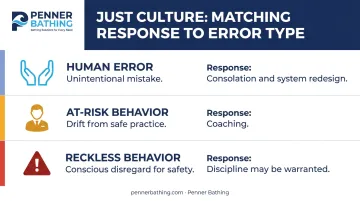
A just culture framework addresses this directly. Rather than treating all errors as individual failures, it distinguishes:
- Human error — warrants consolation and system redesign
- At-risk behavior — warrants coaching
- Reckless behavior — may warrant discipline
This framework encourages transparency without eliminating accountability. Facilities that implement just culture consistently see higher reporting rates and more actionable safety data.
Effective Team Communication and Structured Handoffs
Communication breakdowns contribute to more than 60% of reviewed hospital adverse events, according to Joint Commission data cited in a 2018 systematic review. Shift transitions are particularly vulnerable — information degrades with each transfer.
SBAR (Situation, Background, Assessment, Recommendation) is the most widely adopted standardized handoff tool. Originally developed in the U.S. Navy and adapted for healthcare by Kaiser Permanente, it gives staff a consistent framework for communicating critical patient information concisely and accurately.
The Joint Commission identifies inadequate handoffs as a patient safety risk and recommends standardized content, tools, and structured opportunities for clarifying questions — not just a verbal summary.
Evidence-Based Practice Integration
Protocols become dangerous when they're outdated. Safety culture requires that care decisions stay anchored in current evidence rather than institutional habit.
Examples of evidence-based bundles that measurably reduce harm:
- AHRQ's Safety Program for Long-Term Care reduced CAUTI rates by 54% across more than 400 facilities through catheter management, aseptic technique, and safety-culture integration
- Infection prevention bundles combining hand hygiene, staff education, and antimicrobial stewardship outperform single-intervention approaches
Keeping protocols current is an ongoing organizational responsibility — not a project with a finish line.
Leadership Commitment and Accountability
Safety culture cannot be delegated. Nurse managers and facility administrators set the tone through daily behavior. Staff watch how leaders:
- Respond when errors are reported (with curiosity or blame)
- Treat safety huddles (as essential or optional)
- Handle conflicts between safety and efficiency targets
Staff mirror what leadership models. A manager who dismisses near-miss reports teaches the unit that reporting isn't worth the effort.
Continuous Learning Systems
Incident reporting, root-cause analysis, and regular safety huddles are tools for organizational learning — not just documentation. Facilities with strong safety cultures treat every adverse event as a system-improvement opportunity. The question isn't "who made the mistake?" but "what conditions allowed this to happen?"
Best Practices for Nurses to Enhance Patient Safety
Medication Safety and the "Five Rights"
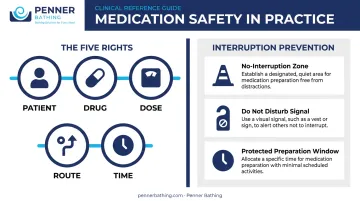
Medication errors account for more than a third of resident harm in skilled nursing facilities. The Five Rights — right patient, drug, dose, route, and time — remain the foundational safeguard.
Additional layers of protection include:
- Double-checking high-alert medications with a second nurse
- Barcode medication administration (BCMA), which reduced nontiming administration errors by 41.4% in foundational hospital research
- Medication reconciliation at every care transition to catch discrepancies before they cause harm
Interruptions during medication administration are a documented risk — a 2025 scoping review confirmed a direct dose-response relationship between interruptions and error rates. Practical mitigation strategies include:
- Designated no-interruption zones during medication preparation
- "Do Not Disturb" visual signals during administration
- Dedicated preparation windows protected from non-urgent communication
Fall Prevention and Safe Mobility Practices
Fall risk isn't static. Nurses should reassess residents — particularly those who are elderly, cognitively impaired, or on fall-risk medications — after any condition change, not only at admission.
Key environmental and procedural safeguards:
- Call light accessibility within reach at all times
- Bed and chair alarm protocols
- Clear pathways free of equipment and clutter
- Mobility assistance protocols that specify when a second caregiver is required
- Explicit fall-risk communication during every handoff
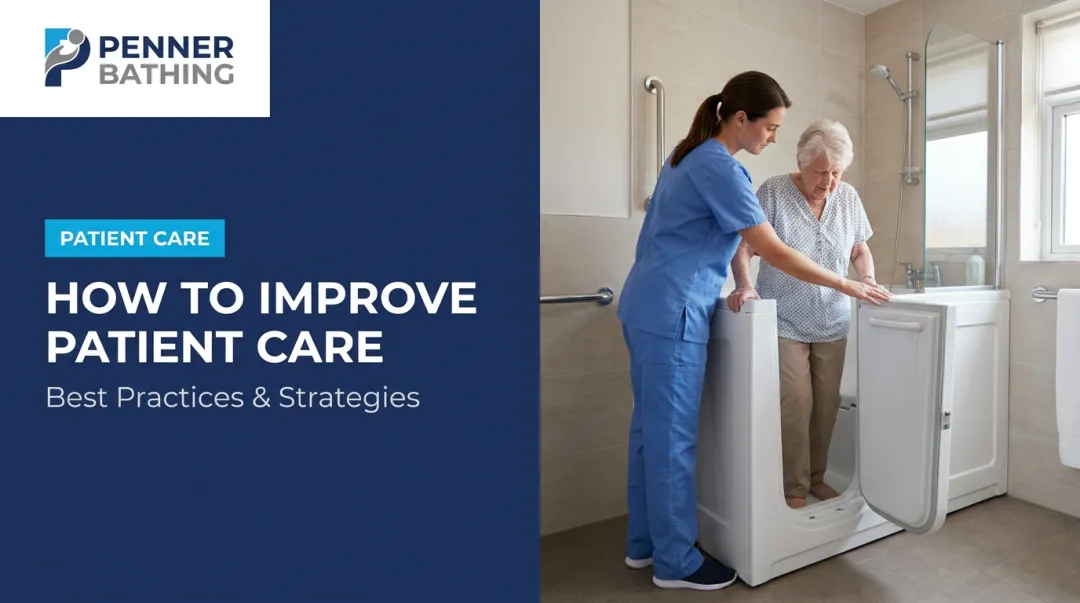
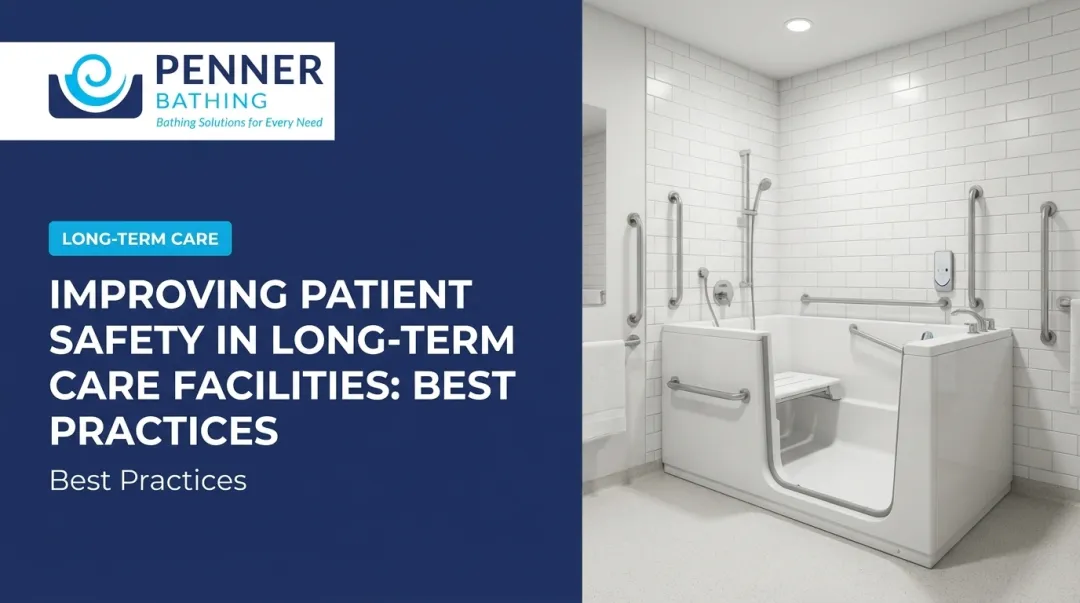
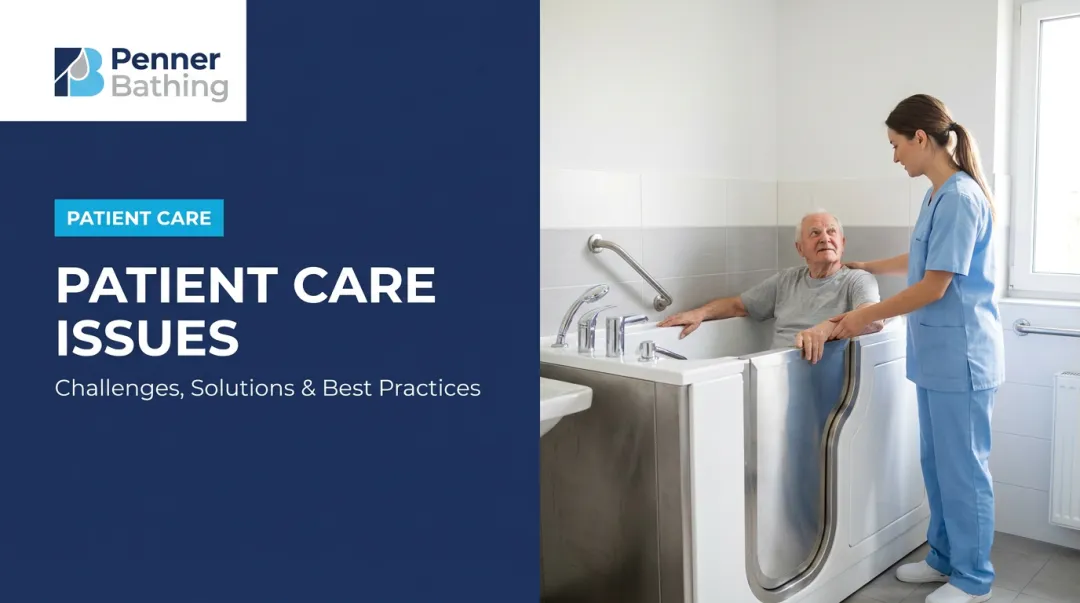
Bathing and toileting activities carry particularly high injury risk. Transfer distance and positioning during bathing are primary injury factors — end-opening and side-entry bathing system configurations, such as those offered by Penner Bathing, are designed specifically to reduce these hazards at the moment of highest vulnerability.
Infection Prevention
Healthcare-associated infections are largely preventable. Core nursing-led practices include:
- Hand hygiene — the single most effective infection prevention intervention
- Proper PPE use, including gowns and gloves for high-contact activities such as wound care and bathing residents under Enhanced Barrier Precautions (per CDC guidance)
- Aseptic technique for catheter care, wound care, and device management
- Early symptom recognition — catching an infection on day one produces significantly better outcomes than catching it on day five
Equipment disinfection is equally critical. In shared bathing environments, manual disinfection is vulnerable to human error — missed surfaces, incorrect concentrations, rushed cycles.
Automatic disinfection eliminates that variability. Penner Bathing's healthcare systems include it as a standard feature across all models, supporting compliance with CMS infection control requirements under 42 CFR 483.80.
Patient Identification and Diagnostic Vigilance
Two-identifier verification before any medication administration, procedure, or care delivery is non-negotiable. Name plus date of birth, or name plus medical record number — never room number alone.
Beyond identification, nurses are primary contributors to diagnostic safety through:
- Monitoring subtle changes in patient condition over time
- Documenting trends accurately and consistently
- Escalating concerns promptly when clinical presentation doesn't fit the expected pattern
Deterioration rarely announces itself clearly. Nurses who document methodically and speak up early are often the ones who catch what others miss.
The Nurse Leader's Role in Driving Safety Culture
Model and Manage Safety Behaviors Visibly
Nurse leaders shape their unit's safety culture through observable daily choices: running safety huddles, responding to reported errors with curiosity rather than blame, and holding the line when efficiency pressures push against safe practices.
Staff adapt to what they see rewarded and punished. When a leader thanks a nurse for reporting a near-miss, the whole unit learns that reporting is safe. When a leader dismisses concerns, the unit learns the opposite.
Address Staffing and Burnout as Safety Issues
A 2024 meta-analysis of 85 studies and 288,581 nurses found mean burnout prevalence of 30.7%, with consistent associations between burnout and higher rates of medication errors, falls, infections, and missed care. AHRQ reports that medication errors were three times more likely when nurses worked shifts longer than 12.5 hours on more than two consecutive days.
Staffing decisions are safety decisions. Adequate ratios, flexible scheduling, and wellness investment directly reduce infection rates, fall incidents, and medication errors — each with documented outcomes tied to how facilities staff their floors.
Build Multidisciplinary Safety Infrastructure
Effective safety culture extends beyond nursing. A multidisciplinary safety committee — including physicians, infection prevention specialists, pharmacy, support staff, and facility administrators — creates accountability that crosses departmental lines.
This committee should:
- Meet regularly to review incidents and near-misses
- Conduct protocol audits with frontline input
- Identify system-level failure patterns that individual units can't see alone
Invest in Education and Competency Development
Leaders are responsible for ensuring staff are trained before new equipment goes live, not after the first error. Structured preparation closes the gap between policy and practice:
- Safety drills run on a regular schedule — not just after incidents
- Protocol updates paired with hands-on training, not just memo distribution
- New equipment orientation completed before staff use it independently
Higher nursing education is associated with better clinical outcomes: studies link greater proportions of BSN-prepared nurses with lower surgical mortality rates. Supporting staff in pursuing advanced education is a long-term safety investment.
Creating a Safer Physical Care Environment for Patients
Patient safety culture has to extend to the physical environment — and in long-term care, the bathing space is one of the highest-risk locations in the entire facility.
Bathing involves two of the most significant safety exposures in care settings: transfer-related falls and cross-contamination between residents. Both are directly addressable through equipment decisions.
Penner Bathing has served long-term care facilities since 1980, manufacturing therapeutic bathing systems built for the realities of nursing home and assisted living care. Their systems address both risk categories in concrete ways:
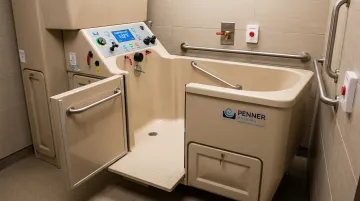
- Automatic disinfection is standard on all models — not an optional add-on. This eliminates the human-error variable inherent in manual disinfection between residents, supporting compliance with CMS infection control standards under 42 CFR 483.80
- Transfer configurations including end-opening and side-entry designs reduce the awkwardness of bathing transfers for residents with limited mobility
- Easy-to-operate controls with clearly labeled panels, digital temperature readouts, and glove-compatible interfaces reduce procedural error during what is already a high-attention task
- Fast-fill reservoir systems across multiple models reduce the time pressure that contributes to rushed decisions and missed steps
Equipment investment also communicates organizational values. A facility that equips its bathing rooms with infection-controlled, purpose-designed systems sends a different message to staff, residents, and families than one making do with outdated equipment. That distinction shows up in staff confidence, family trust, and survey-readiness.
Penner Bathing's systems carry UL and CUL listings and are designed with CMS and Joint Commission compliance as a core requirement — not an afterthought.
Frequently Asked Questions
What is patient safety in nursing?
Patient safety in nursing means preventing avoidable harm during care delivery — covering medication accuracy, infection prevention, fall prevention, clear communication, and early detection of deterioration. It applies across every care interaction, from medication rounds to bathing routines.
What are the key components of patient safety in nursing?
The core components are: safe medication administration using the Five Rights, infection control through hand hygiene and aseptic technique, accurate patient identification, structured communication and handoffs, fall prevention protocols, and consistent monitoring and documentation of condition changes.
What is the role of the nurse in patient safety?
Nurses are the primary line of defense — responsible for monitoring patients continuously, coordinating care across providers, catching errors before they reach patients, and advocating for those who cannot advocate for themselves. No other role stays as close to patient risk throughout a full shift.
What is a patient safety culture and why does it matter?
Patient safety culture is an organization-wide commitment to preventing harm through shared values, transparent error reporting, leadership accountability, and system-based learning. Facilities with strong safety cultures experience fewer adverse events and better regulatory outcomes than those treating safety as an individual responsibility.
How can nurse leaders foster a culture of safety?
Nurse leaders should model safe behaviors visibly, create non-punitive environments for error reporting, conduct regular safety huddles, manage staffing to prevent fatigue-driven errors, and invest in ongoing staff education and competency development.
What are the most common patient safety risks in long-term care?
The highest-volume risks include falls (especially during bathing and mobility), medication errors, pressure ulcers, healthcare-associated infections, and patient misidentification. All can be significantly reduced through proactive safety culture, evidence-based protocols, and appropriate equipment selection.