This guide covers what skilled nursing care actually is, the services provided, how it differs from other care options, who qualifies, how Medicare and Medicaid pay for it, and what to look for when choosing a facility.
One important note upfront: skilled nursing care is a strictly regulated, typically short-term level of care governed by the Centers for Medicare & Medicaid Services (CMS). That regulatory distinction sets it apart from every other senior living option.
Key Takeaways
- Skilled nursing care requires licensed medical professionals — not just aides — and is regulated by CMS
- Medicare Part A covers up to 100 SNF days per benefit period, with the first 20 days fully covered
- The 2026 daily copay for days 21–100 is $217
- SNFs, nursing homes, and assisted living serve different needs — and may share a building
- Use Medicare's Care Compare tool to evaluate any facility before choosing
What Is Skilled Nursing Care?
Medicare defines skilled care as nursing or therapy services that can be performed safely and effectively only by — or under the direct supervision of — licensed professional or technical personnel. That distinction separates skilled care from custodial care, which covers tasks like bathing, dressing, and eating assistance that aides handle without clinical oversight.
Skilled nursing facilities (SNFs) must be certified by CMS and comply with federal regulations under 42 CFR Part 483. State survey agencies conduct unannounced inspections, with CMS making the final certification call. Only CMS-certified facilities can bill Medicare for these services.
What Counts as Skilled Care
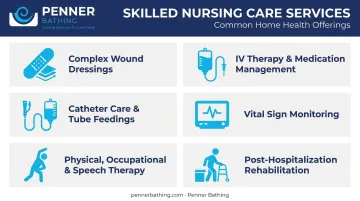
Common examples include:
- Complex wound dressings following surgery
- IV therapy and medication management
- Catheter care and tube feedings
- Vital sign monitoring under physician supervision
- Physical, occupational, and speech therapy
- Blood transfusions and post-hospitalization rehabilitation
Where Skilled Care Is Delivered
Skilled nursing care isn't limited to one building type. It can be provided in:
- Standalone skilled nursing facilities
- Hospital-based SNF units
- Nursing homes with a licensed SNF wing
- Home health agencies (for qualifying homebound patients)
- Some assisted living communities with appropriate licensing
Regardless of the setting, the goal of SNF care is recovery — return to baseline health or independent living — not permanent residency. AHCA data from 2024–2025 reflects this: 64% of nursing facility admissions were short stays, averaging 25 days.
What Services Does a Skilled Nursing Facility Provide?
Rehabilitative Therapies
Physical therapy is the backbone of most post-acute SNF stays. Licensed physical therapists design individualized recovery plans targeting mobility, strength, and function after surgery, stroke, or serious injury. The American Physical Therapy Association identifies PTs as core members of the SNF collaborative care team, using clinical judgment to set treatment frequency and duration based on each patient's needs.
Occupational therapy focuses on helping patients relearn how to perform activities of daily living (ADLs) like dressing, bathing, and cooking. OTs also develop adaptive strategies and recommend devices that support functional independence when full recovery isn't possible.
Speech-language pathology covers communication impairments and swallowing dysfunction — two issues that frequently emerge after stroke or neurological illness. Speech-language pathologists (SLPs) manage conditions including aphasia, cognitive-communication disorders, and dysphagia. ASHA identifies SLPs as the preferred providers for diagnosing and managing oral and pharyngeal dysphagia.
Nursing and Personal Care
Beyond rehabilitation, round-the-clock nursing care forms the other essential pillar of SNF services. SNFs provide 24/7 nursing coverage. Federal regulations require a licensed nurse on duty around the clock and a registered nurse on duty for at least 8 consecutive hours per day, 7 days a week. Registered nurses, licensed practical nurses, and licensed vocational nurses collectively handle:
- Medication administration and management
- Wound care and dressing changes
- Continuous medical monitoring
- Coordination with the supervising physician
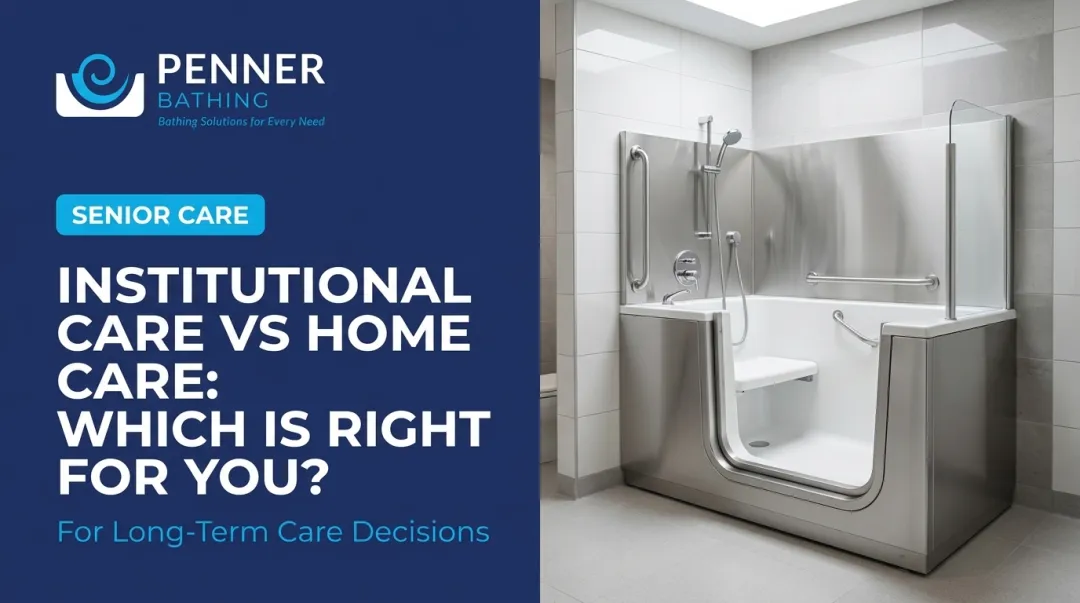
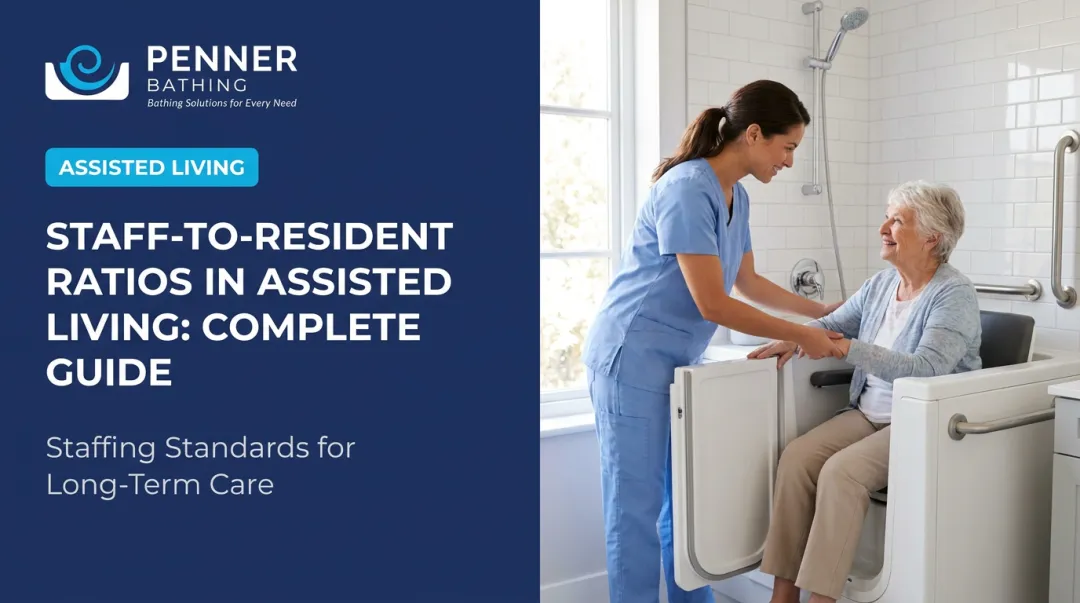
Personal care is equally central to SNF life: safe bathing, hygiene routines, and daily comfort directly affect resident well-being and recovery outcomes. Quality facilities invest in purpose-built therapeutic bathing equipment to meet these needs safely and efficiently.
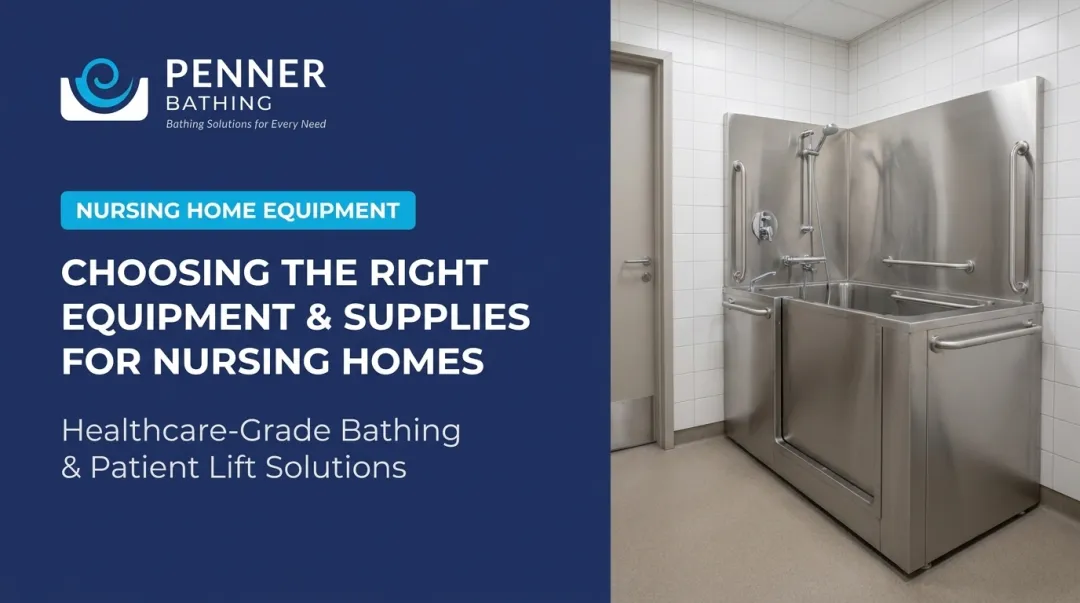
Penner Bathing manufactures healthcare bathing systems — including the Premier, Cascade, and Pacific — designed specifically for long-term care environments. Features like height-adjustable transfer systems, automatic disinfection, and fast-fill reservoirs reduce fall risk, ease staff burden, and support resident dignity at every stage of care.
Skilled Nursing Facility vs. Nursing Home vs. Assisted Living
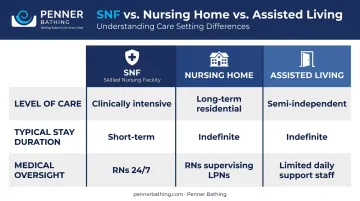
These three terms describe meaningfully different things, even when they exist in the same building.
| Care Setting | Level of Care | Typical Stay | Medical Oversight |
|---|---|---|---|
| Skilled Nursing Facility | Clinically intensive, post-acute | Short-term | RNs providing complex medical care 24/7 |
| Nursing Home | Long-term residential care | Indefinite | RNs supervising LPNs and aides for custodial care |
| Assisted Living | Semi-independent residential | Indefinite | Staff available for limited daily task support |
Assisted living is a residential community where seniors receive help with some ADLs: medication reminders, transportation, and light personal care. Unlike an SNF or nursing home, staff are not equipped to manage complex clinical needs.
A single campus can legally operate all three levels simultaneously — these are often called Continuing Care Retirement Communities (CCRCs) or Life Plan Communities. CMS recognizes dually certified SNF/NF facilities, meaning the same building may participate in Medicare as an SNF and Medicaid as a nursing facility at the same time.
When evaluating any facility, verify the specific certification level that applies to the care your loved one needs. The building's name alone won't tell you which certification governs the unit or floor where care will be provided.
Who Qualifies for Skilled Nursing Care?
Most Common Candidates
- Seniors discharged after surgery, stroke, or serious illness requiring daily medical monitoring
- Individuals with chronic conditions (Parkinson's, COPD, heart failure) needing skilled interventions
- Patients requiring ongoing wound care, IV therapy, or catheter management
- Those with complex medical conditions who cannot safely receive care at home
A 2020 CDC/NCHS analysis of Medicare hospital-to-SNF discharges found the leading admission diagnoses were septicemia (13.4%), heart failure (6.4%), hip fracture (4.9%), pneumonia (3.8%), and urinary tract infection (3.4%).
These diagnoses reflect the medically complex cases Medicare was designed to support — and understanding the qualifying criteria helps clarify who can access that coverage.
Medicare Qualifying Criteria
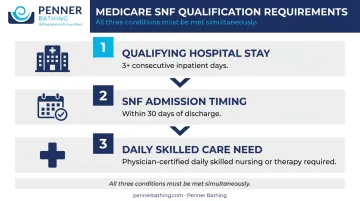
To access Medicare-covered SNF care, a patient must meet all three conditions:
- Qualifying hospital stay — at least 3 consecutive inpatient days (observation time and the discharge day do not count)
- SNF admission timing — within 30 days of hospital discharge
- Daily skilled care need — a physician or provider must certify daily skilled nursing or therapy as medically necessary
Cognitive impairment or dementia alone does not satisfy Part A criteria — the patient must still qualify through the daily skilled-care requirement. Assistance with ADLs alone is custodial and not covered.
How Is Skilled Nursing Care Paid For?
Medicare Coverage
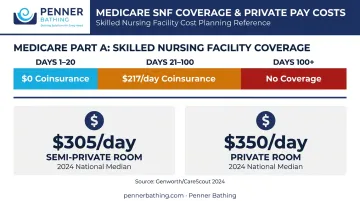
Medicare Part A covers up to 100 SNF days per benefit period following a qualifying hospital stay:
- Days 1–20: $0 daily coinsurance (after the applicable Part A deductible)
- Days 21–100: $217 per day coinsurance in 2026
- After day 100: Medicare pays nothing
A benefit period begins at hospital admission and ends after 60 consecutive days without inpatient hospital or SNF care. A subsequent admission starts a new period, resetting the full 100-day benefit.
Medicare Advantage (Part C) plans must cover the basic SNF benefit but may use different networks, cost-sharing structures, and prior authorization requirements. For 2026, 95% of Medicare Advantage enrollees are in plans requiring prior authorization for SNF stays — so verify your plan's specific rules before admission and understand the appeals process if care is denied.
Medicaid and Private Pay
For those who don't qualify for Medicare or exhaust their benefit days, Medicaid may cover SNF care for eligible low-income individuals. Coverage rules, income and asset thresholds, and reimbursement rates vary by state — consult your state Medicaid agency for current eligibility criteria. Federal Medicaid law requires nursing facility services for eligible individuals age 21 and older.
Private pay rates vary widely by region and room type. Genworth/CareScout's 2024 Cost of Care Survey found national medians of $305 per day for a semi-private room and $350 per day for a private room at Medicare-certified nursing facilities.
A resident may transition from Medicare to Medicaid coverage within the same facility if both certifications apply — and many facilities accept all three payment types.
What to Look for When Choosing a Skilled Nursing Facility
Start With Data
Before touring any facility, review its profile on Medicare's Care Compare tool. The five-star rating system evaluates three domains — health inspections, staffing, and quality measures — but Medicare itself calls the rating a snapshot, not a substitute for visiting. Look at each domain individually rather than relying solely on the composite score.
Verify CMS certification. Only certified facilities can provide Medicare-covered SNF care, and certification status is publicly searchable.
Evaluate the Therapy Program
Ask direct questions:
- Are PT, OT, and speech therapy staff employed in-house or contracted?
- How many therapy hours does the typical resident receive daily?
- How individualized is the care planning process?
High-quality SNFs create individualized care plans from the first day — tailored to each resident's condition and recovery goals, not applied one-size-fits-all.
Tour the Physical Environment
During any facility visit, assess:
- Cleanliness and odor — unannounced visits at different times of day reveal more than scheduled tours
- Safety modifications — grab bars, non-slip flooring, accessible bathrooms, adequate lighting
- Specialized adaptive equipment — look for purpose-built bathing systems, ceiling lifts, and transfer aids that reduce fall risk and support staff during daily care routines
- Staff interactions — observe how staff speak to and handle residents, not just during the tour
Medicare's official nursing home checklist also recommends asking about abuse screening practices, staff turnover rates, resident rights policies, and infection prevention protocols.
Frequently Asked Questions
What is the average cost per day in a skilled nursing facility?
National medians in 2024 were $305 per day for a semi-private room and $350 for a private room, according to Genworth/CareScout's survey of Medicare-certified facilities. Rates vary significantly by region, facility type, and whether you're paying privately versus through Medicare or Medicaid. Contact individual facilities and consult CMS resources for current local pricing.
What is considered skilled care in a nursing home?
Skilled care means services that must be performed by or under the supervision of licensed medical professionals. Examples include wound care, IV therapy, catheter management, tube feedings, medication management, and rehabilitative therapies (PT, OT, and speech). These differ from custodial care tasks such as bathing assistance or dressing help.
How long can someone stay in a skilled nursing facility?
Medicare covers SNF care for up to 100 days per benefit period — the first 20 at no daily cost-share and days 21–100 at $217 per day in 2026. Coverage may end sooner if the patient no longer demonstrates medical necessity or measurable improvement as defined by their insurer.
What is the difference between a skilled nursing facility and home health care?
An SNF is a residential care setting with round-the-clock medical and rehabilitative services. Home health delivers a more limited range of skilled services, such as wound care or PT visits, directly in the patient's home to qualifying homebound individuals.
Does Medicare cover skilled nursing facility care?
Yes. Medicare Part A covers SNF care following a qualifying 3-day inpatient hospital stay, covering the first 20 days in full and requiring a $217 daily copay for days 21–100 in 2026. Medicare pays nothing beyond 100 days per benefit period.
What should I look for when choosing a skilled nursing facility?
Review CMS Care Compare ratings, verify CMS certification, and evaluate staffing levels and therapy program quality. Tour the facility in person — ideally more than once — to assess cleanliness, safety features, adaptive equipment, and whether care appears person-centered and dignity-focused.