Introduction
Caregiving is one of the most demanding relationships a person can hold — a daily commitment where trust either builds or erodes with each interaction. According to AARP's 2025 Caregiving in the U.S. report, approximately 63 million Americans — about 1 in 4 adults — now provide unpaid care for a family member or loved one.
Most enter the role without preparation. Only 11% of family caregivers report receiving any formal training for daily care tasks, according to the same 2025 report. When caregiving happens without relationship-building, it often becomes a source of frustration for both parties — and patients can be left feeling like a burden rather than a person.
This article covers what the caregiver-patient relationship actually looks like in practice: how trust forms, why dignity in daily care determines outcomes, and how communication and caregiver wellness sustain the bond over time.
Key Takeaways
- Meaningful caregiver-patient relationships are built on trust, empathy, and consistency — not just task completion.
- Structured caregiver engagement measurably reduces rehospitalization rates.
- Dignity during personal care — especially bathing — directly affects a patient's emotional safety and willingness to cooperate.
- Caregivers who neglect their own health cannot sustain meaningful care long-term.
- Compassionate communication reduces patient anxiety and strengthens the care partnership.
What Is the Caregiver-Patient Relationship?
The caregiver-patient relationship is a partnership — not a one-way service transaction. A caregiver tends to physical, emotional, and social needs, while the patient remains an active participant in decisions about their own care. When patients are treated as passive recipients, care becomes less effective and the relationship erodes.
Johns Hopkins describes this dynamic through its Called to Care program, which uses a three-part framework: the care recipient, the family or informal caregiver, and the professional care team each function as one leg of a supporting structure. Remove any one of them, and the whole system becomes unstable.
Why the Relationship Shapes Health Outcomes
This is not just philosophical. A 2022 meta-analysis of 54 randomized controlled trials involving 31,291 participants found that transitional care interventions incorporating structured caregiver engagement were associated with an 18% lower rehospitalization rate at two or more months (RR 0.82, 95% CI 0.74–0.92). The mechanism was structured engagement — not relationship quality alone — but the implication is clear: when caregivers are meaningfully integrated into care, patients fare better.
Beyond hospitalization rates, the relationship shapes outcomes in several interconnected areas:
- Medication adherence — patients are more consistent when they trust the person overseeing their care
- Response to treatment — cooperation improves when patients feel heard, not managed
- Emotional well-being — a stable, respectful dynamic reduces anxiety and supports recovery
Types of Caregivers and Their Roles
Understanding who provides care — and what they bring to the relationship — is the first step in recognizing how each caregiver type can build a more meaningful bond.
The Four Primary Caregiver Types
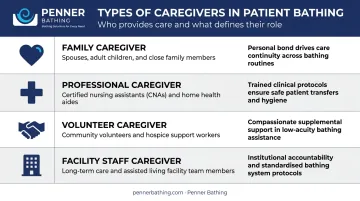
| Caregiver Type | Who They Are | What Defines the Role |
|---|---|---|
| Family/Informal | Spouses, adult children, friends | Relationship-based, unpaid, emotionally invested |
| Professional | CNAs, home health aides, nurses | Trained and compensated, clinically structured |
| Volunteer | Community or faith-based supporters | Supplementary care, socially motivated |
| Facility-Based | Nursing home and assisted living staff | Shift-based, regulated by facility and federal standards |
Each type brings different strengths to the relationship:
- Family caregivers provide continuity and emotional depth rooted in shared history
- Professional caregivers deliver clinical knowledge and consistent, structured routines
- Volunteer caregivers reduce social isolation through community connection
- Facility staff coordinate care across shifts using established plans and protocols
What Caregivers Actually Do
The 2020 AARP/NAC Caregiving in the U.S. report found that 99% of adult caregivers assist with instrumental activities of daily living, averaging 4.4 tasks, while **60% perform at least one personal care activity** like bathing, grooming, or dressing. Common duties include:
- Personal hygiene (bathing, grooming, toileting)
- Medication management and administration
- Meal preparation and feeding assistance
- Transportation to appointments
- Mobility support and fall prevention
- Communication with doctors and nurses
- Emotional support and companionship
None of these tasks are purely logistical. How a caregiver handles a bath or a medication reminder shapes whether the patient feels respected or managed — and that distinction defines the quality of care.
Building Trust and Emotional Connection
Trust between a caregiver and patient builds through repetition: showing up consistently, following through on commitments, and staying calm when things get difficult.
A patient who does not trust their caregiver tends to withdraw, resist help, and grow more anxious over time. That distrust has real consequences — missed medications, refused personal care, and declining emotional health.
Active Listening and Emotional Validation
There is a meaningful difference between hearing a patient and actually listening. Active listening requires:
- Maintaining eye contact without distraction
- Not rushing responses — allowing space for the patient to finish their thought
- Asking open-ended questions ("What would make this easier for you?")
- Reflecting back what you hear to confirm understanding
Equally important is emotional validation — acknowledging that a patient's fear, grief, or frustration about their condition is legitimate. Simply naming an emotion ("I can see this is really frustrating for you") often does more to strengthen the relationship than offering a solution.
Patience and Small Consistent Gestures
Listening and validation set the tone, but patience sustains it. Patients experiencing cognitive decline, chronic pain, or emotional distress may be uncooperative or withdrawn. Responding with calm — rather than frustration — consistently de-escalates tension and gives patients a sense of stability they can rely on.
Small, consistent gestures also carry significant weight:
- Remembering a patient's preferred meal, music, or daily routine
- Celebrating small progress milestones
- Picking up on changes in mood or behavior before the patient voices them
For patients with limited verbal communication, these gestures are often the primary language of the relationship.
Maintaining Patient Dignity in Daily Care
Federal nursing home regulations require that residents have the right to a **dignified existence, self-determination, privacy in personal care, and participation in treatment decisions** (42 CFR § 483.10). Dignity is not a courtesy — it is a measurable care standard.
Patients who feel respected as whole persons engage more openly with their care and report better emotional outcomes. Those who feel reduced to a diagnosis or a set of limitations tend to withdraw — and that withdrawal makes every subsequent interaction harder.
Personal Care as a Trust-Building Moment
Bathing, in particular, is among the most vulnerable moments in the caregiver-patient relationship. A person who cannot bathe themselves independently is placing enormous trust in the caregiver's hands. How that task is approached — whether with warmth and privacy or with clinical detachment — shapes the patient's sense of safety.
Purpose-built bathing systems for long-term care can reduce both the anxiety and physical risk that bathing creates for residents and staff. Penner Bathing's healthcare bathing systems are engineered with that dynamic in mind. Key features include:
- Three-point access (left, right, and end opening) so staff can assist from multiple angles without awkward repositioning
- Rail-free spa design that creates a calmer, less institutional environment
- Flat-screen TV integration on select models, which can reduce distress for residents with dementia during bathing
- Neutral color tones (sand and light beige) paired with a fast-fill reservoir that cuts wait times and limits the period a resident feels exposed
- Automatic disinfection standard on all models, maintaining infection control without adding caregiver burden

That combination — physical safety, reduced anxiety, and lower staff workload — directly supports the kind of consistent, unhurried care that builds trust over time.
Preserving Autonomy and Privacy
Even patients with significant physical limitations deserve choices wherever possible:
- Preferred bathing time (morning vs. afternoon)
- Water temperature within safe ranges
- Which clothing to wear after bathing
Small as they seem, these choices reinforce something essential: that the patient retains control over their own life. That sense of agency directly affects how patients respond to care — and how much they trust the people providing it.
Privacy practices matter equally: knocking before entering, using proper draping, and narrating care steps before performing them. No patient should be caught off-guard during personal care.
Communication Strategies That Strengthen the Bond
Clear communication reduces patient anxiety. The Alzheimer's Association recommends that caregivers speak directly to the person, maintain eye contact, allow extra response time, and avoid interrupting — guidance that applies broadly, not just in dementia care.
Caregivers as Patient Advocates
In most care situations, the caregiver is the patient's primary link to the broader healthcare system. They observe daily changes, flag concerns, and translate complex medical information back to the patient. To do this effectively:
- Keep a care journal documenting daily changes in condition, mood, appetite, and behavior
- Use a communication log to track what was reported to clinical staff and when
- Prepare specific observations for appointments rather than general updates
This kind of organized advocacy directly improves patient outcomes and builds the trust that makes care relationships work.
Difficult Conversations and Social Connection
Hard conversations — about declining condition, resistance to care, or end-of-life preferences — should be approached with honesty and a focus on what the patient values most, not what is clinically convenient. Avoiding these conversations does not make them easier; it makes them more urgent later.
Those same conversations often reveal another gap worth addressing: social isolation. Caregivers should support the patient's broader social world by helping them maintain contact with family and friends — even via phone or video calls. According to the CDC, social isolation is associated with approximately 50% higher dementia risk, 29% higher heart-disease risk, and 32% higher stroke risk. Regular, meaningful social connection is part of the care plan.
Caregiver Wellness: Sustaining the Relationship Long-Term
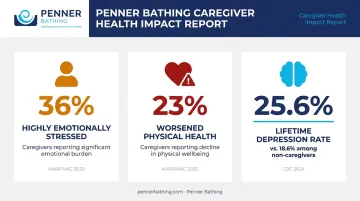
A caregiver cannot give what they do not have. The data here is clear: 36% of family caregivers describe caregiving as highly emotionally stressful, and 23% report that caregiving has worsened their own physical health, according to the 2020 AARP/NAC report. A CDC analysis published in 2024 found lifetime depression rates of 25.6% among caregivers, compared to 18.6% among non-caregivers.
Burnout does not just hurt the caregiver. It also degrades the quality of care the patient receives.
Practical Self-Care Strategies
- Schedule regular breaks — even short ones disrupt the cycle of depletion
- Accept help from other family members, neighbors, or community volunteers
- Use respite care so the primary caregiver can recover without leaving the patient unattended
- Set realistic expectations about what one person can sustain over months or years
Building a Support Network
Peer support groups, professional counseling, and programs like the National Family Caregiver Support Program are practical tools that make long-term caregiving sustainable. Caregivers who use them tend to bring more patience and emotional steadiness to daily care. Key resources worth exploring:
- Peer support groups — connect with others managing similar caregiving demands
- Professional counseling — address burnout before it affects care quality
- National Family Caregiver Support Program — federally funded respite, training, and supplemental services
Frequently Asked Questions
What are the 4 types of caregivers?
The four primary types are family/informal caregivers (unpaid loved ones such as spouses or adult children), professional caregivers (trained and paid individuals like CNAs and home health aides), volunteer caregivers (community or faith-based supporters), and facility-based caregivers (nursing home or assisted living staff). Each differs in their relationship to the patient, scope of duties, and level of formal training.
What are signs of caregiver stress?
Common warning signs include persistent exhaustion, increased irritability, withdrawing from social activities, neglecting personal health appointments, and feeling resentment or hopelessness. Caregivers experiencing these signs should seek support through a peer group, counselor, or respite services — untreated stress directly affects care quality.
Will SSI pay a family member to be a caregiver?
SSI does not directly pay family members for caregiving. However, some state Medicaid programs offer self-directed care options that allow participants to hire and compensate family members. Eligibility and rates vary by state — contact your state's Medicaid office or a benefits counselor for specifics.
How do caregivers build trust with patients?
Trust builds through consistency — showing up reliably, following through on commitments, respecting patient preferences, and listening without dismissing concerns. Over time, these behaviors communicate safety, making patients more open and more willing to share honestly about their needs.
How can caregivers protect the dignity of patients during personal care?
Knock before entering, explain each care step before performing it, use proper draping for privacy, and offer choices wherever possible — preferred bathing time, water temperature, clothing selection. Using equipment designed for accessibility and comfort, rather than forcing patients to adapt to poorly suited environments, also communicates respect for their personhood.
What is the difference between a family caregiver and a professional caregiver?
Family caregivers are typically unpaid loved ones whose role is shaped by emotional history and daily proximity. Professional caregivers are trained, compensated individuals whose scope is defined by clinical or facility standards. The strongest care outcomes happen when both work as coordinated partners — each bringing something the other cannot fully replicate.