Bathroom adaptations aren't about acknowledging limitation. They're about preserving independence, dignity, and the ability to stay home on your own terms. According to AARP's 2024 survey, 75% of adults 50+ want to remain in their current home — and among those planning accessibility work, 72% specifically identified bathroom changes as a priority.
This guide covers everything from low-cost safety aids to full accessible bathroom conversions: grab rails, non-slip solutions, walk-in showers, wet rooms, walk-in baths, toilet adaptations, and wheelchair-specific modifications — plus guidance on choosing the right solution for your situation.
Key Takeaways
- Bathrooms account for 22.7% of at-home falls among older adults that result in an ER visit
- Small changes — grab rails, non-slip mats, raised toilet seats — cut fall risk without major expense
- Walk-in showers, wet rooms, and walk-in baths each suit different mobility levels and budgets
- Wheelchair access requires doorway widening (32+ inches), a 60-inch turning circle, and careful fixture placement
- Consult an occupational therapist before committing to major structural changes
Why Bathrooms Are Uniquely Hazardous
Wet floors. Hard porcelain surfaces. High tub rims. Low toilet seats. These hazards don't just coexist — they compound each other for anyone with limited mobility, balance issues, or sensory impairment.
CDC data from a national study of 2015 emergency department visits found that bathrooms accounted for 22.7% of at-home falls among adults 65+ that led to an ER visit — making them one of the three most dangerous rooms in the home, alongside bedrooms (25%) and stairs (22.9%). Critically, a bathroom fall carries 2.4 times the injury odds of a living room fall.
The Mobility Challenges That Make Bathrooms Dangerous
Most bathroom injuries stem from a handful of predictable physical difficulties:
- High tub rims require lifting the leg over a barrier — nearly impossible with hip or knee limitations
- Low toilet seats demand the strength and joint flexibility to lower and raise the body from a very low position
- Round tap controls require firm grip and fine motor control, which arthritis or stroke recovery can eliminate
- Wet, hard floors offer zero friction and zero forgiveness if balance fails
- Poor lighting or low contrast makes edges, steps, and surface changes invisible to visually impaired users
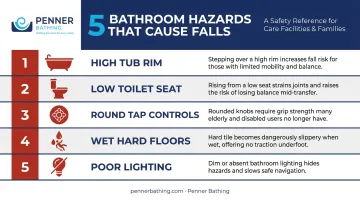
Each of these hazards narrows independence — and none is more consequential than the bathroom's role in aging in place.
Aging in Place: Why the Bathroom Matters Most
"Aging in place" — remaining in your own home rather than transitioning to a care facility — is the goal for most older Americans. The bathroom is often the deciding factor. It's the room people use multiple times daily, where privacy matters most, and where a single fall can force an abrupt change in living situation. Addressing these hazards directly is what keeps independent living viable — not just now, but for the long term.
General Safety Aids: High Impact, Lower Cost
Not every adaptation requires construction. Several safety aids deliver meaningful protection with minimal installation effort or expense.
Grab Rails and Assistance Poles
Grab rails are structural supports anchored into wall studs, designed to bear weight during the critical moments of sitting, standing, and moving through the bathroom. They can be positioned beside the toilet, inside the shower, at the bath entry, or near the sink.
Key considerations:
- Wall anchoring matters: a rail attached to drywall only (not studs) will pull free under load — always anchor into studs
- ADA benchmarks recommend horizontal rails at 33–36 inches above the floor with 1.5-inch wall clearance, built to support 250 lbs
- Installed cost runs roughly $200–$350 per bar, including professional fitting
- Finish options include brushed nickel, matte black, and teak — most blend cleanly with contemporary bathroom designs
Where wall mounting isn't feasible, floor-to-ceiling assistance poles offer a freestanding alternative that requires no drilling.
Non-Slip Surfaces and Emergency Pull Cords
Traction loss on wet surfaces is one of the most common causes of bathroom falls. Several low-cost options address this directly:
- Anti-slip bath mats (from around $6 at home improvement stores) reduce traction loss on wet tub floors
- Adhesive non-slip strips applied directly to existing tile eliminate slipping without full floor replacement
- Contrast tape along step edges and tub rims adds both traction and visual definition
Emergency pull cords are an underused but practical addition: a corded alarm placed within reach of the tub or shower floor allows users to call for help without wearing a device while bathing. For anyone living alone, placement near floor level — not just wall height — ensures it's reachable if a fall occurs.
Shower Seats and Bath Lifts
| Option | Best For | Approximate Cost |
|---|---|---|
| Foldable shower seat | Limited space, moderate mobility | $140–$393 |
| Fixed shower seat | Permanent installation, daily use | Similar range |
| Powered bath lift | Getting in/out of existing tub | Starting around $449 |
| Bath cushion | Moderate mobility, budget-conscious | Lower cost, portable |
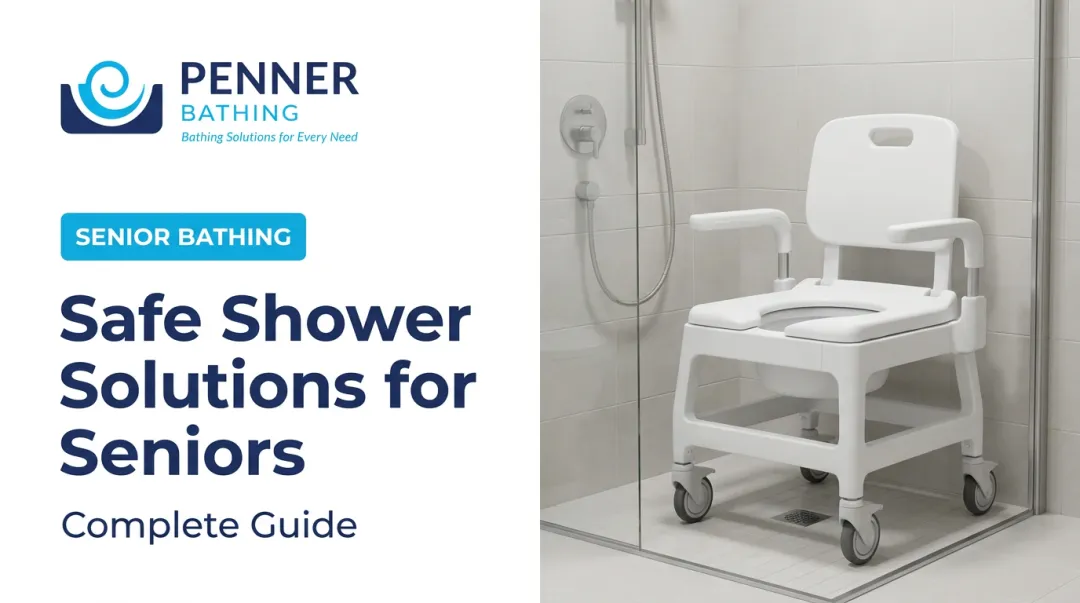
Shower seats reduce fall risk by eliminating the need to stand throughout washing. Bath lifts mechanically lower and raise users into a standard tub — a practical option for households that want to keep an existing bathtub without a full walk-in bath installation.
Adaptations for Visual Impairment
For visually impaired users, contrast is as important as physical support. Dark grab rails against light walls, colored toilet seats against white porcelain, and contrasting floor-to-wall color transitions help users distinguish surfaces and edges without relying on fine visual acuity.
Voice-activated or large-button shower controls replace standard dials that require both precise grip and clear sight to operate — a direct benefit for users managing both vision loss and reduced hand strength simultaneously.
Accessible Bathing: Walk-In Showers, Wet Rooms, and Walk-In Baths
When grab rails and mats aren't enough, the bathing unit itself needs to change. Three options dominate — and each suits a different mobility profile.
Walk-In Showers
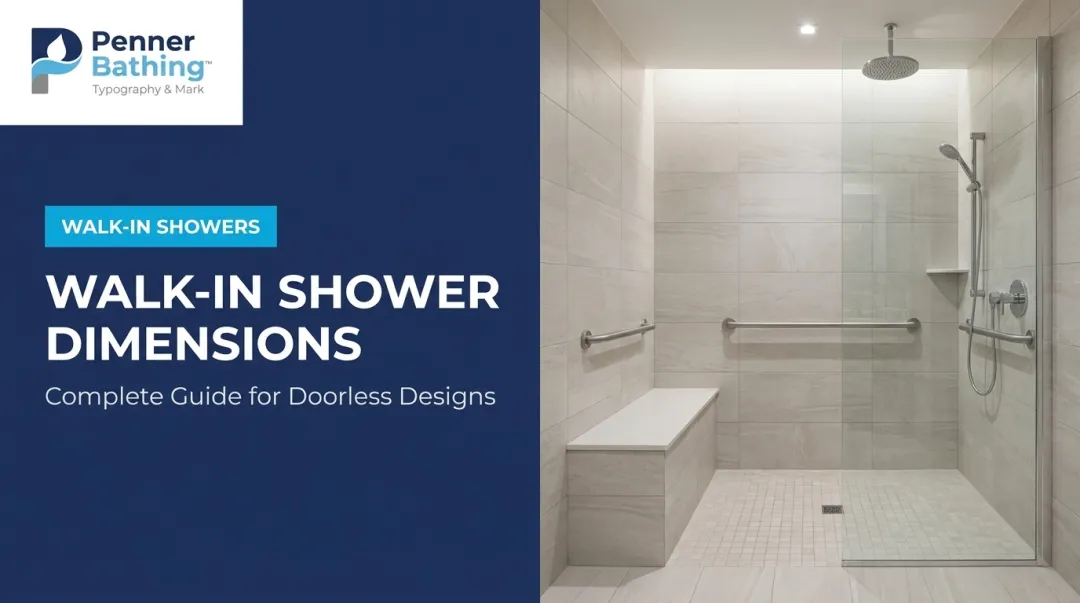
Walk-in showers feature a very low threshold (typically around 35–40mm) and an open design with no doors to navigate. They work well for people who can walk independently but cannot safely step over a conventional bath rim. Benefits include:
- Easy entry for ambulant users and their carers
- Space for a shower seat or wheelchair transfer
- Simpler cleaning than enclosed shower cubicles
- Installed cost: $6,000–$12,000
Wet Rooms
A wet room is a fully waterproofed bathroom where the shower area has no threshold — the floor drains flush with the surrounding surface. This is the maximum-accessibility option:
- Zero step means no transfer barrier whatsoever
- Maximum floor space for wheelchair maneuvering
- Modern, open aesthetic that doesn't look "medical"
- Installed cost: $6,000–$20,000, averaging around $13,000
Installation complexity is the main drawback. A wet room requires complete waterproofing of walls and floor, and failed waterproofing causes extensive damage. Professional installation is non-negotiable.
Walk-In Baths
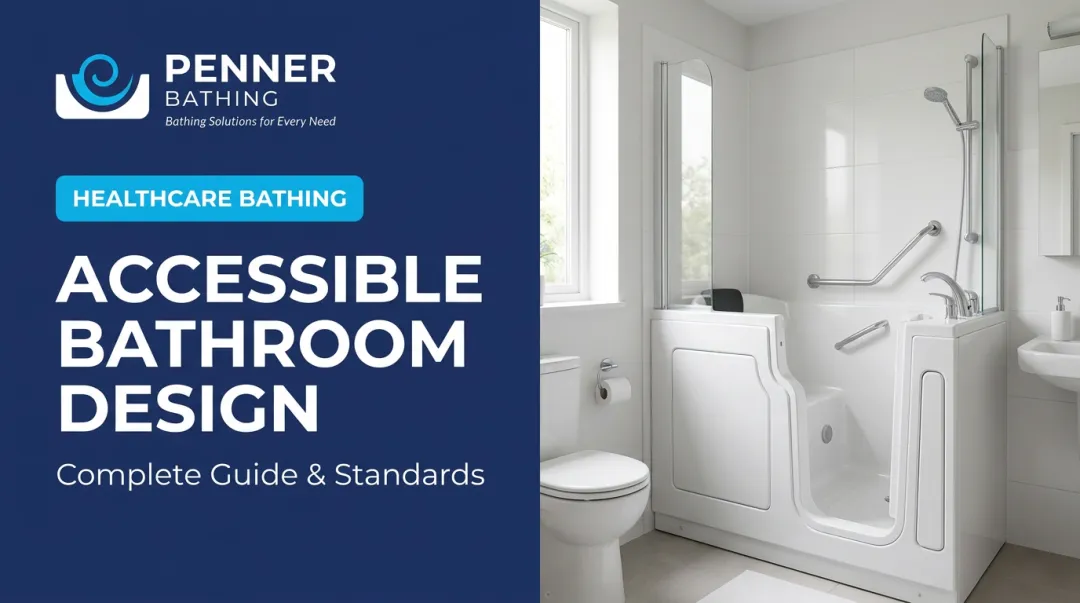
Walk-in baths have a watertight side door that eliminates the need to step over a high rim. The user enters, seals the door, fills the tub, bathes, drains the water, and then exits. That fill-and-drain sequence is the key practical difference from a shower — users must wait inside while the tub drains before opening the door.
For those who want full immersion rather than showering, walk-in baths offer something showers can't: hydrotherapy. Penner Bathing's Dream Spa Walk-In Bath is one example built around this:
- Aqua-Aire Jet System circulates water to soothe muscles and joints
- Heated seat and back support, noted as beneficial for arthritis and muscle tension
- Optional PennAire Microbubble Technology delivers oxygenated microbubbles for gentle therapeutic cleansing
- Available in 38+ models and 40+ spa combinations to fit varying home layouts
Walk-in bath cost: $4,000–$22,100, including installation.
Comparing the Three Options
| Walk-In Shower | Wet Room | Walk-In Bath | |
|---|---|---|---|
| Threshold | Low (35–40mm) | Zero | Side door |
| Best for | Ambulant users | Wheelchair users | Soaking, hydrotherapy |
| Carer access | Good | Excellent | Moderate |
| Installed cost | $6K–$12K | $6K–$20K | $4K–$22K |
| Structural work | Moderate | Significant | Moderate |
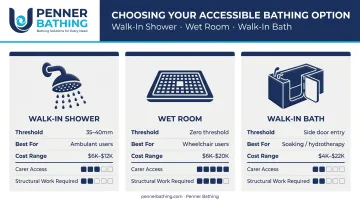
No single option is universally superior. The right choice depends on mobility level, bathroom dimensions, whether soaking is important, and budget.
All three options require professional installation. Shortcuts — whether a poorly anchored grab rail or inadequate wet room waterproofing — create new hazards rather than solving old ones.
Toilet Adaptations for Comfort and Independence
Standard toilets sit at roughly 15–17 inches — a height that creates real difficulty for anyone with knee, hip, or lower body weakness. The lower the seat, the more muscular effort and joint strain it takes to sit and stand.
Raised Seats and Comfort-Height Toilets
- Raised toilet seats clamp onto existing toilets and add height immediately. Retail prices range from around $32 to $200, making them one of the most affordable adaptations available.
- Comfort-height toilets (also called chair-height) are built at 17–19 inches — the ADA benchmark for accessible facilities — and replace the existing fixture. A basic model starts around $199.
The few extra inches make a genuine difference for daily function, especially after hip or knee replacement.
Specialized Toilet Features
For users with limited upper body mobility or dexterity:
- Auto wash/dry bidet toilets eliminate the need for manual wiping, giving users greater hygiene independence without physical strain. Prices range from roughly $379 to $2,300 depending on features.
- Powered toilet lifts automatically elevate and tilt the seat, enabling users with significant lower body weakness to sit and stand with minimal exertion. Models typically run $1,599–$1,999.
Rails and Flush Controls
Two low-cost additions that significantly improve toilet independence:
- Drop-down grab rails fix to the wall beside the toilet and provide stable leverage for sitting and standing
- Lever-style or sensor-activated flush controls replace standard buttons for users with limited grip or hand strength
Wheelchair-Accessible Bathroom Modifications
Adapting a bathroom for wheelchair use means thinking about the whole space as a system, not just swapping out individual fixtures.
Doorways and Door Types
Standard interior doorframes are often too narrow for wheelchairs. The ADA minimum is a 32-inch clear opening; many accessibility guidelines recommend 36 inches for comfortable maneuvering.
Key doorway considerations include:
- Doorway widening: Costs between $701 and $8,056, averaging $4,370
- Inward-swinging doors: Difficult to close from inside a wheelchair — avoid where possible
- Sliding or pocket doors: Eliminate the swing-clearance problem entirely; retrofit runs $800–$2,950
Basins, Turning Space, and Controls
- Floating wall-mounted basins with open knee clearance allow wheelchair users to pull directly in front of the sink. Installed cost: $250–$1,050.
- Turning radius: ADA standards require a minimum 60-inch diameter circular turning space — about the footprint of a small bathroom. If an existing bathroom can't accommodate this, layout changes or a room extension may be necessary.
- Switch and control placement: The ADA and Fair Housing guidelines recommend an accessible reach range of 15–48 inches for unobstructed controls, with forward-reach limits over obstructions. Light switches, outlets, and shower controls should all be verified against this range for seated users.
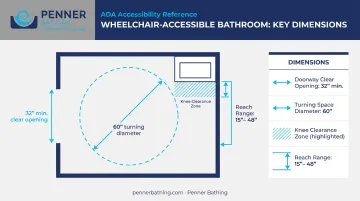
Each element depends on the others. A wide door loses its value if the turning radius inside is too tight, and a perfectly placed basin is undermined by controls a seated user can't reach.
How to Choose the Right Bathroom Adaptation
Start with a Needs Assessment
Before spending on major adaptations, consult an occupational therapist (OT). An OT evaluates specific conditions — arthritis, MS, stroke recovery, visual impairment, dementia — alongside the actual layout of your home, and recommends targeted changes rather than generic ones. OTs can be accessed through primary care referrals, local health departments, or privately.
Note: Medicare covers OT home assessments when the patient meets homebound criteria and needs medically necessary skilled care — though it does not fund the construction work itself.
Plan for Future Needs, Not Just Today
A walk-in shower that works now may need additional grab rails or a shower seat within a few years. Reinforcing walls during initial renovation — even if rails aren't installed yet — avoids expensive rework later. Widening doorways once is far cheaper than doing it twice.
Budget Realistically and Phase Your Approach
A phased approach makes sense for most households:
- Phase 1 (immediate): Grab rails, non-slip mats, raised toilet seat, emergency pull cord — typically under $500 total
- Phase 2 (medium-term): Shower seat, better lighting, high-contrast fixtures
- Phase 3 (major renovation): Walk-in shower, wet room conversion, or walk-in bath installation
Financial Assistance Options
Several US programs may offset costs:
- Medicaid HCBS waivers — cover environmental accessibility adaptations in many states; eligibility and limits vary
- USDA Section 504 — loans up to $40,000 for very-low-income rural homeowners; grants up to $10,000 for homeowners 62+ unable to repay
- VA Specially Adapted Housing grants — up to $126,526 (SAH) or $25,350 (SHA) for qualifying veterans with service-connected disabilities
- State programs — Colorado, New York, and Massachusetts each have documented home modification programs with specific bathroom scope
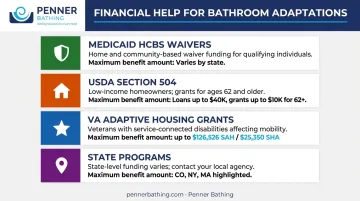
Contact your local Area Agency on Aging or state social services office to determine eligibility before choosing a contractor or design.
Once funding is confirmed, selecting the right equipment becomes the next step. For residential walk-in bathing, Penner Bathing carries 38+ models built specifically for aging-in-place use, with phone support available to help homeowners match a system to their situation.
Frequently Asked Questions
What is an adapted bath?
An adapted bath is any bathtub modified or purpose-built to improve accessibility for people with limited mobility or age-related changes. Examples include walk-in baths with a side door, standard tubs fitted with grab rails and non-slip surfaces, or baths with integrated seats or powered lifts.
What bathroom modifications help prevent falls for elderly people?
The most effective fall-prevention changes are grab rails near the toilet, shower, and bath; non-slip mats or flooring; motion-sensor lighting; removal of loose rugs; and replacing high-threshold baths with walk-in showers or wet rooms.
What is the safest bathing option for someone with limited mobility?
Wet rooms offer the highest accessibility due to their zero-threshold design, followed by walk-in showers with low-profile trays. Walk-in baths suit those who prefer soaking but cannot step over a conventional tub rim — the best fit depends on mobility level and available space.
How much do bathroom adaptations typically cost?
Grab rail installation runs $200–$350 per bar; raised toilet seats retail from $32. Walk-in showers cost $6,000–$12,000 installed; wet rooms $6,000–$20,000; walk-in baths $4,000–$22,100. Get scope-specific quotes, as waterproofing, plumbing, and finishes drive significant cost variation.
Can I get financial help to pay for bathroom adaptations?
Yes. Medicaid HCBS waivers, the USDA Section 504 program, and VA adaptive housing grants are the main federal options. Several states have additional programs. Eligibility varies by income, disability status, and location — consult your local Area Agency on Aging for guidance specific to your situation.
Do I need an occupational therapist before making bathroom adaptations?
For minor additions like grab rails or non-slip mats, you can typically handle the assessment yourself. For any structural modification — wall removal, wet room conversion, doorway widening — strongly recommend an OT assessment first to avoid costly or unsafe outcomes.