Introduction
Most people think of a bathtub as a place to get clean — full stop. That framing misses most of what a bathtub actually delivers.
A well-used bathtub is a recovery tool, a sleep aid, and a therapeutic fixture for chronic pain. It can affect your cardiovascular health, your cortisol levels, and — for aging adults — whether someone can stay in their home or needs to transition to a care facility.
This article breaks down 10 essential uses and advantages of a bathtub, backed by clinical research — from muscle pain relief and sleep improvement to senior safety and home resale value.
Key Takeaways
- Warm water immersion reduces fibromyalgia pain and supports cardiovascular health markers in clinical studies
- A bath taken 1–2 hours before bed significantly improves sleep onset and sleep quality
- Bathtubs serve every life stage, from infant care to therapeutic bathing for mobility-limited seniors
- Walk-in tubs like Penner Bathing's Dream Spa eliminate the fall risks that make standard tubs hazardous for older adults
- 70% of homebuyers say a home should have at least one bathtub — a direct impact on resale value
What Is a Bathtub?
A bathtub is a fixed or portable water-holding fixture designed for full or partial body immersion. The reality spans a wide range: from standard alcove tubs to freestanding soaking tubs, walk-in models, and hydrotherapy systems built for clinical care settings.
What actually matters is that a bathtub isn't a single-use item. Its value shifts based on who's using it:
- A young family's primary child bathing station
- An athlete's post-training recovery tool
- A chronic pain sufferer's daily hydrotherapy option
- A senior who needs a safer, independent way to bathe
- A homeowner's evening decompression ritual
Each of those users has different needs — which is why the advantages of a bathtub extend well beyond basic hygiene.
Key Physical Health Advantages of a Bathtub
The physical benefits of bathing extend far beyond hygiene. Warm water immersion creates real physiological changes that affect how your muscles recover, how your cardiovascular system responds, and how your skin holds moisture.
Hydrotherapy and Muscle & Joint Pain Relief
Soaking in warm water increases blood flow to muscles and reduces joint inflammation — making a bathtub one of the most accessible hydrotherapy tools available at home.
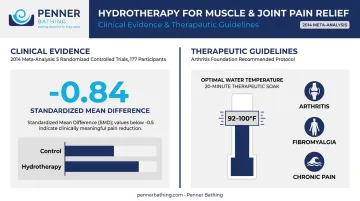
The research backs this up. A 2014 meta-analysis of 5 randomized trials covering 177 participants found that mineral or thermal bath treatment reduced fibromyalgia pain with a standardized mean difference of -0.84 — a statistically significant reduction. The Arthritis Foundation recommends water temperatures of 92–100°F for approximately 20 minutes to maximize heat-treatment benefit for stiff joints.
Who benefits most:
- People with arthritis or fibromyalgia
- Individuals with chronic musculoskeletal pain
- Seniors with joint stiffness
- Post-surgical patients in recovery
Cardiovascular Health and Circulation
Warm water causes blood vessels to dilate, heart rate to rise moderately, and circulation to improve — effects that loosely mirror mild cardiovascular exercise.
A 2016 controlled study of 20 sedentary adults using hot baths 4–5 times per week over 8 weeks found notable changes: flow-mediated dilation nearly doubled (5.6% to 10.9%), aortic pulse-wave velocity decreased, and mean arterial pressure dropped from 83 to 78 mmHg.
A separate 2020 prospective cohort of over 30,000 Japanese adults found that almost-daily tub bathing was associated with a 28% lower risk of total cardiovascular disease compared to bathing 0–2 times weekly. These are observational findings, not a prescription to replace exercise. For individuals with mobility limitations who can't engage in traditional cardio, though, regular warm bathing offers a legitimate physiological benefit.
Skin Hydration and Eczema Management
Warm baths — especially with added colloidal oatmeal, bath salts, or gentle oils — hydrate the skin's outer layer and support barrier function.
The National Eczema Association recommends adding ½ to 1 cup of colloidal oatmeal to lukewarm water and soaking for 10–15 minutes to relieve itch, support hydration, and stabilize skin pH. The American Academy of Dermatology advises applying moisturizer immediately after while skin is still damp to lock in hydration.
One important caveat: hot or prolonged baths can actually worsen dry skin. The AAD recommends keeping soak time to 5–10 minutes for dry-skin management — a reminder that temperature and duration matter as much as the soak itself.
Mental Well-Being and Sleep Advantages of a Bathtub
The mental health case for regular bathing is increasingly well-supported. A warm bath produces measurable neurological and physiological changes, not just a subjective sense of relaxation.
Stress Reduction and Autonomic Nervous System Effects
Warm water immersion shifts the body toward a parasympathetic (rest-and-digest) state, reducing the stress response that keeps cortisol elevated and the nervous system on edge.
A 2018 randomized crossover study of 38 healthy adults found that 10-minute daily whole-body baths at 40°C for 2 weeks produced significantly lower scores for stress, fatigue, pain, tension-anxiety, and depression-dejection.
A 2022 autonomic study found that 30-minute warm baths 5 days per week for 4 weeks reduced resting muscle sympathetic nerve activity from 31.6 to 25.2 bursts per minute — a direct measure of reduced stress load on the nervous system.
Note: these studies didn't directly measure cortisol. The effect is real; the mechanism involves sympathetic nervous system downregulation, not a measurable cortisol percentage.
Most valuable for: High-stress professionals, caregivers, individuals managing anxiety, and anyone who finds mental decompression difficult to achieve through other means.
Better Sleep Quality
This is one of the most practically useful advantages a bathtub offers. The mechanism surprises most people.
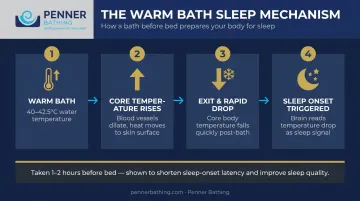
A warm bath raises your core body temperature. When you exit, that temperature drops rapidly. The brain reads this cooling as a signal to initiate sleep, accelerating sleep onset and improving sleep depth. A 2019 systematic review and meta-analysis found that water-based passive warming at 40–42.5°C for at least 10 minutes, taken 1–2 hours before bedtime, significantly shortened sleep-onset latency and improved self-rated sleep quality and efficiency.
This is a non-pharmaceutical, low-cost sleep intervention. For individuals who resist medication-based sleep aids or have tried behavioral approaches without success, a consistent pre-bed bath routine is one of the simplest evidence-backed adjustments available.
Safety, Accessibility, and Family Bathing Advantages
Bathtubs serve essential functional roles across the entire human lifespan. Safety and accessibility determine how much of that value any given user can actually access.
Safe Bathing for Seniors and Mobility-Limited Users
Standard bathtubs are a proven fall hazard for elderly users. CDC data show that approximately 234,094 people aged 15+ received emergency department treatment for bathroom injuries in a single study year, with 81.1% caused by falls — and 13.7% of injured adults 65+ were hospitalized. Among adults 85+, the bathroom injury rate reached 224.3 per 100,000.
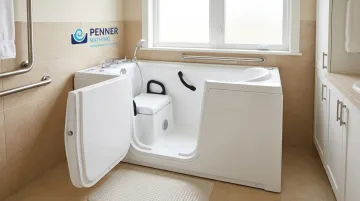
Walk-in bathtubs directly address this. Penner Bathing's Dream Spa Walk-In Bath — which starts at $5,950 — is designed around a core principle: users sit first, then swing their legs in. This eliminates the step-over motion that causes most tub-related falls.
Key safety features include:
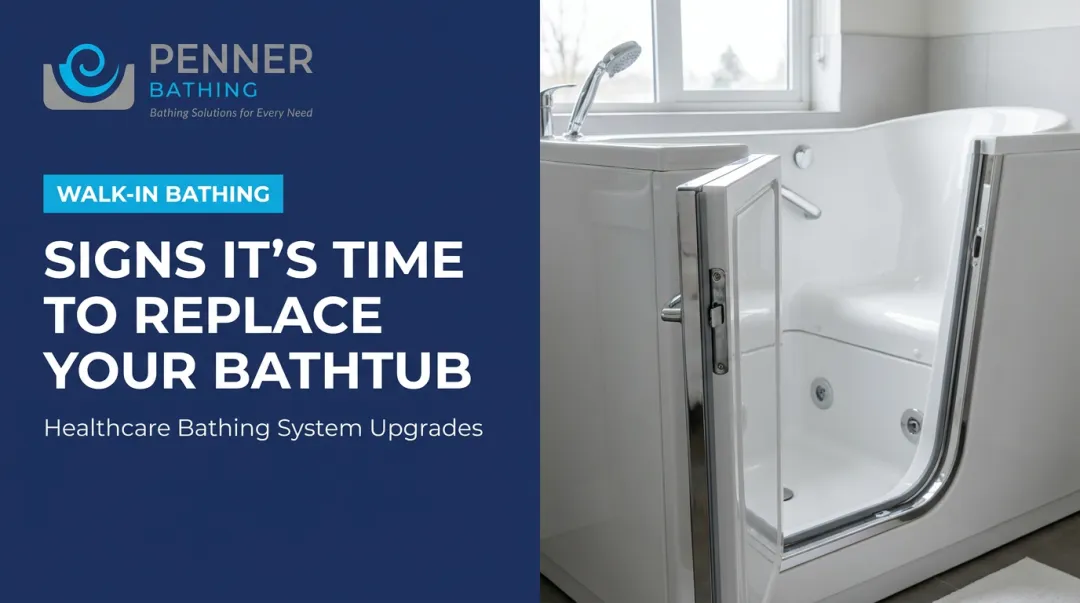
- Wide swing-out door with low-threshold entry
- Ergonomic hand grips and safety bar at the entrance
- Heated built-in seat that encourages fully seated bathing throughout
- Handheld shower wand for rinsing without standing
- Top-mounted controls that don't require reaching or weight shifting
- No-leak door seal that prevents wet floors
AARP's 2024 survey found that 75% of adults 50+ want to stay in their homes as they age. For that population, accessible bathing is a prerequisite for independent living — not an upgrade.
Family Use and Multi-Generational Utility
Children under 5 cannot safely stand in a shower. A bathtub provides the controlled, supervised environment that infant and toddler bathing requires — and it's one of the earliest daily routines that families build around a shared fixture.
In multigenerational households — where the same bathroom serves a toddler and a grandparent — a well-designed tub needs to work safely for both. That gap in needs is exactly what purpose-built accessible tubs are designed to close.
Therapeutic Bathing in Long-Term Care Settings
In nursing homes, assisted living facilities, and hospitals, bathtubs aren't comfort features — they're therapeutic tools subject to federal care standards. CMS Appendix PP (2025 revision) requires that facilities protect resident choice of bathing method and schedule, provide needed assistance, and use bathing observations to assess skin condition and detect nonverbal pain indicators.
Penner Bathing has served this market for over 40 years. Their purpose-built commercial systems include automatic disinfection, fast-fill reservoirs, integrated patient transfer options, and BioCote antimicrobial protection — all designed for the efficiency and safety demands that standard tubs cannot meet.
Practical Advantages: Home Value, Water Control, and Aesthetics
Resale Value and Buyer Preference
Real estate data consistently shows that bathtubs influence buyer decisions. A 2018 NAR-cited consumer survey found that 70% of respondents believed a home should have at least one bathtub — and real estate agents note that removing every tub can meaningfully narrow buyer appeal, particularly for families with young children.
There's no verified dollar-for-dollar price premium tied to a specific tub type. But buyer preference data is clear: a home without any bathtub is a harder sell in most markets.
Water Consumption and Aesthetic Value
Baths use a fixed volume of water, giving users direct control over consumption per session. How that compares to a shower depends entirely on usage habits:
- Standard bath: ~30 gallons per session
- 8-minute shower (standard showerhead): ~17 gallons
- Longer shower (12+ minutes): often exceeds bath usage
Neither option is automatically more efficient — it comes down to how long you shower. Water control, then, is just one dimension of the bathtub's practical value. The other is visual impact: a well-chosen bathtub can anchor a bathroom's design entirely. A freestanding soaking tub, a Japanese-style deep soak model, or an undermount tub with clean deck lines gives the room a focal point and design coherence that something a shower enclosure rarely achieves on its own.
Getting the Most Out of Your Bathtub
Bathtub benefits aren't automatic — they depend on how you use the tub.
Optimize your soak:
- Keep water between 98°F–104°F for therapeutic use; drop to lukewarm if you have eczema or dry skin
- Soak 15–30 minutes for physical and mental benefits; limit to 5–10 minutes when managing skin hydration
- Add Epsom salts for muscle relief, colloidal oatmeal for sensitive skin, or essential oils for relaxation — each works differently
- Bathe 1–2 hours before bed to maximize sleep benefits through the body's natural cooling response
For seniors or anyone with mobility challenges, the tub type matters more than any of the above. A standard tub with no grab bars and a high step-over wall blocks access to most of the advantages covered in this article. Walk-in tubs and therapeutic models with built-in safety features make those benefits physically reachable — which is why equipment selection is the first decision, not an afterthought.
Frequently Asked Questions
What is a bathtub used for?
Bathtubs serve far more functions than a shower alone: personal cleansing, hydrotherapy for muscle and joint pain, stress reduction, sleep improvement, skin care, child bathing, and therapeutic use for seniors and individuals with chronic conditions.
Do baths lower cortisol?
Warm water immersion reduces sympathetic nervous system activity and lowers subjective stress scores in clinical studies. Direct cortisol reduction hasn't been measured in bathtub-specific research, so the percentage-based claims common online aren't well-supported — the stress-relief effect is real, but the exact mechanism is less clear.
Is it better to shower or take a bath?
Showers are faster and more efficient for daily cleansing. Baths deliver therapeutic advantages — muscle relief, sleep support, stress reduction — that showers can't replicate. Both serve different purposes; the right choice depends on your time, goals, and health needs.
How long should you soak in a bathtub?
Most evidence supports 15–30 minutes at 98°F–104°F for therapeutic benefits. For dry skin or eczema, shorter soaks (5–15 minutes) at lukewarm temperatures are recommended to avoid stripping the skin barrier.
Are bathtubs good for elderly or seniors?
Standard tubs present real fall risks for seniors. Walk-in bathtubs address this with low step-in thresholds, swing-out doors, built-in seating, grab bars, and hydrotherapy jets. They make bathing safer and more therapeutic for older adults, meaningfully supporting aging in place.
Does having a bathtub increase home value?
Consumer preference data shows that 70% of buyers believe a home should have at least one bathtub, and agents report that removing all tubs can limit buyer appeal. While a precise price premium isn't established, a quality tub is a sound investment for resale purposes.