Facilities that prioritize patient-centered approaches see real, measurable differences. Research across 175 skilled-nursing facilities found that a single-point increase in employee satisfaction corresponded to a 19% decrease in the combined incidence of falls, weight loss, and pressure ulcers. That connection between how care is delivered and what residents actually experience is the foundation of everything covered here.
This guide walks through the core principles, actionable strategies, and environmental factors that make the biggest difference in patient care quality — particularly for long-term care settings where residents depend on staff every single day.
Key Takeaways
- Patient-centered care addresses physical, emotional, and social needs — not just clinical tasks
- Shared decision-making and two-way communication are foundational to resident trust
- Staff engagement directly predicts resident outcomes and satisfaction
- The physical environment — hygiene, layout, and comfort — directly affects anxiety, infection risk, and dignity
- Continuous improvement depends on structured feedback, regular training, and intentional technology use
What Does It Mean to Improve Patient Care?
Improving patient care means attending to more than clinical accuracy. It means accounting for a resident's physical comfort, emotional wellbeing, social connection, and daily environment — all at once.
NEJM Catalyst defines patient-centered care as care in which "an individual's specific health needs and desired health outcomes are the driving force behind all health care decisions and quality measurements." This shifts the frame from system-level logistics — scheduling, compliance, throughput — to the individual person receiving care.
Why This Matters in Long-Term Care
The stakes are high in residential settings. Unlike hospitals, where patients typically transition out within days, nursing home and assisted living residents live in these environments — sometimes for years. When care falls short of their preferences and needs, the consequences compound.
A study of over 2,000 nursing home residents in China found that:
- 18.3% reported an unmet food need
- 13.9% lacked adequate information about their condition or treatment
- 11.9% lacked company
- 5.9% had more than three simultaneous unmet needs
These gaps aren't just ethical failures — they carry direct consequences for resident health, family trust, and facility reputation. Addressing them means building systems where staff have the tools, time, and training to respond to individual needs — not just minimum compliance thresholds.
Key Principles of Patient-Centered Care
Mutual Respect and Dignity
Every resident, regardless of age, cognitive ability, or physical condition, deserves consistent respect from every member of the care team. Under 42 CFR 483.10, nursing home residents have a federal right to "a dignified existence, self-determination, and communication" — and facilities are legally required to uphold those rights.
In practice, dignity means more than legal compliance. A 2025 systematic review of 27 qualitative studies found that person-centered staff behavior, resident autonomy, privacy, and family involvement all supported emotional well-being in long-term care. Rigid routines, inadequate staffing, and high turnover were the primary threats.
Shared Decision-Making and Transparent Communication
Shared decision-making (SDM) is a collaborative model where clinicians and patients — or their family representatives — review evidence together, explore preferences, and reach decisions jointly. AHRQ defines SDM as decisions "informed by evidence, clinical knowledge, and the patient's values, goals, preferences, and circumstances."
For elderly or disabled residents who often feel voiceless in clinical settings, SDM is a direct expression of respect — not just a procedural checkbox. Three communication practices make it work in long-term care:
- Plain language first — avoid jargon; check for verbal understanding after explanations
- Actively invite questions — from residents and family members, not just during formal care planning meetings
- Document preferences clearly — so care decisions reflect the resident's stated goals across every shift and staff change
Family Inclusion and Emotional Support
In long-term care, family members aren't visitors. They're care partners. A 2026 scoping review of 10 LTC studies linked active family involvement with better continuity of care, stronger advocacy for resident preferences, and improved emotional well-being.
Effective family integration means:
- Including family in care planning meetings and goal-setting conversations
- Communicating proactively about changes in condition or care approach
- Making families feel welcome rather than tolerated
Safety and Evidence-Based Practices
No quality improvement effort holds without a safe foundation. Key safety priorities in long-term care include:
- Infection control: A systematic review covering nearly 710,000 LTC residents across 33 countries estimated healthcare-associated infection (HAI) prevalence at 3.5–5.4%, with UTIs, respiratory infections, and skin infections representing the vast majority
- Fall prevention: 22% of U.S. residential-care-community residents fell in a prior 90-day window, and 15% of those sustained injuries
- Medication management: Error rates in aged-care and skilled-nursing facilities range from 4% to 31%, depending on facility and method of measurement
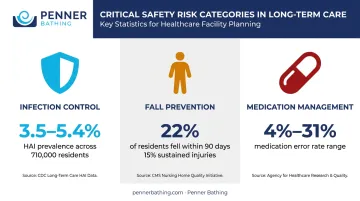
Facilities that audit these areas on a scheduled basis — rather than reactively — catch protocol gaps before they reach residents.
Best Practices to Improve Patient Care
Practice Active Listening and Empathy
Active listening isn't passive. It requires observing non-verbal cues, acknowledging emotional states, and responding to the person — not just the presenting problem.
The numbers reveal a real gap: roughly 1 in 5 U.S. Medicare beneficiaries reported unfair treatment or having concerns dismissed while receiving care, according to a 2024 Commonwealth Fund survey. In long-term care, where residents interact with the same staff repeatedly over months or years, unaddressed dismissiveness erodes trust quickly.
In practice, this means checking in without a task in hand — asking how a resident is feeling before adjusting a medication schedule, or pausing to acknowledge frustration before moving on to the next procedure.
Empower Patients in Their Own Care
Residents who understand their situation and have a voice in their care are more compliant, more satisfied, and more likely to report concerns early. Specific ways to support empowerment:
- Provide condition-appropriate education materials in accessible formats
- Set goals based on what residents say matters to them — not just clinical benchmarks
- Use decision aids to explain treatment options visually or in plain language
- Encourage self-monitoring where appropriate (e.g., tracking pain levels or sleep quality)
Minimize Administrative Friction
Administrative burden discourages care engagement. Among insured, non-elderly U.S. adults, 24.4% reported delaying or forgoing care due to administrative tasks — including scheduling difficulties, billing confusion, and prior authorization hurdles.
Facility-level solutions include:
- Consolidated intake forms (ask once, not repeatedly)
- Self-service portals for family members to access updates
- Clear, jargon-free billing communication
- Dedicated staff contacts for administrative questions
Coordinate Interdisciplinary Care Teams
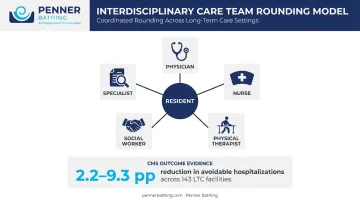
Complex, multi-system conditions — common in long-term care residents — require coordinated responses across disciplines. Interdisciplinary rounding brings physicians, nurses, physical therapists, social workers, and other specialists into regular collaborative review of each resident's needs.
CMS's Initiative to Reduce Avoidable Hospitalizations tracked this across 143 LTC facilities in seven states. Facilities that deployed interdisciplinary teams saw net reductions of 2.2 to 9.3 percentage points in all-cause hospitalization probability — a meaningful outcome for residents and budgets alike.
Ensure Continuity of Care
For long-term care residents, consistency is comfort. Unfamiliar caregivers create anxiety and disrupt established trust. Continuity strategies include:
- Consistent caregiver assignments where staffing allows
- Regular reassessment and updating of individualized care plans
- Structured handoff protocols when residents transition between care levels
- Documentation that travels with the resident, not just the unit
Creating a Comfortable, Healing Care Environment
The physical environment is one of the most underappreciated drivers of resident experience — especially in facilities that are, someone's home.
Design for Dignity and Home-Like Comfort
Research consistently supports the connection between physical environment and resident well-being. A 2022 scoping review found repeated positive associations between noise reduction, natural light, appropriate lighting, and home-like features with resident health and comfort. A 2024 exploratory study found that home-like environmental changes supported residents' sense of belonging and reported well-being.
Facilities can audit their spaces through a resident's perspective:
- Is the lighting warm or clinical and harsh?
- Do common areas feel inviting or institutional?
- Are personal items and decorations accommodated?
Small changes — warmer color palettes, natural light access, less clinical furniture — create meaningful emotional impact.
Prioritize Hygiene and Infection Prevention During Personal Care
Bathing is among the most intimate moments in a resident's day. It's also a significant infection control concern. Direct observation research across eight nursing homes found body-cleansing lapses in 88–100% of observed bathing sessions, with genital hygiene omitted in more than 90% of cases. CDC's Enhanced Barrier Precautions explicitly require gowns, gloves, and proper hand hygiene during high-contact care activities including bathing.
Purpose-built bathing systems address these gaps directly. Penner Bathing's healthcare systems — used in nursing homes and assisted living facilities across the U.S. — are engineered for these exact environments:
- Automatic disinfection eliminates reliance on manual staff compliance
- BioCote antimicrobial protection suppresses bacterial growth on all bathing surfaces around the clock
- Fast-fill reservoirs reduce time per resident without sacrificing hygiene standards
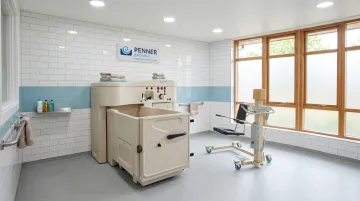
The outcome: facilities meet infection control requirements without compromising the resident experience.
Support Physical Comfort Through Therapeutic Approaches
Chronic pain is pervasive in long-term care. A 2022 systematic review found current-pain prevalence in nursing homes ranging from 22.2% to 85.0%, depending on assessment method. Standard care routines don't always address this.
For residents managing chronic discomfort, bathing can be more than a hygiene task. Warm water immersion has demonstrated sleep quality improvements in older adults, and Penner Bathing's PennAire Microbubble Technology — which saturates water with billions of oxygen-rich microbubbles — supports skin hydration, exfoliation, and a spa-like comfort experience, making bathing restorative rather than purely functional.
When combined with the Aqua-Aire Jet System, the effect extends to soothing muscles and joints directly.
For residents dealing with chronic discomfort, that difference matters daily.
Building a Culture of Continuous Improvement
Engage and Train Staff Consistently
Staff engagement isn't a soft metric. Across 175 skilled-nursing facilities, a one-point increase in employee satisfaction on a standardized scale corresponded to a 17.4-point increase in resident and family satisfaction. That's a direct, measurable link.
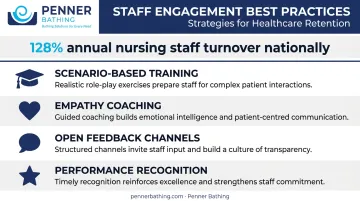
High turnover — national nursing-staff turnover averages 128% annually — undermines continuity, trust, and care quality. Reducing it starts with how staff are supported:
- Regular scenario-based training, not just one-time onboarding
- Empathy coaching alongside clinical skills development
- Open feedback channels where staff feel heard, not evaluated
- Recognition of consistent, high-quality performance
Collect Feedback and Act on It
Structured feedback loops are only valuable when the data actually drives change. Effective feedback systems include:
- Regular resident satisfaction surveys (with accessible formats for those with cognitive or physical limitations)
- Family interviews and quarterly check-ins
- Real-time feedback mechanisms (comment boxes, brief post-visit check-ins)
- Closed-loop communication — sharing changes back to staff and residents so input visibly leads to action
Without that final step, even the best feedback system becomes noise.
Use Technology to Streamline and Improve Care Delivery
A national study of 927 U.S. nursing homes found that EHR implementation was associated with significant reductions in long-stay weight loss, catheter use, UTIs, depressive symptoms, and short-stay pain. Technology, used well, frees care staff from administrative burden and puts them back where they're needed most: with residents.
Effective technology priorities for long-term care include:
- Integrated electronic health records accessible across care team disciplines
- Incident reporting systems that flag patterns before they become crises
- Care coordination platforms that improve handoff quality
The measure of any clinical technology isn't its features — it's whether care staff can use it without friction and residents feel the difference.
Frequently Asked Questions
What does improve patient care mean?
Improving patient care means moving beyond basic clinical treatment to address a resident's physical comfort, emotional needs, personal dignity, and individual preferences. In long-term care, this requires consistent attention to both clinical quality and the relational, environmental, and personal dimensions of daily life.
What are the 5 P's of patient care?
The 5 P's — Pain, Position, Personal needs, Placement, and Potty — are a structured rounding framework used to proactively check on common resident needs before they escalate. Regular rounding built around these categories reduces call light use and improves patient satisfaction scores.
What are the 4 C's of patient care?
Communication, Compassion, Competence, and Commitment are four core values widely recognized across nursing and long-term care practice. Together, they define what human-centered care looks like in daily interactions between staff and residents.
How does the physical environment affect patient care quality?
Cleanliness, lighting, noise control, comfortable furnishings, and hygiene infrastructure (including bathing facilities) directly affect resident anxiety levels, infection risk, and overall sense of well-being. A well-designed environment supports better clinical outcomes and improves daily quality of life for residents.
What role does staff training play in improving patient care?
Well-trained, engaged staff are the most consistent predictor of patient care quality. Ongoing training in communication, empathy, safety protocols, and equipment use sustains standards over time and directly correlates with better resident and family satisfaction outcomes.