Introduction
Patient safety in long-term care is a measurable, persistent challenge — and the numbers make that clear. According to the Office of Inspector General, 22% of Medicare skilled nursing facility residents experienced adverse events and another 11% experienced temporary harm within just 35 days of admission. Physician reviewers judged 59% of those harm events preventable.
The operational consequences are real: CMS has reported that nearly 45% of hospitalizations among nursing facility residents were potentially avoidable. That translates to avoidable staff burden, regulatory scrutiny, legal exposure, and — most importantly — direct harm to residents who came to these facilities for care and protection.
None of this is inevitable. Patient safety in long-term care responds to deliberate, consistent action across staffing, environment, protocols, and culture — and facilities that close gaps in all four areas consistently reduce harm events, hospitalizations, and regulatory exposure.
This guide covers the best practices : building a safety culture, designing safer environments, preventing falls and bathing injuries, and managing infection and medication risks.
Key Takeaways
- Falls affect roughly 50% of nursing home residents annually; combined exercise, medication review, and environmental programs show the strongest results
- 82% of nursing homes were cited for infection control deficiencies at least once between 2013 and 2017
- Medication discrepancies occur in 71.4% of hospital-to-SNF admissions, making care transitions a high-risk window
- A safety culture where staff report concerns without fear is the foundation every other improvement depends on
- Bathing equipment design directly affects fall risk, resident dignity, and caregiver injury rates
What Patient Safety Actually Means in Long-Term Care
Patient safety in long-term care means protecting residents from preventable harm while preserving their autonomy and quality of life — recognizing that a nursing home is simultaneously a clinical setting and someone's home.
That dual identity matters. The resident population is inherently high-risk:
- Complex, multiple chronic conditions requiring coordinated management
- High rates of cognitive impairment that limit self-reporting of symptoms or pain
- Widespread polypharmacy — cross-national data shows 60.9% to 72.0% of nursing home residents take five or more medications
- Physical frailty that makes even routine care activities like bathing or transfers potentially hazardous
Effective safety management in this environment demands continuous attention across three interconnected domains:
- People — staffing levels, training quality, and safety culture
- Processes — protocols, medication management, and care transitions
- Place — physical environment, equipment, and infection control systems
Building a Safety Culture Through Staffing and Training
Why Staffing Levels Matter
The connection between nursing staff levels and resident outcomes is well-established. Research published in PubMed found that among facilities meeting adequate CNA staffing thresholds, greater RN hours were associated with fewer injurious falls (IRR 0.61) — and greater CNA staffing also reduced fall rates. Workforce stability matters too: a JAMA analysis found that each 10-percentage-point rise in nursing staff turnover was associated with 0.241 additional inspection citations and lower quality scores across multiple measures.
Current national nursing turnover sits at 43.6% according to 2025 Payroll Based Journal data — a figure that directly undermines care continuity and heightens safety risk.
Elements of a Genuine Safety Culture
A genuine safety culture shows up in daily operations, not orientation binders. It looks like:
- Leadership models safe practices visibly and consistently, not just in orientation materials
- Frontline staff can report errors and near-misses without fear of punishment or retaliation
- Safety huddles occur regularly, giving care teams a structured opportunity to flag emerging concerns
- Standardized checklists are used for high-risk tasks — fall risk assessments, infection control checks, medication handoffs
Facilities that treat safety as a compliance exercise rather than an operational commitment tend to see the same deficiencies repeat. The GAO found that 48% of nursing homes cited for infection control deficiencies had citations in multiple consecutive years — a pattern that points to systemic failure, not isolated lapses.
Essential Training Areas for LTC Staff
Training must be ongoing, not just at onboarding. Priority areas include:
- Recognizing and communicating changes in resident condition (SBAR and similar structured tools)
- Medication management protocols and high-risk drug awareness
- Infection prevention practices, including proper PPE use and hand hygiene
- Fall risk assessment and documentation
- Safe patient handling — proper transfer techniques, correct use of mechanical lifts and bathing equipment
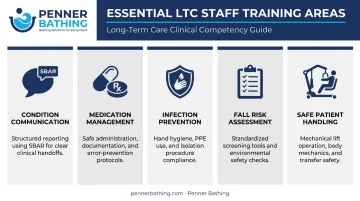
Safe patient handling is frequently undertrained. Staff operating bathing systems, transfer chairs, or ceiling lifts without adequate instruction create real risk during some of the most physically vulnerable moments in a resident's day.
Physical Environment and Facility Design
How Design Affects Safety Outcomes
The physical layout of a long-term care facility directly shapes both infection risk and fall frequency.
Room crowding is the clearest example. A study of 618 Ontario nursing homes found COVID-19 incidence was 9.7% in high-crowding facilities versus 4.5% in low-crowding facilities, with mortality following the same pattern. Modeling suggested conversion to single occupancy could have averted roughly 31% of infections.
Beyond crowding, Facility Guidelines Institute (FGI) standards establish minimum requirements for LTC environments that directly affect safety:
- Grab bars at resident toilets, showers, and tubs
- Nurse-call devices in all bathing and toilet areas
- Adequate doorway clearance for wheelchairs, transfer chairs, lifts, and shower gurneys
- Thresholds that don't create tripping hazards for wheeled equipment
Accessible handwashing stations integrated into care workflows — not located across the room or in a separate area — support CDC hand hygiene requirements and reduce the friction that leads to skipped hand hygiene moments.
Bathing Areas Require Particular Attention
Bathing spaces are among the highest-risk areas in any long-term care facility. A well-designed bathing area needs to:
- Support safe resident transfer without awkward maneuvering or caregiver over-exertion
- Prevent cross-contamination between residents through disinfection-compatible surfaces and equipment design
- Maintain resident dignity throughout the process
- Protect caregivers from ergonomic strain that leads to injury and turnover
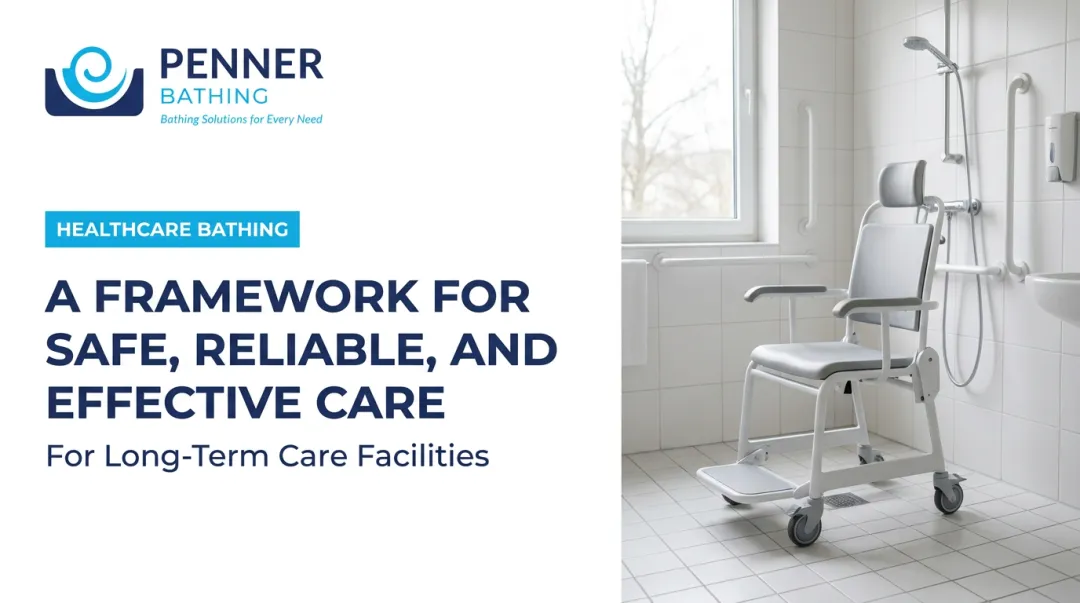
Purpose-built healthcare bathing systems address these requirements in ways standard fixtures can't. Penner Bathing has manufactured bathing systems for long-term care facilities since 1980, engineering each system specifically for the institutional care environment. Key design features include:
- Rail-free construction for unobstructed caregiver access during transfers
- Multiple entry configurations (left, right, and end-opening) to fit different room layouts and resident mobility levels
- Height-adjustable transfer mechanisms that reduce both resident fall risk and caregiver back strain
All systems carry UL and CUL listings and include built-in BioCote antimicrobial protection, active around the clock.
Fall Prevention and Bathing Safety in Daily Care
Understanding Fall Risk in LTC
AHRQ reports that approximately half of U.S. nursing home residents fall each year, with a recent JAMDA clinical practice guideline citing an incidence of 121 falls per 100 person-years. Falls are not rare incidents — they are recurring events that require programmatic management.
The risk factors in LTC are compounded:
- Polypharmacy — with 23.2% of long-stay residents on three or more CNS-active medications simultaneously, according to 2021 data
- Cognitive impairment that limits awareness of environmental hazards or self-correction during movement
- Gait and balance deficits that change over time and require regular reassessment
- Environmental hazards — poor lighting, uneven surfaces, inadequate grab bar placement
Core Components of an Evidence-Based Fall Prevention Program
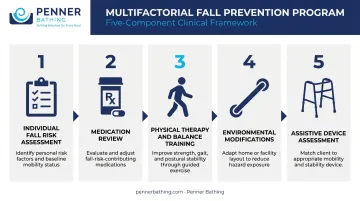
Multifactorial programs show the strongest results. A comprehensive program typically addresses:
- Individual fall risk assessments conducted on admission and after any significant change in condition
- Medication review targeting fall-risk-increasing drugs — antipsychotics, benzodiazepines, and antidepressants are consistently associated with higher fall risk in older adults
- Physical therapy and balance training as an active intervention, not a reactive one
- Environmental modifications — grab bars, non-slip surfaces, appropriate lighting, bed and chair alarms where clinically appropriate
- Assistive device assessment to ensure residents are using the right equipment correctly
Bathing as a High-Risk Care Activity
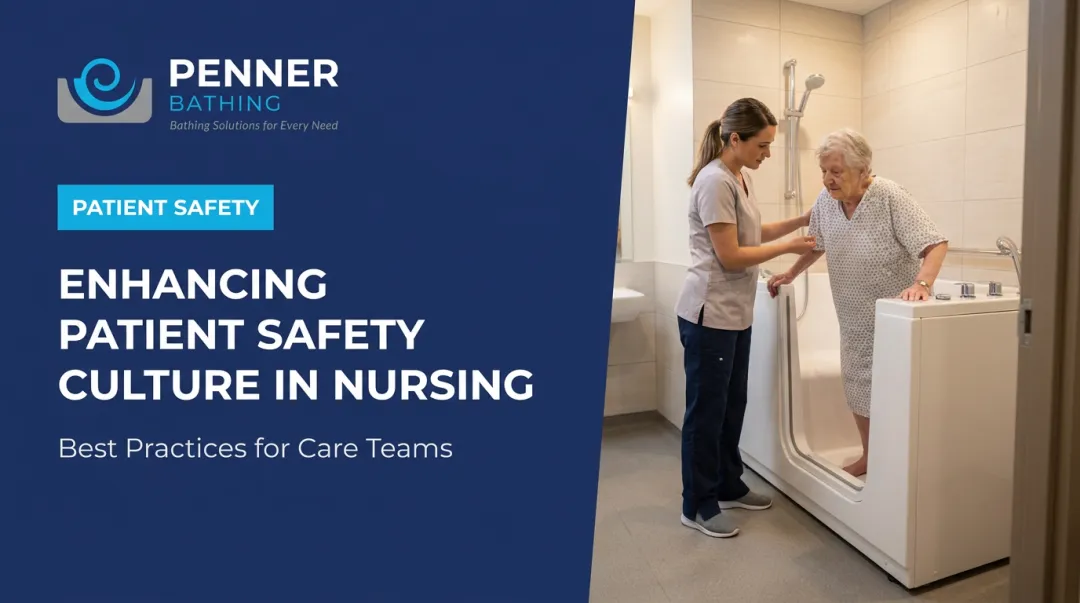
Bathing combines multiple fall risk factors simultaneously: wet surfaces, required transfers, undressing, and the presence of water. Safety protocols during bathing must include:
- Proper resident positioning throughout the process
- Use of appropriate lift and transfer equipment — mechanical lifts where indicated, transfer chairs engineered to integrate with the bathing system
- Water temperature verification before immersion (FGI guidelines specify 105–120°F for clinical use)
- Never leaving a resident unattended during the bathing process
- Using integrated dispensers for bath products so caregivers don't need to step away to retrieve supplies
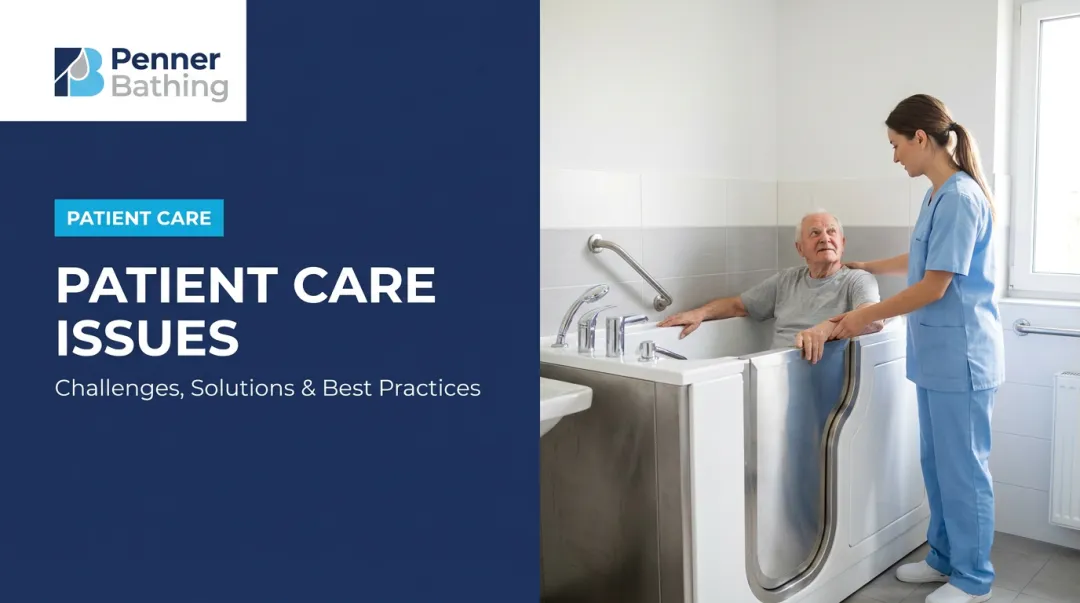
Specialized therapeutic bathing systems address these risks through design features that standard equipment lacks. Penner Bathing's systems, for example, include:
- Non-slip interior surfaces and contoured seating for secure positioning
- Temperature monitoring displays to prevent scalding
- Height-adjustable transfer posts that reduce physical strain during entry and exit
Their transfer chairs — available in 400 lb and 600 lb bariatric capacities — include safety belts and are designed to align directly with the bathing unit's door configurations. This makes each transfer a coordinated, supported movement rather than an improvised one.
Infection Control and Medication Safety Practices
The Infection Control Imperative
GAO identified infection prevention and control as the most frequently cited nursing home survey deficiency — 82% of nursing homes were cited at least once between 2013 and 2017. Nearly half had citations in multiple consecutive years.
CDC's current data puts the burden at approximately 1 in 43 nursing home residents carrying a healthcare-associated infection on any given day, with estimates of 1.1 to 3.8 million infections annually across U.S. nursing homes.
A compliant infection control program requires more than basic hygiene policies:
- A designated infection preventionist (required under 42 CFR 483.80 since November 2019) who works at least part-time in that role and participates in quality assessment
- An antibiotic stewardship program — a study of 439 LTC facilities found that a structured educational stewardship program reduced antibiotic starts and unnecessary urine cultures, though the gains are incremental
- Documented protocols for communicable disease identification, containment, and reporting
- PPE availability and training — supply is insufficient without staff competency in proper use
- Disinfection protocols for shared equipment, including bathing systems, shower chairs, and any resident-contact surfaces
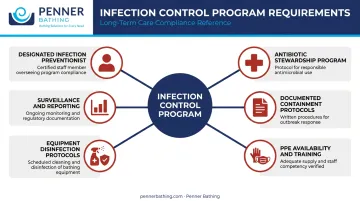
On the equipment side, bathing systems used by multiple residents require between-use disinfection that is both effective and consistently executed. Systems with automatic disinfection cycles remove the staff compliance variable from this step entirely, so disinfection occurs regardless of shift changes or staffing pressure. Penner Bathing's systems include automatic disinfection as a standard feature across all models for this reason.
Medication Safety: Polypharmacy and Transitions
Infection control addresses one major safety frontier in LTC; medication management presents another. Polypharmacy is the norm in most LTC settings, not a subset problem. With 60–72% of residents on five or more medications and nearly a quarter on three or more CNS-active drugs simultaneously, the risk of adverse drug events is constant.
Effective mitigation strategies include:
- Monthly pharmacist drug regimen reviews, as required by CMS for long-stay residents
- Deprescribing protocols that systematically evaluate whether each medication remains appropriate
- Adherence to the 2023 AGS Beers Criteria, which identifies medications generally best avoided in adults 65 and older in institutional settings
Care transitions represent a distinct and serious vulnerability. A foundational AHRQ-reviewed study found medication discrepancies in 71.4% of hospital-to-SNF admissions, averaging 3.5 discrepancies per admission and affecting 21.3% of all admission medications. Standardized handoff tools (SBAR, INTERACT) and EHR integration are the most practical mitigation approaches available. That said, no single tool has been shown to eliminate transition-related errors entirely.
Common Patient Safety Mistakes to Avoid
Three failure patterns appear consistently in facilities with poor safety outcomes:
Treating Safety as a Compliance Exercise
Facilities that orient their safety programs around passing surveys rather than protecting residents tend to accumulate recurring deficiencies. The GAO's finding that 48% of cited facilities had infection control citations in multiple consecutive years reflects exactly this pattern — survey preparation without genuine system change.
Running Siloed Safety Programs
A falls prevention program that doesn't account for medication side effects will underperform. An infection control program that skips equipment hygiene during bathing routines creates gaps that inspectors and outcomes data will eventually expose.
Effective patient safety requires deliberate coordination across all departments:
- Nursing and pharmacy teams aligned on medication-related fall risks
- Dietary and therapy staff integrated into mobility and nutrition protocols
- Administration enforcing cross-departmental accountability
Under-Investing in Staff Training and Retention
At 43.6% nationally, nursing turnover is a direct safety problem. High turnover means inconsistent care practices, knowledge gaps around high-risk procedures, and an ongoing drain on institutional memory.
Facilities that treat staff education as a discretionary cost rather than a safety investment consistently see worse outcomes and higher liability exposure. Training on equipment operation — including bathing systems, mechanical lifts, and transfer chairs — is particularly susceptible to being skipped or rushed when turnover is high.
Conclusion
Patient safety in long-term care is a shared responsibility. Leadership sets the culture and allocates resources. Clinical staff execute protocols and escalate concerns. Equipment choices either support or undermine safe care delivery. The physical environment either reduces or amplifies risk.
No single intervention eliminates harm. But facilities that address all of these domains systematically, treating safety as an ongoing operational commitment rather than a periodic project, produce better outcomes for residents.
That commitment looks the same across most high-performing facilities: audit protocols regularly, engage frontline staff in hazard identification, invest in purpose-built equipment with real training behind it, and measure what matters. The facilities that do this well don't wait for an incident to prompt action — they build safety into daily operations before the gaps become harm.
Frequently Asked Questions
What are the most common patient safety risks in long-term care facilities?
Falls, healthcare-associated infections, medication errors, and adverse events during care transitions are the leading categories. Most are preventable with appropriate protocols — the OIG found 59% of nursing home harm events were preventable, leaving significant room for improvement.
How can long-term care facilities reduce fall-related injuries among residents?
Multifactorial programs combining individual risk assessment, medication review (targeting CNS-active and sedating drugs), physical therapy, and environmental modifications show the strongest evidence. Single-strategy approaches (bed alarms alone, for example) are consistently less effective than coordinated, resident-specific interventions.
What role does staffing play in patient safety outcomes in nursing homes?
Higher RN and CNA staffing levels are consistently associated with better safety outcomes, including fewer injurious falls and lower deficiency citation rates. Staff continuity also matters: when caregivers work with the same residents consistently, they recognize changes in condition earlier and respond before problems escalate.
How do infection control programs protect residents in long-term care facilities?
Effective programs combine a designated infection preventionist, antibiotic stewardship, adequate PPE supply with proper-use training, disinfection protocols for shared equipment, and regular surveillance for outbreak indicators. Facilities that exceed minimum requirements — through active surveillance and staff accountability — show measurably lower infection rates.
What is a safety culture and why does it matter in long-term care settings?
A safety culture is an organizational environment where staff feel safe to report errors and near-misses without fear of punishment. Facilities with strong safety cultures surface problems earlier — before they become adverse events — making it foundational to every other safety initiative a facility undertakes.
How does the physical environment of a nursing home affect resident safety?
Private rooms reduce infection transmission, appropriate lighting reduces fall risk, and purpose-built bathing areas with specialized equipment reduce injury during one of the highest-risk daily care activities. Design choices made during construction or renovation carry safety consequences that persist for decades, making them clinical decisions as much as architectural ones.