Introduction
According to WHO, around 1 in every 10 patients is harmed in healthcare settings — and more than 50% of that harm is preventable. What's striking is how persistent these problems remain, even as clinical technology has advanced significantly.
Patient care issues span a wide range: medication errors, healthcare-associated infections, patient falls, missed nursing care, and diagnostic delays. Long-term care facilities face all of these — plus a distinct layer of challenges tied to serving elderly residents with cognitive decline, complex chronic conditions, and limited ability to advocate for themselves.
This guide breaks down the most common patient care challenges across healthcare settings, examines their underlying causes, and outlines practical solutions that administrators and care teams can implement.
Key Takeaways
- Most patient care issues — including infections, medication errors, and falls — are preventable with the right protocols
- Long-term care residents face compounding risks — polypharmacy, mobility loss, and daily dependence on staff all amplify vulnerability
- Missed nursing care (errors of omission) is often harder to detect than active errors, yet just as damaging
- The right combination of staff training, standardized protocols, and purpose-built equipment significantly reduces preventable harm
- A genuine safety culture — not just individual effort — is what sustains improvement over time
What Are Patient Care Issues?
"Patient care issues" refers to any event, condition, or gap in care delivery that can cause harm, discomfort, or preventable decline in a patient's health. This includes two distinct failure types:
- Errors of action — delivering the wrong medication, using incorrect technique during transfers
- Errors of omission — failing to reposition a bedridden resident on schedule, missing a scheduled hygiene routine
The distinction between care settings matters. Acute hospital patients typically face short, intense episodes of risk. Long-term care residents — older adults, those with cognitive decline, and individuals with complex chronic conditions — face sustained, day-to-day risk across months or years. In these environments, a single missed step — skipped repositioning, inconsistent hygiene, an unmonitored skin condition — can escalate into a pressure ulcer, infection, or fall within days.
Top Patient Care Challenges in Healthcare Settings
Healthcare-Associated Infections (HAIs)
HAIs remain one of the most serious and persistent patient safety threats. CDC data shows that on any given day, approximately 1 in 31 U.S. hospital patients and 1 in 43 nursing home residents has at least one HAI.
Drug-resistant pathogens like MRSA and C. difficile make this worse. A 2024 scoping review found that MRSA can survive on plastic surfaces for up to 175 days, and C. difficile spores can persist for up to 140 days — meaning inadequate environmental cleaning can sustain transmission long after a room has been occupied.
Key contributing factors include:
- Hand hygiene compliance below 50% of required instances, per CDC
- Prior room occupancy and inadequate surface disinfection
- Shared equipment that isn't cleaned between uses
- Inadequate staff training on infection control protocols
Medication Errors
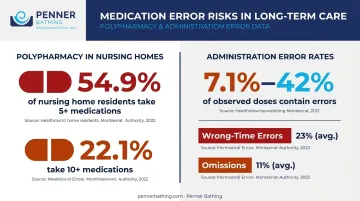
WHO reports that medication-related harm affects approximately 1 in 30 patients globally, and that half of all avoidable healthcare harm is medication-related. In aged-care facilities specifically, a 2024 systematic review found administration error rates ranging from 7.1% to 42% of observed doses — with wrong-time errors and omissions being the most common types.
Long-term care residents face a specific compounding risk: polypharmacy. A 2021 study found polypharmacy (five or more medications) in 54.9% of nursing home residents, with excessive polypharmacy (ten or more) in 22.1%. More medications mean more opportunities for error — wrong dosages, dangerous interactions, and omissions that go unnoticed because residents cannot reliably self-report symptoms.
Patient Falls and Physical Safety
Falls are among the most frequent adverse events in care settings. WHO cites a rate of 3–5 falls per 1,000 bed-days in acute care, with more than one-third resulting in injury. In nursing homes, the scale is significant: HHS-OIG reported in 2025 that 42,864 Medicare-enrolled nursing home residents were hospitalized following falls with major injury between July 2022 and June 2023 — and nursing homes failed to report 43% of those events in required assessments.
Bathroom environments carry particular risk. A 2026 care-home study tracking nearly 17,000 falls found that 13% occurred in bathrooms — spaces where wet surfaces, limited grab points, and standard tub designs not built for elderly users combine.
Contributing risk factors across settings:
- Wet or slippery surfaces during bathing and toileting
- Inadequate or improperly sized equipment
- Low staff-to-resident ratios during peak care times
- Residents with balance, mobility, or cognitive impairments
Missed Nursing Care and Errors of Omission
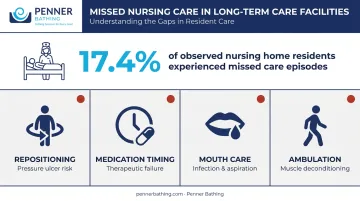
Missed nursing care is any aspect of required care that is omitted or significantly delayed — skipped repositioning, delayed medication, missed mouth care, insufficient ambulation. These errors are harder to spot than active mistakes, which is part of what makes them dangerous.
The staffing connection is well-documented. Aiken et al.'s foundational study found that each additional patient per nurse was associated with 7% higher odds of patient death within 30 days.
A 2021 multicenter nursing home study found missed care episodes in 17.4% of observed residents — and those were only the episodes that researchers could document.
Diagnostic Errors and Delayed Treatment
Diagnostic errors affect an estimated 5% of U.S. adults (approximately 12 million people annually) in outpatient settings, with roughly half carrying potential for harm. Research by Newman-Toker et al. found that cancers, vascular events, and infections account for 74.1% of high-severity diagnostic error cases.
Long-term care adds another layer of risk. Residents with dementia or limited verbal communication often cannot report worsening symptoms — so conditions that would trigger a rapid response in an alert patient can deteriorate for days before staff identify them.
Factors that increase diagnostic delay in care settings include:
- Cognitive impairment masking symptom reporting
- High resident-to-staff ratios limiting individual observation time
- Atypical symptom presentation in older adults
- Over-reliance on resident self-report without systematic clinical checks
Patient Care Issues Specific to Long-Term Care and Nursing Homes
Residents of nursing homes and assisted living facilities represent one of the most vulnerable patient populations. Their care needs don't resolve after a hospital discharge — they require sustained, individualized attention across months and years. Several challenges are particularly acute in this environment.
Pressure Ulcers and Skin Integrity
A 2023 meta-analysis estimated 11.6% prevalence of pressure injuries among nursing home residents, with a cumulative incidence of 14.3%. Immobility, limited communication, and inadequate repositioning schedules drive most of these cases — and most are preventable.
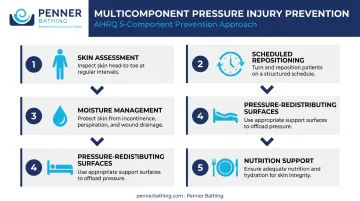
AHRQ's prevention toolkit emphasizes a multicomponent approach:
- Admission and daily skin assessment
- Scheduled repositioning using turning teams
- Moisture management
- Pressure-redistributing support surfaces
- Nutrition support
In long-term care specifically, delays in implementing specialized mattresses and staff unfamiliarity with repositioning techniques for residents with physical deformities increase risk substantially.
Bathing Safety and Hygiene-Related Care
Bathing is a high-risk care activity in long-term care. Missed or rushed hygiene directly contributes to HAIs, pressure ulcers, and skin breakdown — and standard institutional tub designs weren't built for elderly or mobility-impaired residents, compounding the risk.
Purpose-built bathing systems address this directly. Penner Bathing has designed healthcare bathing systems for long-term care facilities across the U.S. and Canada since 1980, with infection control and safe care delivery built into every model:
- Automatic disinfection standard on all models
- Built-in BioCote antimicrobial protection
- Fast-fill reservoirs to reduce care delays
- Integrated transfer systems for residents who cannot bear weight
These features are part of the core product design, not afterthoughts — so staff can provide consistent, safe hygiene care even during high-demand shifts.
Nutrition, Hydration, and Basic Needs
Malnutrition and dehydration are significant and underrecognized risks in long-term care. A 2025 international nutritionDay study found 18.4% of nursing home residents malnourished and 48.7% at nutritional risk — far higher proportions than staff assessments alone typically identify.
Dysphagia (swallowing difficulties) compounds this risk. A 2024 meta-analysis estimated dysphagia prevalence at 56.11% among residential aged-care residents, linking it to malnutrition, dehydration, and aspiration pneumonia. Residents who rely entirely on staff for feeding, or who have dementia-related appetite changes, face the highest risk.
Resident Dignity and Emotional Well-Being
Physical risks are only part of the picture. Loss of autonomy, impersonal care routines, and inadequate communication cause real psychological harm that directly affects physical recovery and quality of life. Federal regulation 42 CFR 483.10 requires that facilities treat each resident with respect and dignity and provide care in a manner that promotes quality of life. This isn't aspirational guidance — it's a regulatory expectation.
Private activities like bathing carry particular dignity implications. Equipment and workflows that allow residents to be bathed with minimal exposure, personal control where possible, and genuine attention to comfort are part of meeting this standard, not just exceeding it.
Best Practices and Solutions to Common Patient Care Issues
Standardize Care Protocols and Checklists
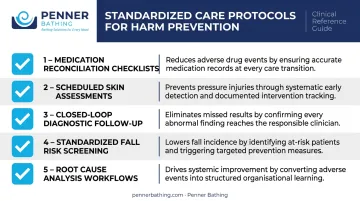
Variation in care delivery is one of the primary drivers of preventable harm. Standardizing routines through checklists, scheduled assessments, and closed-loop processes for medication administration reduces both errors of action and errors of omission.
Practical applications include:
- Medication reconciliation checklists at each care transition
- Scheduled skin assessments tied to repositioning documentation
- Closed-loop diagnostic follow-up systems (flagging outstanding results)
- Standardized fall risk screening on admission and after any status change
- Root cause analysis built into adverse event reporting workflows
ECRI's Total Systems Safety framework specifically recommends proactive system redesign — not just reacting to failures after they occur.
Prioritize Staff Training and Competency Development
One-time onboarding isn't sufficient. Care team composition changes frequently, patient conditions evolve, and protocols are updated. Ongoing training is the only approach that keeps pace.
Key training priorities for long-term care settings:
- Infection control and hand hygiene compliance
- Medication administration accuracy, including high-risk drug classes
- Fall prevention, including equipment use and environmental assessment
- Correct operation of bathing and transfer equipment
- Communication strategies for residents with cognitive impairment
- Resident rights, consent frameworks, and dignity-of-care standards
Engage Patients, Residents, and Families
WHO notes that effective patient engagement can reduce the burden of harm by up to 15%. In long-term care, where residents may have cognitive limitations, family advocates often serve as a critical early warning system for care concerns.
Practical engagement approaches include:
- Regular care plan discussions with residents and designated family members
- Resident and family councils that surface quality and safety concerns
- Transparent communication about medications, schedules, and care changes
- Clear processes for families to report concerns without fear of retaliation
CMS identifies resident and family engagement as a formal component of nursing home quality improvement, not a discretionary add-on.
Invest in the Right Equipment and Facility Environment
Physical environment and equipment quality directly affect safety outcomes. Facilities should audit their current equipment to identify where gaps create unnecessary risk — particularly in bathrooms, where falls and hygiene lapses occur most frequently.
Equipment considerations for long-term care:
- Bathing systems with integrated transfer mechanisms for non-weight-bearing residents
- Automatic disinfection to maintain hygiene consistency between residents
- Fast-fill reservoirs that reduce care delays during high-demand shifts
- Bariatric-rated equipment (transfer chairs rated to 600 lbs) for appropriate resident coverage
- Flooring and grab surfaces that reduce slip and fall risk in wet areas
- Patient lifts (mobile and ceiling-mounted) for residents requiring full mechanical transfer

Purpose-built equipment matters because it consolidates safety, hygiene, and efficiency into a single system — reducing the operational complexity staff have to manage on every shift. Penner Bathing, for example, offers 38+ healthcare bathing models with multiple entry configurations, automatic disinfection, and integrated transfer options designed specifically for long-term care environments.
Building a Culture of Patient Safety
Protocols and equipment reduce specific risks. Culture determines whether those improvements stick.
A genuine safety culture means near-misses are reported without fear of punishment, data is reviewed regularly, and staff wellness is treated as a patient safety issue alongside clinical outcomes. A 2024 meta-analysis of 85 studies and 288,581 nurses found that burnout was associated with poorer safety climate, increased medication errors, more falls, and higher rates of missed care. Fatigued staff make more errors. That's not a moral judgment — it's a documented risk factor.
Components of a strong patient safety culture:
- Leadership commitment that is visible and consistent, not just stated in policy
- Non-punitive incident reporting systems that surface near-misses before they become harm events
- Regular data review — tracking fall rates, HAI rates, medication errors, and skin assessment completion
- Gap analysis against best practices, using frameworks like WHO's Global Patient Safety Action Plan 2021–2030 or ECRI's Total Systems Safety approach
- Staff wellness support as a foundational element, not an afterthought
Facilities that embed these practices into daily operations see measurable gains: lower HAI rates, fewer falls, and higher staff retention. Safety culture isn't built through policy documents — it's built through consistent leadership behavior, transparent data, and systems that make the right action the easy one.
Frequently Asked Questions
What are current issues in healthcare?
The most persistent challenges include healthcare-associated infections, medication errors, diagnostic delays, and chronic staff shortages driving burnout. Emerging concerns include AI governance in clinical decision-making and cybersecurity vulnerabilities in connected health systems.
What are the top ethical issues in healthcare?
Common ethical concerns include patient autonomy, informed consent, end-of-life decision-making, equitable access, resource allocation, and AI bias in diagnostics. These debates are framed by four core clinical ethics principles: autonomy, beneficence, nonmaleficence, and justice.
What are the most common patient care issues in nursing homes and long-term care?
Pressure ulcers, patient falls, medication errors, hygiene-related infections, missed care due to understaffing, malnutrition, and inadequate attention to resident dignity are the most consistently documented challenges. Many are preventable with consistent protocols and appropriate equipment.
How can long-term care facilities reduce healthcare-associated infections?
Hand hygiene compliance, rigorous environmental cleaning protocols, regular staff training on infection control, and the use of equipment with built-in antimicrobial protection all reduce HAI rates. Automatic disinfection systems that run between resident uses remove a common point of failure in manual cleaning routines.
What role does staff training play in preventing patient care issues?
Trained staff identify early warning signs faster, follow standardized protocols more consistently, and communicate more effectively with residents and families. Because care teams change frequently and resident conditions evolve, ongoing training — rather than one-time onboarding — is what sustains safer care outcomes over time.