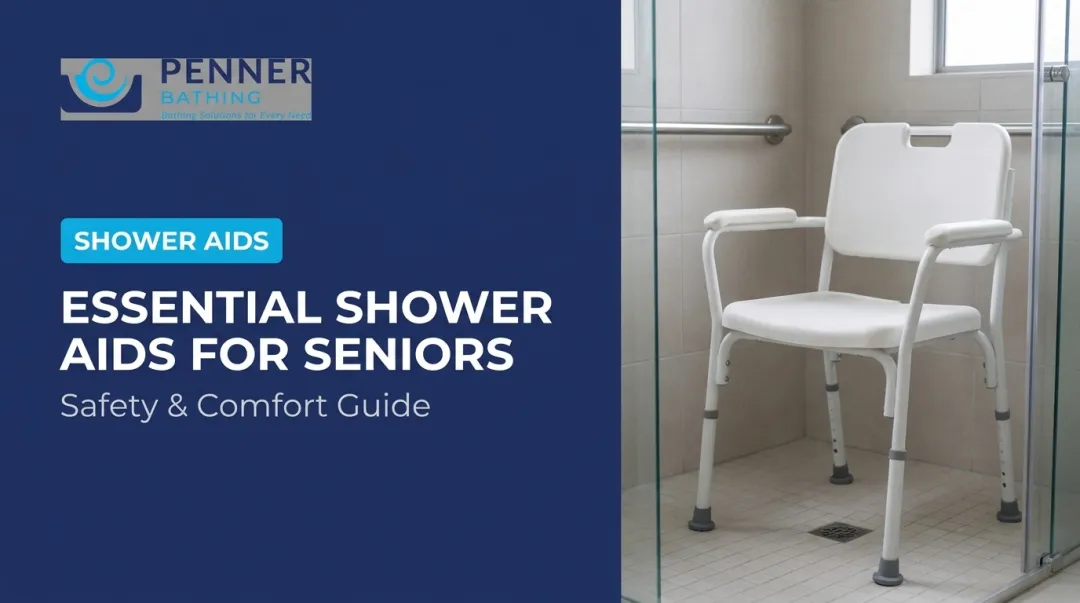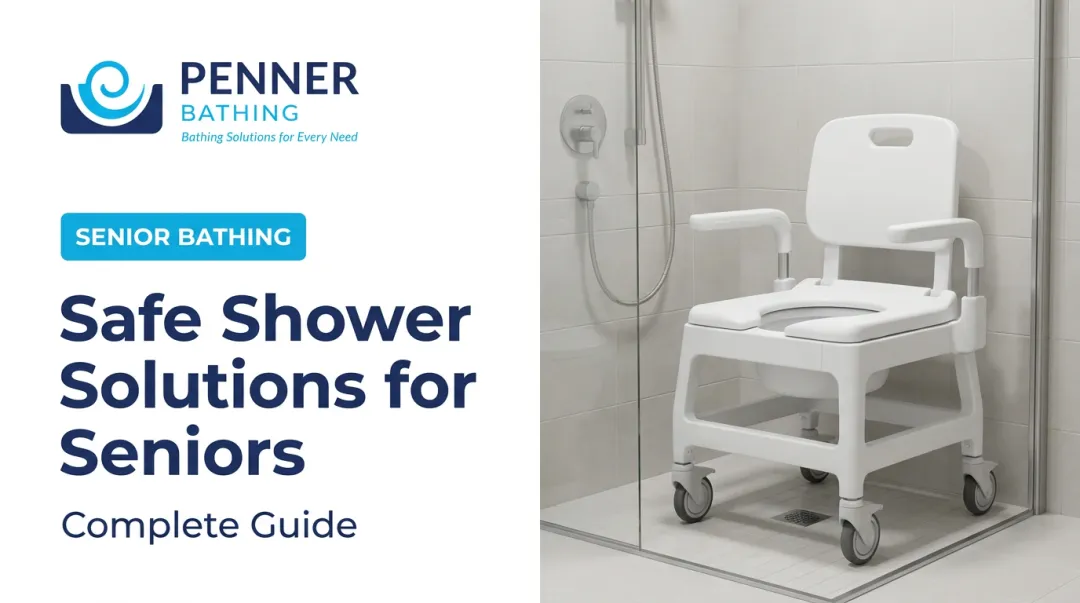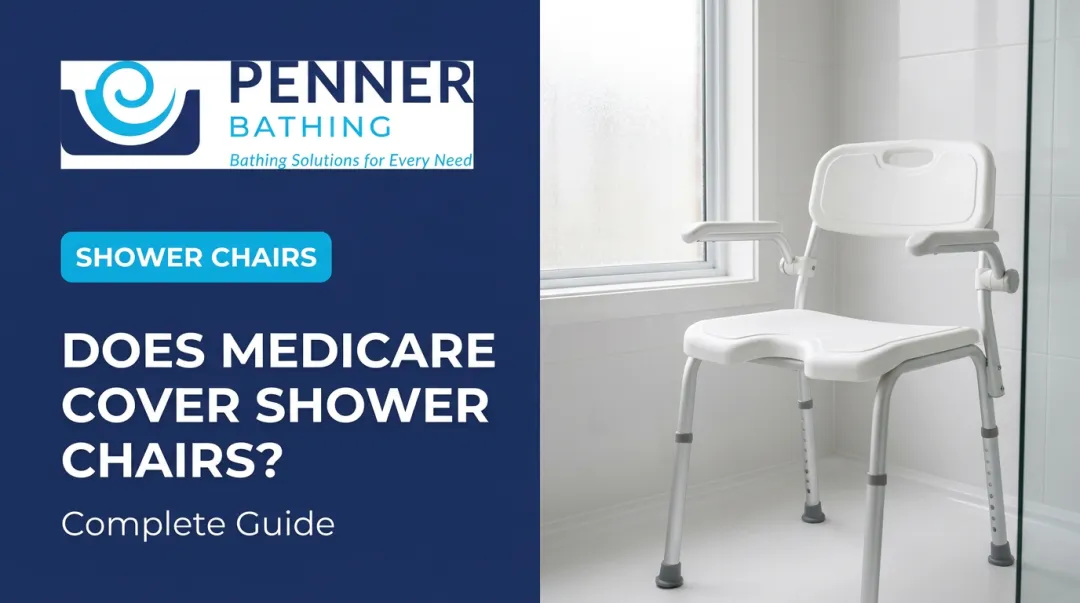

A shower chair won't eliminate that risk entirely, but for seniors managing balance issues, post-surgical recovery, or simple fatigue from standing in a hot shower, it's one of the most practical tools available. It also connects directly to something many seniors care about deeply: staying home and bathing on their own terms.
This guide covers the five best shower chairs for 2026, explains the different types, and gives you a practical buyer's checklist — so you can choose with confidence.
Key Takeaways
- Falls are the leading cause of injury among seniors — a proper shower chair significantly reduces that risk
- The right chair depends on your bathroom layout, mobility level, and whether you use a tub or walk-in shower
- Always measure your shower or tub floor space before buying — fit is the most overlooked factor
- Choose a weight capacity at least 20–25 lbs above the user's actual weight for a safe, durable fit
- In assisted living or long-term care settings, purpose-built bathing systems offer capabilities portable chairs can't match
Why Shower Chairs Are Essential for Seniors
Heat makes everything harder. When you stand in a hot shower, blood vessels dilate and blood pressure can drop — a phenomenon called orthostatic hypotension. A 2019 meta-analysis published in PubMed found the condition was associated with falls in older adults at a pooled odds ratio of 1.73. NHS clinical fatigue guidance recommends sitting while showering as an energy-conservation strategy, noting that shower stools reduce the physical demand of bathing.
For seniors, that risk compounds quickly. Key factors that make showering dangerous without support:
- Blood pressure drops more sharply in hot water, raising fall risk
- Prolonged standing strains joints and drains energy faster than most people expect
- A single fall in the bathroom can trigger a cascade of health and independence losses
The consequences reach beyond safety. A prospective cohort study of 754 community-living adults over age 70 found that persistent bathing disability was associated with long-term nursing home admission, with an adjusted hazard ratio of 1.77. Losing the ability to bathe independently isn't just inconvenient — it's one of the clearest predictors of accelerated transitions to long-term care.

The right shower chair reduces that risk at the source — which makes choosing one worth doing carefully.
Best Shower Chairs for Seniors in 2026
Products were evaluated on stability, weight capacity, ease of assembly, height adjustability, comfort, and suitability across different bathroom types and mobility needs.
Best Overall: KingPavonini Shower Chair
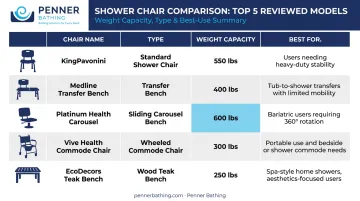
A lightweight, high-capacity standard chair that consistently earns top marks across consumer and clinical-oriented reviews. At a retailer-verified 550 lb capacity, it handles a wide range of users without requiring a separate bariatric model.
The removable M-shaped armrests set this apart from cheaper alternatives: they allow lateral transfers from a wheelchair without repositioning the entire chair. Push-button height adjustment works for users with limited grip strength, and drainage holes in the seat prevent water pooling.
One practical note: the seat is wide, which is comfortable for most users but may be a tight fit in narrow tub surrounds. Measure before ordering.
| Spec | Detail |
|---|---|
| Weight Capacity | 550 lbs |
| Key Features | Tool-free assembly, removable armrests and backrest, drain holes, height adjustable, shower clip holster |
| Best For | Most seniors; wheelchair users needing lateral transfer; caregivers who need quick daily setup |
Best Transfer Bench: Medline Transfer Bench
Transfer benches solve a specific problem: getting into a tub without stepping over the edge. This model straddles the tub wall with two legs inside and two outside, so the user sits at the edge, lifts their legs over, and slides across. No step-over required.
Confirmed specs: 400 lb capacity, height range of 18–22.5 inches, reversible backrest for left or right tub entry, suction-cup feet for extra grip, and tool-free assembly.
Worth noting: sliding across the bench requires some core strength. The hard plastic seat can be uncomfortable for users with sensitive skin or pressure concerns. A padded seat cushion resolves that quickly if needed.
| Spec | Detail |
|---|---|
| Weight Capacity | 400 lbs |
| Key Features | Reversible backrest, suction-cup feet, tool-free assembly, height adjustable |
| Best For | Users who cannot safely step over a tub wall; post-operative patients; budget-conscious buyers |
Best Sliding Transfer Bench: Platinum Health Carousel Bariatric
The Carousel takes the transfer bench concept further by removing most of the physical effort. A twist-knob slide mechanism glides the user into the tub, and a swivel seat handles the rotation. With a 600 lb bariatric capacity and full padding on the seat, backrest, and armrests, it's a significant comfort upgrade over hard plastic benches.
This chair is used in hospitals and nursing homes precisely because it reduces transfer effort for both user and caregiver. The optional leg extender kit accommodates taller tub walls.
Two limitations to flag: operating the twist-knob requires some hand dexterity, and the minimum seat height may be too elevated for shorter users. Confirm measurements before purchase.
| Spec | Detail |
|---|---|
| Weight Capacity | 600 lbs |
| Key Features | Padded seat/back/armrests, pivoting and sliding seat, optional extension legs |
| Best For | Bariatric users; very limited mobility; caregivers seeking minimal-effort transfers |
Best for Wheelchair Users: Vive Health Shower Commode Transport Chair
This chair rolls. It functions as a shower chair, bedside commode, and transport chair in one, cutting the number of seat-to-seat transfers throughout the day. For wheelchair users, that consolidation matters.
Rated at 300 lb capacity, it includes locking wheels, adjustable footrests, and a commode bucket with lid. It rolls directly over a toilet and into a curbless (roll-in) shower.
The hard constraint: it will not work with a tub or any shower that has a lip or step. If your bathroom doesn't have a roll-in shower, this isn't the right product.
| Spec | Detail |
|---|---|
| Weight Capacity | 300 lbs |
| Key Features | Locking wheels, commode function, adjustable footrests, wheeled transport |
| Best For | Wheelchair users with roll-in showers; caregivers managing complex daily routines |
Best Stylish Option: EcoDecors Symmetry Teak Shower Bench
Aesthetics matter more than most clinical guides acknowledge. Seniors who resist using assistive products because they look medical will simply not use them, and that's a real safety problem. The EcoDecors Symmetry looks like spa furniture.
It's built from solid plantation teak with LiftAide arms (raised sides that double as handholds), a lower shelf for toiletries, and adjustable rubber feet. Full specs are in the table below.
The trade-offs are real: no backrest, no height adjustment, and a lower weight capacity than the other chairs here. This is the right pick for users with adequate core strength who want something they'll actually use because it doesn't look like medical equipment.
| Spec | Detail |
|---|---|
| Weight Capacity | 250 lbs |
| Key Features | Solid teak, slatted seat, LiftAide arm handholds, lower storage shelf, rubber feet |
| Best For | Seniors with moderate balance needs who prioritize aesthetics; walk-in shower users |
Types of Shower Chairs Explained
Matching the chair type to the user's situation is more important than picking the best-reviewed model.
Standard Shower Chairs
Four legs, a seat, a back, and armrests — these sit inside the shower or tub and are where most seniors start. Backless stools are a compact variant for users with strong core stability who need minimal support.
Transfer Benches
Transfer benches straddle the tub wall so the user can sit outside the tub and slide in without stepping over the edge. Standard models require the user to slide manually; sliding benches like the Platinum Health Carousel add a mechanical glide mechanism to reduce the effort further.
Wheeled Commode Chairs
These combine shower seating, toilet function, and mobility into a single device. They require a curbless (roll-in) shower — they won't clear a tub or shower lip — making them best suited for wheelchair users and those with severe mobility limitations.
Once you know which type fits the user's needs, the next step is comparing features within that category.
What to Look For When Buying a Shower Chair
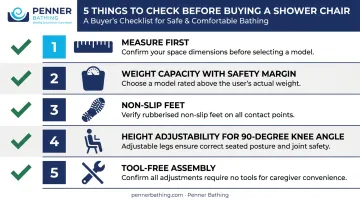
Measure First
The most common and costly mistake is ordering a chair without measuring. Before purchasing:
- Measure the interior floor space where the chair legs will actually sit
- Compare that against the chair's base footprint — not just the seat width, but the full leg spread
- Confirm at least 1 inch of clearance on each side
A chair that doesn't fit safely in the space is not a safe chair, regardless of its other features.
Weight Capacity
Always choose a chair rated above the user's actual weight — not just marginally, but with a meaningful safety margin. The five chairs reviewed here range from 250 to 600 lbs, with capacity being model-specific rather than tied to a universal category standard. When in doubt, size up.
Non-Slip Feet
Non-negotiable. Rubber feet or suction-cup feet are the two common solutions. Both are verified features on the chairs reviewed above. Check that feet are in good condition before each use — worn rubber loses grip quickly.
Height Adjustability
The goal is a seat height where the user's hips and knees sit at approximately 90 degrees with feet flat on the floor. This position distributes weight safely and makes standing and sitting transitions easier. Adjustable-height chairs accommodate this for most users; fixed-height options (like the EcoDecors bench) only work if the height happens to match.
Assembly and Dexterity
Tool-free, push-button assembly is strongly preferable for users and caregivers managing arthritis or limited grip strength. Chairs that require tools or complex assembly are poorly matched to this population. Chair weight is also a practical factor — a 20 lb bench that needs to be moved daily is a different experience than a 7 lb plastic chair.
When to Go Beyond a Portable Chair
For users with post-surgical recovery, neurological conditions, or very limited mobility, consulting an occupational or physical therapist before purchasing is worth the time — they can assess the full picture and recommend equipment matched to the user's actual condition.
For seniors in assisted living or long-term care settings, a portable shower chair may not be enough. Penner Bathing designs bathing systems specifically for care environments, including the Lopital line of wheeled, padded, and bariatric shower chairs built for professional settings. Features like built-in BioCote antimicrobial protection and hydrotherapy address needs that no portable chair can meet.
Conclusion
The right shower chair is one of the highest-impact, lowest-cost purchases a senior or caregiver can make. The decision tree is straightforward: measure the space, confirm the weight capacity with a real safety margin, and match the chair type to how the user actually gets in and out of the shower.
- Standard chair: for most seniors who step into the shower without issue
- Transfer bench: for those who cannot safely clear a tub wall
- Sliding bench: when even sliding requires more effort than the user has
- Commode/wheeled chair: for wheelchair users with roll-in showers
- Teak bench: for users who need light support but won't use something clinical-looking
For situations where a single chair isn't enough — think full bathing systems for assisted living, long-term care, or aging-in-place renovations — the calculus changes. Penner Bathing has manufactured and distributed bathing systems for nursing homes, hospitals, and assisted living facilities across North America since 1980. Their systems are UL Listed, made in Aurora, Nebraska, and backed by 24/7 live phone support. Reach out at 1-800-732-0717 or visit PennerBathingSpas.com.
Frequently Asked Questions
Does Medicare cover shower chairs for seniors?
Standard shower chairs are classified by CMS as comfort or convenience items and are generally not covered under Original Medicare Part B. Commode chairs with a medical function may qualify separately. Some Medicare Advantage plans include OTC allowances that cover shower chairs — check your plan's current Evidence of Coverage to confirm.
What should I look for when buying a shower chair?
Prioritize non-slip feet, a weight capacity that exceeds the user's weight with margin to spare, height adjustability (so the user's knees sit at 90 degrees), and tool-free assembly. Measure your bathroom floor space before ordering.
What is the safest shower chair for seniors?
Look for rubber non-slip feet, a frame rated well above the user's weight, adjustable height, and armrests for lateral stability. Those four features cover the most common causes of shower chair incidents.
What is the most comfortable shower chair for seniors?
Padded seats and backrests are better for longer showers, while teak benches offer a naturally warm, non-slip surface. A wide seat with armrests and drainage holes to prevent water pooling works well for everyday use.
What is the difference between a shower chair and a transfer bench?
A shower chair sits entirely inside the shower or tub — the user steps in to use it. A transfer bench straddles the tub wall, letting the user sit outside and slide in without lifting a leg over the edge. Transfer benches are the right choice for anyone who cannot safely step over a tub ledge.
How do I know what size shower chair to buy?
Measure the interior floor space of your shower or tub where the chair legs will sit, then compare that against the chair's base footprint including any outward leg splay. Confirm the seat height adjusts so the user's knees are at roughly 90 degrees with feet flat. When in doubt, choose an adjustable-height model.