For long-term care facilities specifically, this matters more than almost anywhere else. Residents depend on their facility for nearly every aspect of daily life. The quality of their care, their comfort during routine tasks, and whether their personal values are honored aren't abstract ideals — they're daily realities.
This article covers what patient-centered care actually means, its five core elements, the measurable benefits for both patients and providers, the real barriers facilities face, and practical implementation strategies — with particular attention to long-term care settings.
Key Takeaways
- Patient-centered care treats the whole person — diagnosis, values, preferences, and emotional well-being — not just the illness.
- Active patient engagement improves adherence, reduces complications, and raises satisfaction scores.
- Time constraints and staffing shortages are real barriers — training, culture, and equipment choices can overcome them.
- In long-term care, patient-centered care touches every interaction: bathing, meals, mobility, and care planning.
What Is Patient-Centered Care?
Patient-centered care is a model that places the individual — their values, preferences, cultural background, and personal goals — at the center of every clinical decision. The Institute of Medicine defines it as care that is "respectful of and responsive to individual patient preferences, needs, and values" and ensures those values guide clinical decisions.
Traditional care tends to be task-oriented: the provider diagnoses, prescribes, and the patient follows instructions. Patient-centered care changes that relationship. The patient becomes an active participant in their own treatment, not just a recipient of it.
Who It Applies To
Patient-centered care isn't exclusive to any one setting. It applies across:
- Acute hospitals managing complex diagnoses
- Rehabilitation centers supporting recovery
- Assisted living communities focused on quality of life
- Long-term care facilities where residents live indefinitely
CMS describes person-centered care as integrated services guided by an individual's goals, preferences, and values. That definition holds whether you're planning a hospital discharge or deciding how a resident prefers to bathe each morning.
The 5 Key Elements of Patient-Centered Care
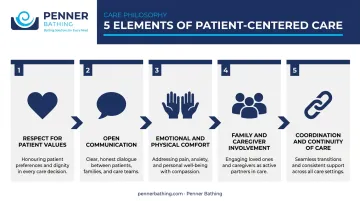
The Picker Institute's eight principles offer a comprehensive framework, but most literature converges on five core elements.
1. Respect for Patient Values and Preferences
Care decisions must reflect what matters most to each individual — including cultural background, religious beliefs, and personal goals. This isn't just philosophical. A 2025 systematic review found that three of four eligible RCTs reported a significant positive effect of shared decision-making on medication adherence in respiratory patients. That adherence gap is a care team problem as much as a patient one — and shared decision-making directly closes it.
2. Open, Transparent Communication
Patients and families can't make informed decisions without clear, timely information. Yet a 2022 review found that providers interrupt patients after a median of just 11 seconds — a 2023 study put that number at 6.5 seconds. Active listening is the mechanism of informed consent, and that gap between intent and behavior is where patient-centered communication breaks down.
3. Emotional and Physical Comfort
Patient-centered care addresses both dimensions of health — clinical and emotional. A meta-analysis of 28 randomized trials involving 6,017 patients found that empathic consultations modestly but meaningfully improved pain, anxiety, and satisfaction (SMD -0.18). Brief, genuine acts of compassion produce measurable outcomes. In clinical terms, they're interventions, not pleasantries.
4. Family and Caregiver Involvement
In complex or long-term cases — particularly dementia — family members and caregivers hold essential context. A systematic review found that two randomized trials promoting staff-family partnership reported improvement in residents' behavioral and psychological dementia symptoms. Practically speaking, care teams that build family into the planning process get better behavioral outcomes and more durable treatment plans.
5. Coordination and Continuity of Care
Gaps between care settings are dangerous. A prospective study covering 762 hospital-to-nursing-home discharges found adverse events occurred after 37.3% of transitions — at an incidence of 13.6 per 1,000 resident-days. Patient-centered care requires organized, accessible services with consistent follow-up so patients don't fall through those gaps.
Why Patient-Centered Care Matters: Benefits for Patients and Providers
The case for patient-centered care isn't just ethical — it's practical.
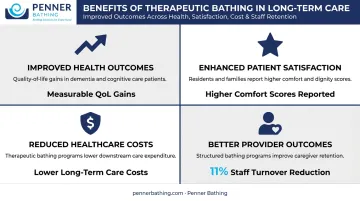
Improved Health Outcomes
Patients who actively participate in care decisions are more likely to follow through on treatment plans. The WHELD cluster RCT — conducted across 69 UK nursing homes with 847 residents with dementia — found that person-centered training produced meaningful improvements compared with usual care:
- Proxy-rated quality of life improved by 2.54 points
- Agitation reduced by 4.27 CMAI points
- Neuropsychiatric symptoms reduced by 4.55 NPI-NH points
Enhanced Patient Satisfaction
A LeadingAge-supported study following more than 100 residents, 180 aides, and 54 nurses found greater resident engagement and satisfaction in more fully implemented person-centered settings. Residents who feel respected and involved report better experiences.
Reduced Healthcare Costs
The WHELD trial also reported lower direct health and social-care costs compared with treatment as usual — while simultaneously improving outcomes. Person-centered care isn't an add-on that increases cost; it's an approach that can reduce unnecessary interventions and improve efficiency.
Better Provider Outcomes
The Korean LTC study found that a one-unit increase in person-centered environment score was associated with an 11% reduction in staff intention to leave (OR 0.890) and a 0.49-point increase in job satisfaction. Meaningful, relationship-based care supports the people delivering it — not just the people receiving it.
The AMA reported 45.2% of US physicians experienced at least one burnout symptom in 2023 — making staff-supporting care models more urgent than ever.
Greater Equity in Care
Patient-centered care is particularly consequential for marginalized populations. KFF data from 2024 found that adults with limited English proficiency were far less likely to report a healthcare visit in the prior three years — 86% vs. 95% among English-proficient adults. Recognizing and removing linguistic, cultural, and socioeconomic barriers is patient-centered care in practice.
Common Barriers to Patient-Centered Care
Time and Staffing Constraints
Brief appointment windows make it difficult to build rapport or gather the context that patient-centered care requires. PHI projects 8.9 million direct-care job openings from 2022 to 2032, while the US population aged 65+ already reached 55.8 million in 2020 — up 38.6% from 2010. Demand is rising faster than the workforce can keep pace.
But workforce shortages are only part of the challenge. Even facilities with adequate staffing often misunderstand what patient-centered care actually requires.
Misunderstanding What It Actually Means
Many facilities invest in physical upgrades — updated waiting rooms, new technology — while missing the deeper cultural and communication shifts that define the approach. A provider who listens for 40 seconds with genuine attention does more for patient trust than a renovated lobby.
The structural barriers run deeper still — and for some patients, they make the approach nearly unreachable.
Social and Systemic Barriers
Language differences, educational gaps, and cultural variation in communication styles create real obstacles between providers and patients. This is especially true for non-English-speaking populations: 25.7 million US residents — 8% of those aged 5 and older — had limited English proficiency in 2021. Without key supports in place, patient-centered care can't reach the patients who need it most:
- Trained medical interpreters available during appointments
- Patient materials translated into relevant languages
- Staff training on cultural communication differences
- Intake processes that flag language and literacy needs early
Patient-Centered Care in Long-Term Care: Practical Implementation Strategies
Long-term care is where patient-centered principles face their most intensive test. Residents don't visit — they live there. Every routine carries weight.
Foster a Culture of Dignity in Everyday Care Routines
Bathing, meals, and mobility assistance aren't interruptions to care — they are care. How staff approach these moments determines whether residents experience their facility as a home or an institution. Comfort, privacy, and individual preferences during daily routines are direct expressions of whether a facility truly lives by patient-centered values.
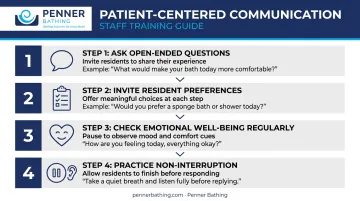
Train Staff on Active Listening and Individualized Communication
Practical training steps include:
- Asking open-ended questions rather than yes/no prompts ("What would make this easier for you?" vs. "Are you comfortable?")
- Inviting residents to share preferences at the start of each care routine
- Checking in on emotional well-being regularly, not just during scheduled assessments
- Practicing non-interruption during resident-led conversation
Involve Residents and Families in Care Planning
Care conferences should include the resident — to whatever extent their condition allows — and family members. Plans that reflect evolving personal goals rather than static clinical protocols stay relevant and earn trust. Federal regulations under 42 CFR 483.21 require baseline care plans within 48 hours of admission and comprehensive person-centered plans within 7 days after assessment, with resident and family participation built into the process.
Invest in Equipment That Supports Physical Comfort and Dignity
Physical comfort during care routines is a tangible expression of patient-centered values. In long-term care settings, the bathing environment carries particular weight — it's one of the most intimate and potentially vulnerable moments in a resident's day.
Therapeutic bathing systems like those from Penner Bathing directly support this principle. Their systems incorporate:
- Aqua-Aire jet technology providing hydrotherapy for muscle and joint relief, particularly relevant for residents with arthritis or chronic pain
- PennAire Microbubble Technology that increases skin hydration by 46% through deep pore penetration and maintains water temperature throughout the session, benefiting residents sensitive to temperature fluctuations
- Automatic disinfection cycles built into every system, eliminating human error in infection control between resident uses
- BioCote antimicrobial protection that works continuously to reduce bacterial growth on surfaces
- Rail-free, home-like design with neutral aesthetics and optional entertainment integration, reducing the clinical feel of the bathing environment
A landmark randomized nursing-home trial found that person-centered showering approaches significantly reduced bathing-associated agitation, aggression, and discomfort compared with standard procedures. The equipment a facility chooses either reinforces that approach or works against it.
Penner Bathing has served long-term care facilities across the US and Canada for over 40 years, manufacturing their systems in Aurora, Nebraska with same-day parts shipping for orders placed before 2 PM CST.

Measure Patient-Centered Outcomes Consistently
Clinical metrics alone don't capture whether person-centered principles are working. Facilities should track:
- Patient-reported satisfaction with daily care routines
- Resident sense of dignity and comfort during personal care
- Staff perception of meaningful work — a leading indicator of burnout risk
- Family engagement rates in care conferences
What gets measured gets improved. Building person-centered outcomes into quality reviews makes the philosophy accountable.
Frequently Asked Questions
What is the meaning of patient-centered care?
Patient-centered care is a healthcare model that prioritizes each patient's individual values, preferences, and well-being, addressing the whole person rather than just the diagnosis. It depends on active partnership between the patient, their family, and the care team.
What are the 5 key elements of patient-centered care?
The five elements are: respect for patient values and preferences, open and transparent communication, emotional and physical comfort, family and caregiver involvement, and coordination and continuity of care.
How does patient-centered care improve health outcomes?
Patients who actively participate in care decisions and feel respected by providers are more likely to follow through on treatment plans, experience fewer complications, and report better overall well-being.
What are the most common barriers to implementing patient-centered care?
Time constraints, staffing shortages, and misaligned priorities within facilities are common. Systemic barriers — language differences, cultural gaps, and limited health literacy — also prevent equitable delivery, particularly for non-English-speaking residents.
Why is patient-centered care especially important in long-term care settings?
Residents in long-term care depend on their facility for nearly every aspect of daily life. When care doesn't reflect personal values, preferences, and dignity, residents experience that deficit every single day — not just during medical appointments.
How does the physical environment support patient-centered care?
Equipment, room design, and daily care tools directly affect resident comfort and dignity. Facilities that invest in comfort-focused, home-like environments, including therapeutic bathing systems that reduce pain and support skin health, reinforce patient-centered principles in every routine interaction.