The numbers underscore the urgency. According to an HHS Office of Inspector General report, 42,864 falls involving major injury and hospitalization occurred among Medicare-enrolled nursing home residents between July 2022 and June 2023—1,911 of those residents died while hospitalized. Equipment selection sits at the center of fall prevention, infection control, and resident dignity. Getting it right isn't optional.
Key Takeaways
- Equipment gaps across mobility, hygiene, monitoring, safety, and comfort categories create direct care risk
- Let resident acuity, compliance requirements, staff workflows, and total cost of ownership drive procurement
- Bathing and hygiene systems are high-risk and under-evaluated—they directly affect infection control and resident dignity
- Vendor support, staff training, and ease of use matter as much as product specifications
- Prioritize suppliers who offer on-site training, responsive technical support, and readily available replacement parts
Essential Equipment and Supply Categories for Nursing Homes
Nursing home equipment covers a broad spectrum—mobility, clinical monitoring, hygiene, infection control, comfort, and cognitive support. Administrators often focus on the most visible categories while underinvesting in others. Every area needs deliberate attention.
Mobility and Transfer Aids
Mobility equipment forms the foundation of resident safety. This category includes:
- Walkers and rollators – matched to the resident's balance and endurance capacity
- Wheelchairs – standard, tilt-in-space, and power-assisted configurations
- Patient lifts – ceiling-mounted and portable, for full-assist transfers
- Gait belts and transfer boards – for partial-assist repositioning
The wrong selection creates measurable risk. A standard walker issued to a resident who needs a rollator increases fall probability. A manual lift assigned to a high-acuity bariatric resident puts both the resident and the caregiver in danger. OSHA data shows that musculoskeletal disorders among nursing assistants occur at more than five times the national average across all industries—unsafe manual transfer practices are a primary driver.
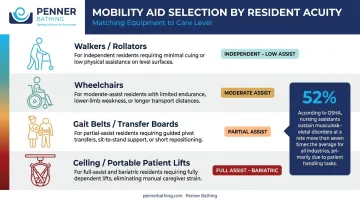
Selection in this category should be driven by individual mobility assessments, documented and updated as residents' conditions change.
Monitoring and Diagnostic Equipment
Accurate, consistent monitoring keeps residents out of the hospital. Core monitoring equipment includes:
- Blood pressure monitors
- Pulse oximeters
- Thermometers and glucometers
- Stethoscopes
In high-census facilities, the consistency of measurements—and how reliably they're documented—determines whether early deterioration gets caught or missed.
MedPAC's 2023–2024 data puts the median facility risk-adjusted potentially preventable readmission rate for SNFs at 10.7%. Digital monitoring devices with onboard memory and logging functions reduce the chance of missed readings and give nursing staff a clearer baseline to compare against when a resident's condition changes.
Bathing and Hygiene Systems
Bathing is one of the highest-risk activities in a long-term care setting—for falls, temperature exposure, and cross-contamination. Yet it's frequently treated as a comfort category rather than a clinical one.
A 2023 direct-observation study across eight California nursing homes found failure to cleanse assessed body sites in 88–100% of observed bed baths, and failure to change soiled wipes in 96% of observed showers. Those numbers reflect systemic infection control breakdowns, not isolated mistakes.
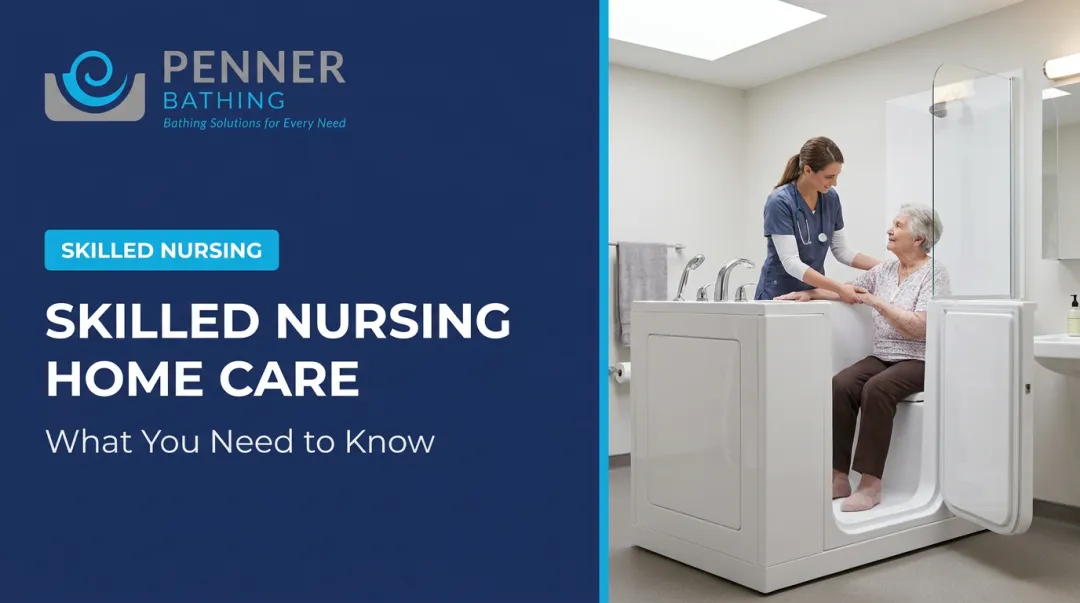
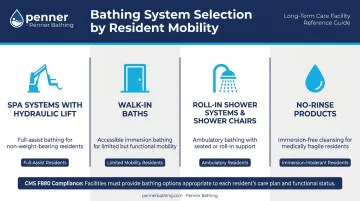
Purpose-built bathing systems for long-term care differ meaningfully from standard tubs. The right system depends on each resident's mobility level and transfer capability:
- Spa systems with hydraulic lift access serve residents who require full staff assistance for transfers
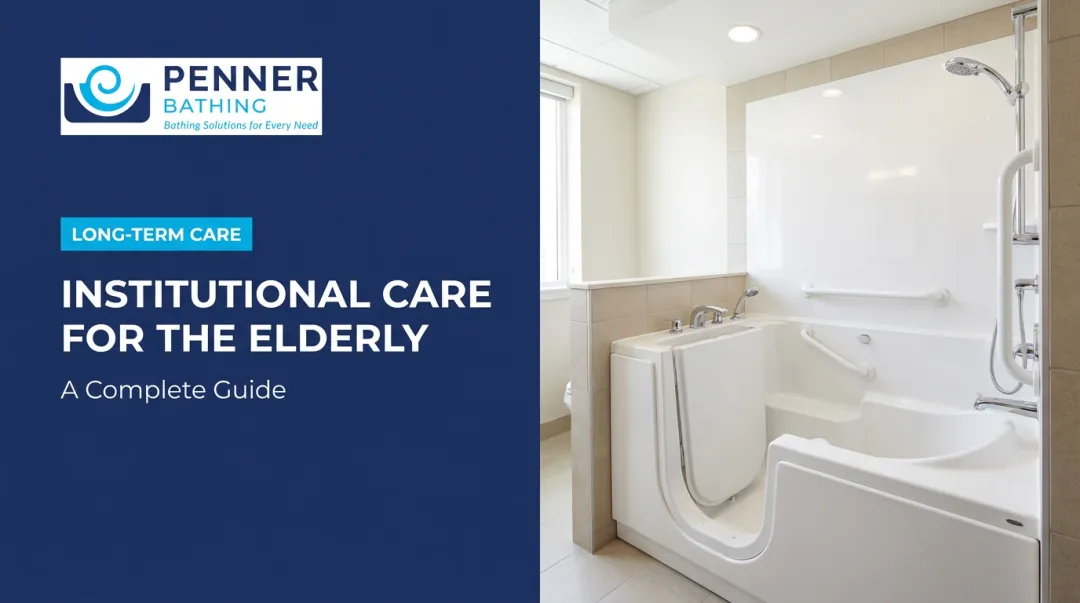
- Walk-in baths work well for residents with limited but functional mobility who can step through a low-threshold door
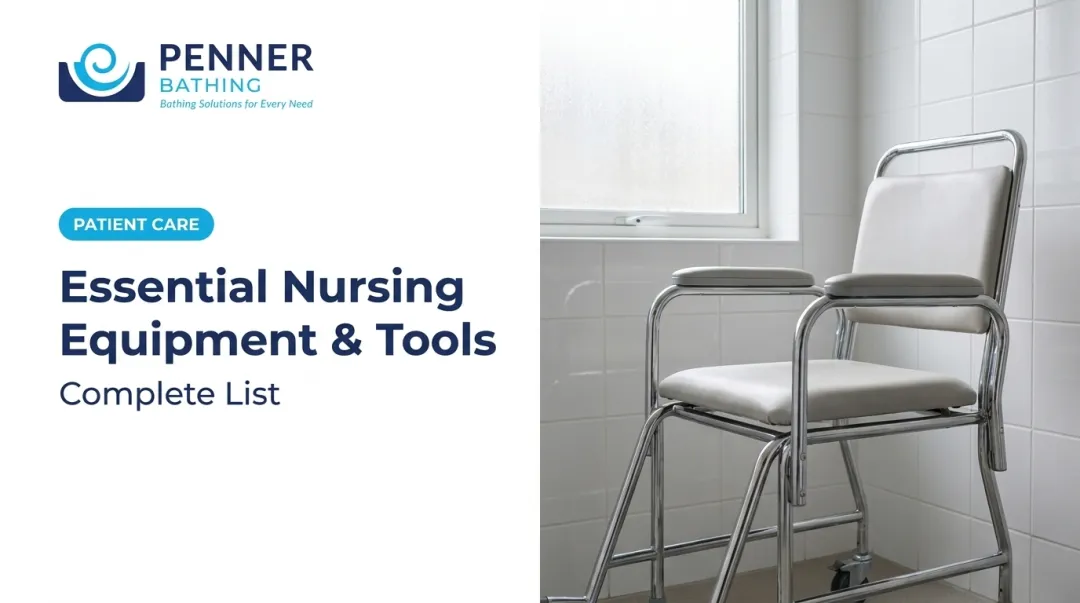
- Roll-in shower systems and shower chairs accommodate facilities that prioritize shower-based bathing routines
- No-rinse bathing products provide a safe alternative for residents who cannot tolerate full immersion
CMS F880 requires shared equipment to be cleaned and disinfected with an EPA-registered product between uses. Systems with built-in automatic disinfection cycles and antimicrobial surface materials directly support compliance with this requirement and reduce reliance on manual protocols that vary by staff member.
Infection Prevention and Safety Equipment
On any given day, approximately 1 in 43 nursing home residents has at least one healthcare-associated infection. That exposure rate demands procurement decisions that go beyond surface-level hygiene and cover every point of resident contact.
Essential infection control supplies:
- EPA-registered disinfectants appropriate for the target pathogens
- Hand sanitizers at all entry points and high-touch areas
- PPE: gloves, masks, and gowns in adequate quantities and proper sizes
- UV sanitizing tools for high-touch shared equipment
Fall prevention and emergency equipment:
- Bed and chair exit alarms (note: CMS guidance specifies alarms should not be the sole or primary fall intervention)
- Motion monitoring systems
- AEDs with accessible placement throughout the facility
- Comprehensive first-aid kits
Comfort, Cognitive, and Daily Living Aids
This category directly affects both physical outcomes and quality of life.
Physical comfort and pressure injury prevention:
- Pressure-redistribution foam mattresses (the 2025 International Pressure Injury Guideline strongly recommends full-body pressure-redistribution surfaces for at-risk residents)
- Ergonomic positioning chairs and recliners
- Adaptive eating utensils and incontinence supplies
Cognitive and recreational aids:
- Activity kits, puzzles, and sensory engagement tools
- Tablets and entertainment systems
CMS F679 requires an ongoing activities program that addresses each resident's physical, mental, and psychosocial well-being. For residents with dementia, individualized non-pharmacological engagement tools—tablets, music players, structured activity kits—are explicitly recognized as appropriate interventions for behavioral symptoms.
Key Factors to Consider When Choosing Nursing Home Equipment
With hundreds of products across every category, administrators need a clear decision process that goes beyond comparing price tags.
Resident Acuity and Individual Care Needs
A memory care unit has very different equipment requirements than a post-surgical rehab floor. The facility's resident profile—average diagnoses, mobility limitations, cognitive status, weight ranges—should drive equipment prioritization.
Nursing staff and occupational therapists belong in the procurement conversation. They interact with residents daily and identify fit problems that spec sheets won't reveal: the tub that's difficult to enter from a specific wheelchair configuration, the monitoring device whose interface confuses staff on night shifts.
Regulatory Compliance and Safety Standards
Equipment procurement carries direct regulatory consequences. Key compliance areas include:
- CMS Conditions of Participation (42 CFR 483) – covering accident prevention (F689), infection control (F880), and equipment maintenance (F909)
- OSHA standards – bloodborne pathogens (1910.1030), PPE requirements, and ergonomics guidance for patient handling
- ADA Standards – accessible sleeping rooms, bathing rooms, grab bars, and accessible routes for covered new construction and alterations
- Certification marks – UL Listed certification confirms a representative product has been evaluated against applicable safety standards and is subject to ongoing compliance checks
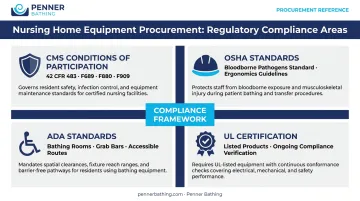
Non-compliance in any of these areas can result in citations, civil monetary penalties, or loss of Medicare/Medicaid certification. Request certification documentation upfront — before a purchase order is issued.
Staff Usability and Training Requirements
Complex equipment that staff can't reliably operate is a liability. Caregiver error rates rise when controls are unintuitive, training is inconsistent, or workflows don't match how the device was designed to be used.
When evaluating equipment, ask:
- Are controls simple enough to be used confidently across shifts with varying experience levels?
- Does the vendor provide on-site training, not just a manual?
- Is training documentation available for onboarding new staff?
- What happens when the primary trained user is absent?
Vendors who provide on-site evaluation and staff training as part of the implementation process reduce both error rates and liability exposure. That same vendor relationship shapes the economics of ownership over time.
Total Cost of Ownership vs. Upfront Price
Purchase price is rarely the largest cost over a device's lifespan. Before committing to any major equipment purchase, model the full cost:
| Cost Component | What to Evaluate |
|---|---|
| Purchase price | Baseline comparison |
| Maintenance & service | Annual service contracts vs. time-and-materials |
| Parts replacement | Parts availability and lead times |
| Consumables | Filter replacements, disinfectants, liners |
| Downtime costs | What happens when equipment is out of service? |
| Staff training | Initial and ongoing training requirements |
Administrators should compare warranty terms, parts availability, and service intervals between vendors. A supplier that ships replacement parts next-day significantly reduces care disruption compared to one with a 7–10 day lead time.
Infection Control Capabilities Built Into the Equipment
Shared equipment—bathing systems, mobility aids, monitoring tools—must be reliably disinfectable between residents. For bathing and hygiene equipment where direct skin contact occurs, this means evaluating:
- Whether surfaces can withstand repeated cleaning with EPA-registered disinfectants without degrading
- Whether built-in antimicrobial material treatments provide additional protection between cleaning cycles
- Whether automatic disinfection features reduce reliance on variable manual protocols
Infection control capability is easy to deprioritize during procurement — and consistently among the first things surveyors check during CMS inspections.
How Penner Bathing Can Help
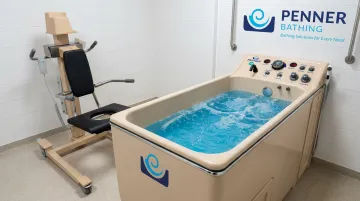
For nursing home administrators evaluating their bathing equipment, Penner Bathing offers purpose-built solutions that address the clinical realities of long-term care bathing: resident safety, infection control, and staff efficiency.
Founded in 1980 and based in Aurora, Nebraska, Penner Bathing has served nursing homes, hospitals, and assisted living facilities across the United States and Canada. Their systems are designed around those same priorities across every model they build.
What sets Penner's systems apart for long-term care procurement:
- Automatic disinfection on all models — dedicated jets run a separate cycle from rinse jets, removing reliance on manual staff protocols and reducing cross-contamination risk
- BioCote® antimicrobial protection works continuously at the surface level, 24/7, as a supplementary layer between cleaning cycles (not a substitute for standard disinfection)
- Fast-fill reservoir cuts the time staff spend waiting on tub fill, streamlining workflows in high-volume settings
- 38+ models and 40+ spa combinations cover facility layouts, resident acuity levels, transfer requirements, and bariatric needs
For procurement and compliance purposes:
- UL Listed and CUL Listed, certified against applicable safety standards
- Manufactured in Aurora, Nebraska — no overseas assembly
- On-site evaluation and staff training provided before and after installation
- 24/7 live phone support and next-day air shipping on parts ordered before 2PM CST
To see the full lineup before committing, procurement teams can visit Penner's national showroom in Aurora, Nebraska (Monday–Thursday 8AM–4PM, Friday 8AM–2PM) or arrange a virtual Zoom tour for remote evaluation.
Contact Penner Bathing at 1-800-732-0717 to schedule an on-site evaluation or discuss model options for your facility.
Conclusion
Choosing equipment for a nursing home involves weighing clinical outcomes, regulatory compliance, staff realities, and long-term cost together. Going with the cheapest bid or a familiar vendor out of habit tends to create problems that show up later on the care floor—not at the point of purchase.
Every category covered in this guide carries direct consequences for resident safety and care quality:
- Mobility aids and patient lifts determine fall risk and injury rates for staff
- Bathing systems affect both infection control outcomes and resident dignity
- Infection control supplies set the baseline for how well a facility contains pathogens
What gets selected at the procurement level shows up in the quality of every shift.
Equipment selection works best as a recurring process. Schedule periodic audits of your inventory as resident populations change, regulations update, and new technologies become available—so your equipment stays aligned with the care your residents actually need.
Frequently Asked Questions
What kind of equipment will Medicare pay for?
During a Medicare Part A-covered SNF stay, equipment used in the facility falls under consolidated billing—the SNF is responsible and DME is not separately payable by Part B. Part B may cover certain DME for qualifying outpatient needs when medically necessary and properly documented. Verify specific item coverage with CMS guidelines or a billing specialist before purchase.
What equipment is used in a nursing home?
Nursing homes rely on a wide range of equipment across several categories:
- Beds & mobility: hospital beds, wheelchairs, walkers, patient lifts
- Monitoring: blood pressure monitors, pulse oximeters, glucometers
- Bathing & hygiene: spa bathing systems, shower chairs, hygiene aids
- Infection prevention: PPE, disinfectants, antimicrobial surfaces
- Comfort & adaptive aids: pressure-relief mattresses, incontinence supplies
How often should nursing home medical equipment be inspected or replaced?
CMS requires all mechanical, electrical, and patient-care equipment to be maintained in safe operating condition (42 CFR 483.90(d)(2)), but sets no universal inspection interval — frequency depends on equipment type and manufacturer guidelines. State licensing rules may mandate specific schedules for certain devices, so check with your state health department.
What bathing equipment is recommended for nursing home residents with limited mobility?
Purpose-built options include spa bathing systems with hydraulic lift access, walk-in baths, roll-in shower systems, and shower chairs designed for long-term care use. In shared-use environments, automatic disinfection, caregiver-accessible controls, and antimicrobial surface materials are clinical requirements, not add-ons.
What are the regulatory requirements for medical equipment in nursing homes?
Nursing homes must comply with CMS Conditions of Participation (42 CFR 483), OSHA workplace safety standards, ADA accessibility requirements, and applicable state health department regulations. Equipment certifications such as UL Listing and documented staff training records are frequently reviewed during CMS surveys as part of compliance verification.