Research published in PMC confirms that comfort is not a secondary consideration in nursing — it's a core nursing outcome, one that influences patient cooperation, recovery behaviors, and overall care quality. Yet many facilities still treat it as an amenity rather than a clinical priority.
This article covers what patient comfort actually means in nursing, Kolcaba's four-dimension framework, the 5 C's of caregiving, practical nursing interventions, and how the physical environment — including bathing — shapes patient outcomes.
Key Takeaways
- Patient comfort spans four dimensions: physical, psychospiritual, sociocultural, and environmental
- Kolcaba's Comfort Theory gives nurses a structured framework to assess and improve comfort across all four dimensions
- Lighting, noise, temperature, and bathing environments directly affect healing outcomes
- Simple interventions — therapeutic communication, quiet hours, warm baths — reduce anxiety and improve care experience
- Facilities that prioritize comfort report higher patient satisfaction scores and stronger staff retention
What Is Patient Comfort in Nursing?
Patient comfort in nursing is not simply the absence of pain. It's a holistic state in which a patient's physical, emotional, social, and environmental needs are being met simultaneously.
Nursing literature has recognized comfort as a nurse-sensitive outcome since Florence Nightingale's time, but the profession's formal shift toward comfort-centered, patient-centered practice gained momentum through the latter half of the twentieth century. Comfort moved from a background assumption to an explicit, assessable nursing outcome.
The patient defines comfort — not the clinician. A nurse may believe a patient is physically comfortable, but if that patient feels anxious, culturally unseen, or stripped of privacy, meaningful comfort hasn't been achieved. That's why individualized assessment matters: comfort looks different for every person, and no single protocol captures it.
In practice, this shapes how nurses assess and plan care:
- Comfort assessments must ask about multiple dimensions, not just pain intensity
- Care plans should reflect what the individual patient identifies as priorities
- Comfort is dynamic — it shifts throughout a patient's stay and must be reassessed regularly
The 4 Dimensions of Patient Comfort: Kolcaba's Framework
Katharine Kolcaba developed her Comfort Theory in the 1990s as a structured way to understand and deliver patient comfort in clinical settings. The theory defines comfort across three forms — relief, ease, and transcendence — applied within four dimensions.
Before examining each dimension, the three forms are worth clarifying:
- Relief — a specific comfort need has been addressed (for example, pain medication reducing acute pain)
- Ease — calm, contentment, or prevention of known discomfort through supportive routines
- Transcendence — helping patients rise above problems that cannot be fully removed, finding meaning or coping capacity despite illness
These forms don't apply sequentially; nurses work across all three simultaneously within each dimension below.
Physical Comfort
Physical comfort addresses bodily sensations: pain, fatigue, nausea, temperature regulation, and mobility. It's the dimension most nurses address first, and the reasoning is straightforward. Unmanaged physical discomfort makes every other dimension harder to reach.
Research supports comfort-focused physical interventions in meaningful ways. A 2021 meta-analysis of 35 studies found that eye masks and earplugs improved sleep measures in ICU patients, with patients gaining an average of 25.47 more minutes of sleep and experiencing fewer nighttime awakenings. Those gains translate directly into recovery outcomes.
Psychospiritual Comfort
This dimension addresses a patient's inner life: anxiety, fear, sense of identity, hope, and spiritual well-being. Patients who feel emotionally abandoned or spiritually adrift cooperate less with care and often experience slower recovery trajectories.
Nursing interventions that target this dimension — psychological support, regular companionship, honest communication about prognosis — make a measurable difference. One neuro-ICU study of 60 patients found that anxiety-focused nursing programs reduced delirium incidence from 70% to 26.7%, a striking outcome attributable to psychospiritual support rather than medication changes.
Sociocultural Comfort
Sociocultural comfort means recognizing and accommodating a patient's cultural background, language preferences, family roles, and social connections. When nurses don't address these factors, patients feel isolated and misunderstood — even when their physical needs are technically being met.
This is especially significant in long-term care, where residents from diverse backgrounds may spend months or years in a facility. Research on nursing home consumer preferences shows that racial, ethnic, and language concordance between staff and residents is a top priority for Black and Latino residents. For these populations, concordance functions as a component of feeling safe — not merely a preference.
Environmental Comfort
Environmental comfort refers to the patient's physical surroundings: lighting, noise, temperature, cleanliness, privacy, and access to calming spaces.
The evidence here is striking:
- Natural daylight is associated with shorter hospital stays. An analysis of 85,021 hospital admissions found a median stay of 4 days near a window versus 5 days near the door
- Noise levels in hospitals regularly reach 68–88 dB during the day and up to 68.8 dB at night — well above levels conducive to rest or recovery
- Room temperature matters: in one nursing home study, agitation scores were 6 points higher at 20°C compared to the optimal 22.6°C
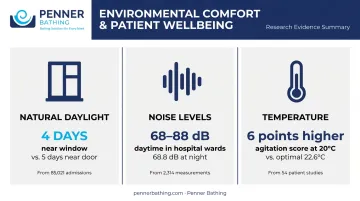
Each of these variables is within a care team's control. Adjusting them is one of the more actionable ways nurses and facility administrators can improve patient outcomes without changing clinical protocols.
The 5 C's of Caregiving
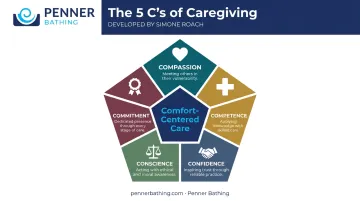
Developed by nursing theorist Simone Roach and first published formally in 1984, the 5 C's define the core qualities nurses and caregivers must embody to deliver genuinely comfort-centered care:
- Compassion — genuine concern for the patient's suffering and humanity
- Competence — the clinical knowledge and skill to respond appropriately
- Confidence — the assurance that builds therapeutic trust between patient and nurse
- Conscience — the ethical compass that guides decisions when guidelines don't
- Commitment — consistent, sustained dedication to the patient's wellbeing over time
These qualities aren't soft additions to clinical skill — they're what translate theoretical frameworks like Kolcaba's Comfort Theory into real bedside experiences. A nurse who understands the four dimensions of comfort intellectually but lacks compassion or commitment won't deliver comfort-centered care consistently.
A 2022 scoping review linked compassion specifically to better patient experience, lower symptom burden, improved quality of life, and higher care ratings.
The 5 C's as a whole serve as the ethical and behavioral backbone of nursing culture — and in long-term care settings, they're often what separates adequate care from care residents and families actually remember.
Building a Healing Physical Environment
The physical care environment — room design, lighting, noise management, temperature, furniture, and bathing facilities — directly shapes how patients heal. It's one of the most actionable levers facility administrators and nurses have.
Environmental Design Elements That Support Comfort
Research points to several specific factors:
- Natural and adjustable lighting — circadian-adjusted lighting increased actigraphic sleep by up to 29 minutes by day five of hospitalization compared to standard lighting
- Noise control — implementing quiet hours with dimmed lighting and reduced activity improved HCAHPS "always quiet" scores across inpatient medical units
- Temperature management — maintaining temperatures near 22.6°C in nursing home settings is associated with significantly lower agitation scores in residents with dementia
- Personalization — home-like furnishings, patient belongings at the bedside, and non-institutional aesthetics reduce anxiety and improve sense of belonging
The Role of Therapeutic Bathing
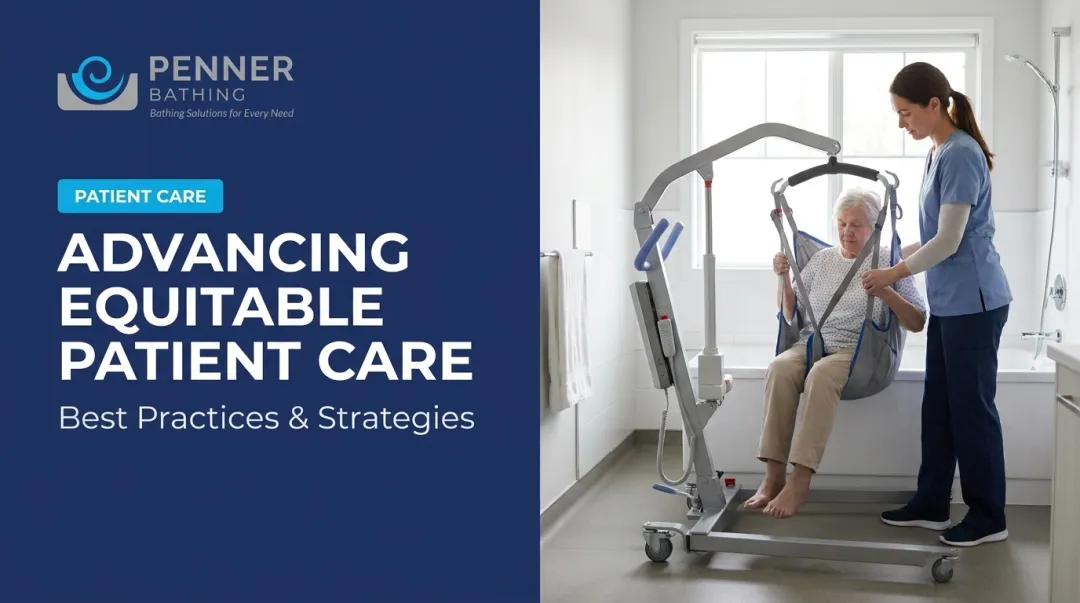
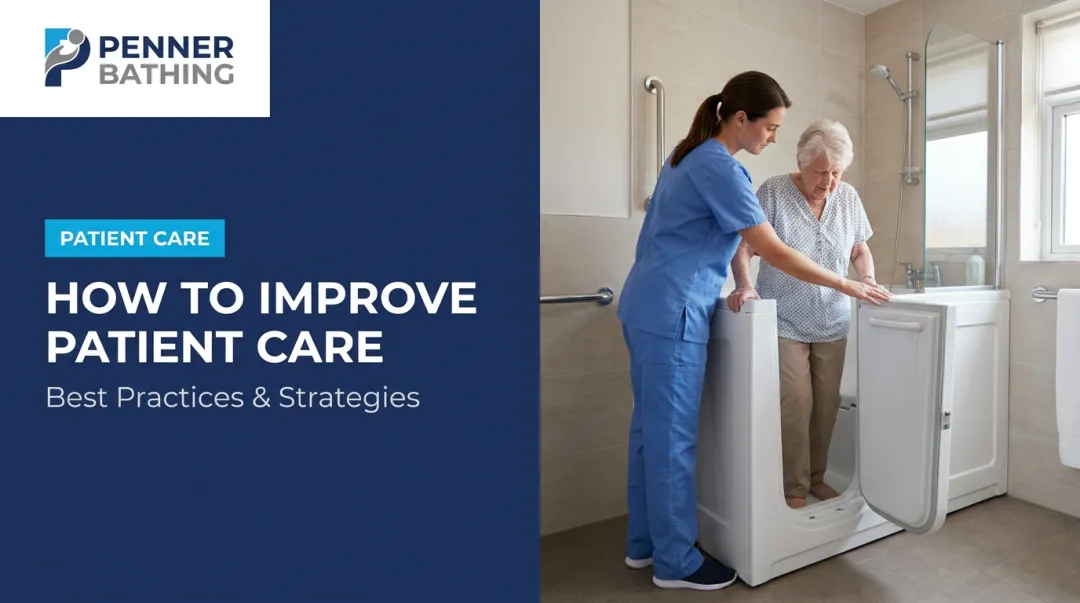
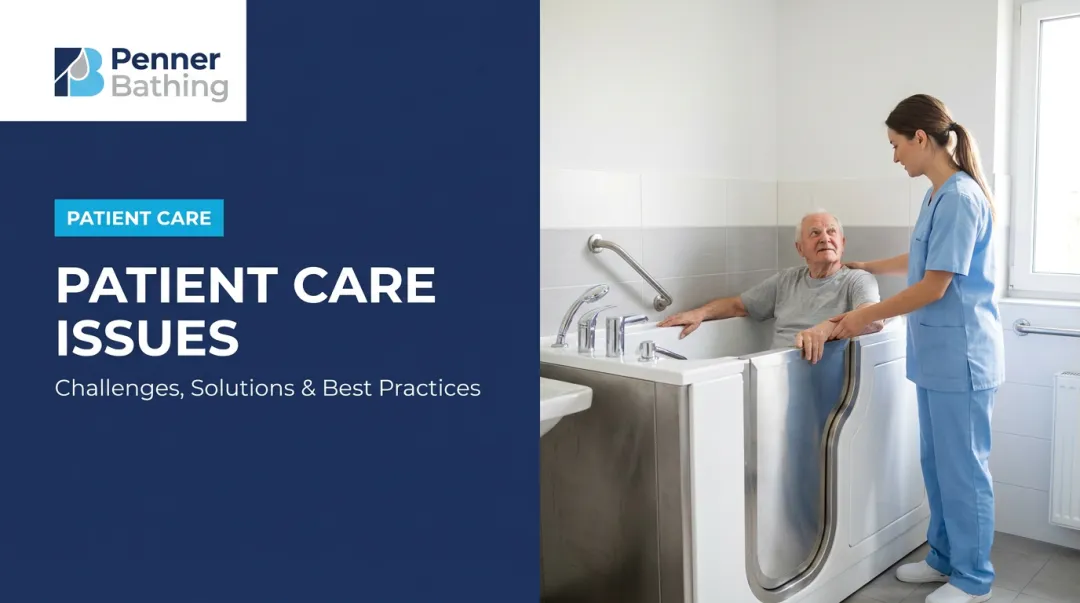
Bathing is a high-stakes moment in long-term care — physically, emotionally, and for patient dignity. When handled without attention to comfort or dignity, it causes agitation, fear, and distress. When done with intention, it becomes genuinely therapeutic.
A randomized trial across 15 facilities found that person-centered bathing approaches reduced aggressive incidents by 53–60% and measurably reduced resident discomfort. The method matters as much as the moment.
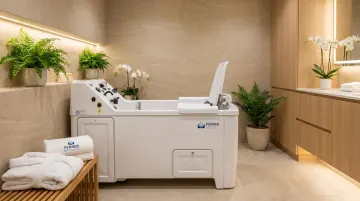
Purpose-built bathing systems, such as those manufactured by Penner Bathing, are designed specifically to serve both patient dignity and staff workflow. Their healthcare bathing systems include rail-free spa designs that avoid clinical aesthetics, neutral color palettes, height-adjustable configurations for safe transfers, and fast-fill reservoirs that cut patient wait time.
The Cascade Bariatric model extends these principles to patients with higher weight requirements, with reinforced construction, flexible entry options, and optional integrated scales for clinical monitoring.
Penner's PennAire Microbubble Technology adds a therapeutic layer, infusing bath water with billions of microbubbles that increase dissolved oxygen by up to 50%, improve skin hydration by 46%, and help maintain water temperature throughout the session. For elderly or mobility-limited residents, this means a routine hygiene procedure also delivers measurable skin and circulation benefits — reducing the gap between clinical necessity and patient comfort.
Privacy and Dignity in the Care Environment
Thoughtful room layouts, privacy curtains, and respectful bathing routines contribute directly to psychospiritual and sociocultural comfort. Patients who feel exposed or rushed during personal care routines experience significantly higher anxiety — and that anxiety compounds across every dimension of Kolcaba's framework.
Facilities that reduce environmental stressors — institutional overhead lighting, constant alarm sounds, clinical visual cues — report improved patient sleep quality and lower anxiety levels. Reducing that friction doesn't require luxury renovations; it requires deliberate choices about what patients see, hear, and feel throughout their stay.
Practical Comfort-Centered Nursing Interventions
Physical Interventions
- Use validated pain tools (NRS for self-reporting adults; PAINAD for patients unable to self-report) to assess and document pain systematically
- Implement appropriate positioning and pressure-relief strategies during rest periods
- Apply warm or cool compresses based on patient preference and clinical indication
- Establish structured mobility routines to prevent deconditioning and reduce fatigue
Psychosocial Interventions
- Practice active listening — allow patients to express fear and uncertainty without rushing toward clinical correction
- Include family members in care planning conversations wherever appropriate
- Make spiritual care referrals when patients express distress tied to meaning, identity, or fear of death
- Communicate clearly about what to expect during procedures, reducing the anxiety of the unknown
Environmental Interventions Nurses Can Take Now
Nurses have practical options regardless of facility limitations:
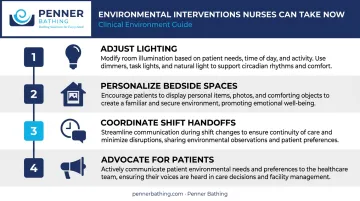
- Adjust lighting during rest periods — dim overhead lights in the evening and request quiet hours be formalized on the unit
- Personalize bedside spaces — encourage families to bring photos, familiar objects, and preferred items
- Coordinate shift handoffs with noise minimization in mind — bedside shift reports can reduce hallway conversations that disrupt sleep
- Advocate for patients when environmental conditions (alarm frequency, room temperatures, bathing schedules) are working against comfort
Documentation and Continuity
Comfort assessments mean little if they don't follow the patient. Joint Commission standards require pain reassessment after every intervention; CMS long-term care guidance mandates interdisciplinary, person-centered care plans that are regularly reviewed. Thorough documentation lets the next nurse continue without interruption — which matters most for patients who cannot easily re-explain their preferences or lack the capacity for self-advocacy.
Why Patient Comfort Matters: Outcomes and Quality of Care
Comfort-centered nursing produces outcomes that matter to patients, institutions, and regulators simultaneously.
Kolcaba's framework has been applied across settings with reported improvements in pain, anxiety, sleep, and satisfaction — though populations and interventions vary, making single pooled reductions difficult to claim with precision. What the evidence consistently shows: addressing comfort systematically produces better results than addressing it reactively.
Comfort care is also directly tied to institutional performance and reimbursement. HCAHPS measures nurse communication, staff responsiveness, and environmental quietness — all comfort-adjacent indicators. Hospitals that perform poorly on these metrics risk losing a portion of their annual IPPS update, and the Hospital Value-Based Purchasing program withholds 2% of base operating DRG payments for redistribution based on performance, with patient experience weighted at 25%.
The connection between care environment and staff burnout is equally real. Across 463 acute-care hospitals, 31.4% of nurses reported high burnout, and every 10-point increase in high burnout was associated with 0.4–1.3 percentage-point lower HCAHPS ratings, including 1.3 fewer patients who would definitely recommend the hospital.
Facilities that build comfort into their culture (through better environments, better tools, and clearer frameworks) create conditions where nurses can do their jobs well. That improvement feeds directly back into patient care.
Frequently Asked Questions
What is patient comfort in nursing?
Patient comfort in nursing refers to the holistic state in which a patient's physical, emotional, spiritual, and environmental needs are met. It's considered a core nursing outcome — not simply pain management — and requires individualized assessment because each patient defines comfort differently.
What are the 4 types of patient comfort in nursing?
Kolcaba's Comfort Theory identifies four dimensions: physical (bodily sensations and symptoms), psychospiritual (emotional and inner well-being, including identity and hope), sociocultural (cultural background, language, and family connections), and environmental (the surrounding care setting — lighting, noise, temperature, and privacy).
What are the 5 C's of caregiving?
The 5 C's — Compassion, Competence, Confidence, Conscience, and Commitment — are the core qualities nurses and caregivers need to deliver effective, comfort-centered care consistently. Developed by Simone Roach, they serve as the ethical and behavioral foundation for patient-centered nursing practice.
How does the physical environment affect patient recovery?
Noise, lighting, temperature, and room design directly influence a patient's stress levels, sleep quality, and sense of safety. Research links natural daylight to shorter hospital stays, controlled temperature to lower agitation, and quiet hours to better HCAHPS scores — each of which shapes recovery speed and treatment outcomes.
What is the role of hydrotherapy in patient comfort?
Warm water bathing reduces muscle tension, promotes relaxation, and restores a sense of normalcy and dignity — particularly for elderly and mobility-limited residents in long-term care. Person-centered bathing approaches have been shown to reduce bathing-related aggression by over 50% in nursing home settings.
How can nursing homes create a more comfortable environment for residents?
Start by reducing noise and harsh lighting, then introduce home-like furnishings and personalized bedside spaces. Therapeutic bathing options with dignity-centered designs and staff training in culturally sensitive communication round out a practical, resident-focused approach.