Beyond the physical toll, a single bathroom fall can trigger a cascade of losses — reduced confidence, reluctance to bathe independently, and in many cases, earlier transition to facility care. That makes shower safety far more than a medical checkbox. It's a quality-of-life issue.
This guide covers the full picture: why the shower is uniquely hazardous for older adults, which solutions exist across the full spectrum of need and budget, what features every setup must include, and how to use those solutions correctly every day.
Key Takeaways
- Bathroom falls are high-consequence events — 2.4x more likely to injure than falls elsewhere in the home
- Safe shower solutions range from grab bars and non-slip mats to full walk-in shower or walk-in bath upgrades
- The right solution depends on mobility level, bathroom layout, and caregiver involvement
- Installation alone isn't enough — safe habits, water temperature control, and regular reassessment are equally important
- Financial assistance through VA HISA benefits and USDA programs may offset upgrade costs
Why the Shower Is a High-Consequence Space for Seniors
Traditional shower and tub configurations were not designed with aging bodies in mind. The combination of wet surfaces, hard materials, and physical demands creates a compounding risk that affects the majority of older adults.
Physical Changes That Increase Fall Risk
Several age-related changes interact to make shower navigation genuinely difficult:
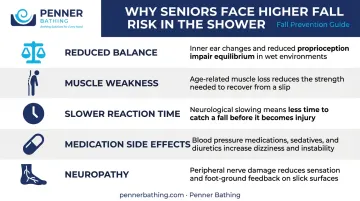
- Reduced balance and proprioception: the body's ability to sense position and self-correct after a stumble diminishes with age
- Muscle weakness: less lower-body strength makes stepping over tub walls and recovering from slips harder
- Slower reaction time: older adults have less effective recovery responses on low-friction surfaces
- Medication side effects: many common medications cause dizziness, orthostatic hypotension, or altered sensation, compounding physical vulnerability
- Neuropathy and reduced temperature sensitivity: common in seniors with diabetes, this reduces awareness of hazardous water temperatures
Why Traditional Bathroom Designs Fail Seniors
The structural problems are just as significant as the physical ones:
- High step-over tub thresholds force seniors to balance on one leg at a time — a demand that becomes genuinely risky with age
- No anchored support points within standard showers or along tub edges
- Fixed showerheads positioned for standing users, requiring awkward reaching and weight shifting
- Hard acrylic and tile surfaces with poor traction when wet
The risk is not a one-time event. Every bathing session without appropriate safeguards is a repeated exposure. Safety modifications work best as prevention: put them in place before a fall happens, not after. The sections that follow cover the most effective options available today.
Types of Safe Shower Solutions for Seniors
Solutions exist across a wide spectrum. The right choice depends on the senior's current mobility, how much that mobility may change over time, and whether a caregiver is involved in bathing. Here's a practical breakdown.
Grab Bars and Non-Slip Surfaces
The most accessible entry point for shower safety. Grab bars provide stable, anchored support during the most vulnerable moments — stepping in, stepping out, and shifting position during bathing. Non-slip mats and textured flooring reduce traction loss on wet surfaces.
Key details to get right:
- Bars must be mounted into wall studs or with proper backing — not just drywall
- ADA standards specify horizontal bars at 33–36 inches above the floor, rated to withstand 250 lbf
- Critical placement zones: at the shower entry threshold, along the wall the senior faces while bathing, and near any seating
- A poorly mounted bar that pulls free mid-use is worse than no bar at all. It creates false confidence without actual support.
Non-slip mats should cover the full shower floor zone. For tile, look for a wet dynamic coefficient of friction (DCOF) of 0.42 or higher per ANSI A326.3 standards for level interior wet applications.
Shower Chairs and Seating Options
Standing for the full duration of a shower is more physically demanding than most people realize — especially for seniors with reduced endurance or balance. Shower seating eliminates the need to sustain upright stance throughout bathing.
Options include:
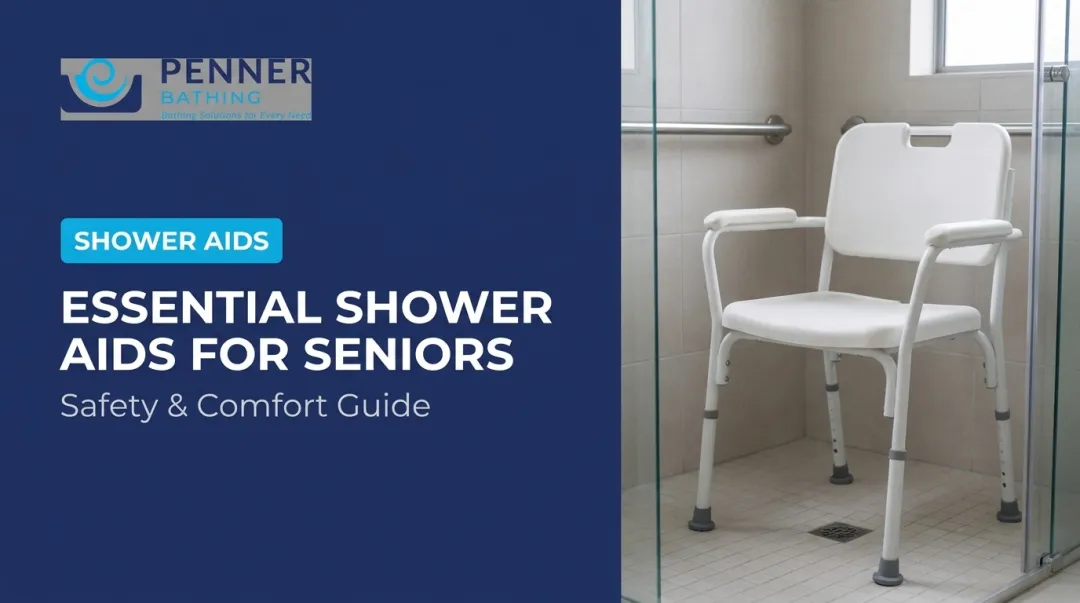
- Freestanding shower chairs — portable, adjustable, and suitable for most standard showers
- Wall-mounted fold-down seats — space-efficient and stable when properly anchored
- Rolling shower/transport chairs — appropriate when a caregiver assists and the senior cannot bear weight independently
The right choice depends on the senior's weight-bearing capacity and whether transfers are self-managed or caregiver-assisted. Any seating solution pairs most effectively with a handheld shower wand, which allows full-body washing while seated without requiring the senior to stand or reposition.
Walk-In Showers
Walk-in (barrier-free or roll-in) showers eliminate the step-over threshold entirely. ADA standards specify a roll-in shower compartment of at least 30 × 60 inches with a threshold no higher than ½ inch — low enough for wheelchair and walker access.
These can be fitted with built-in seats, grab bars, anti-slip flooring, and handheld wands, making them a strong option for seniors with significant mobility limitations. A bathroom remodel is typically required, and professional installation is strongly recommended to ensure proper drainage slope and structural compliance.
Walk-In Baths
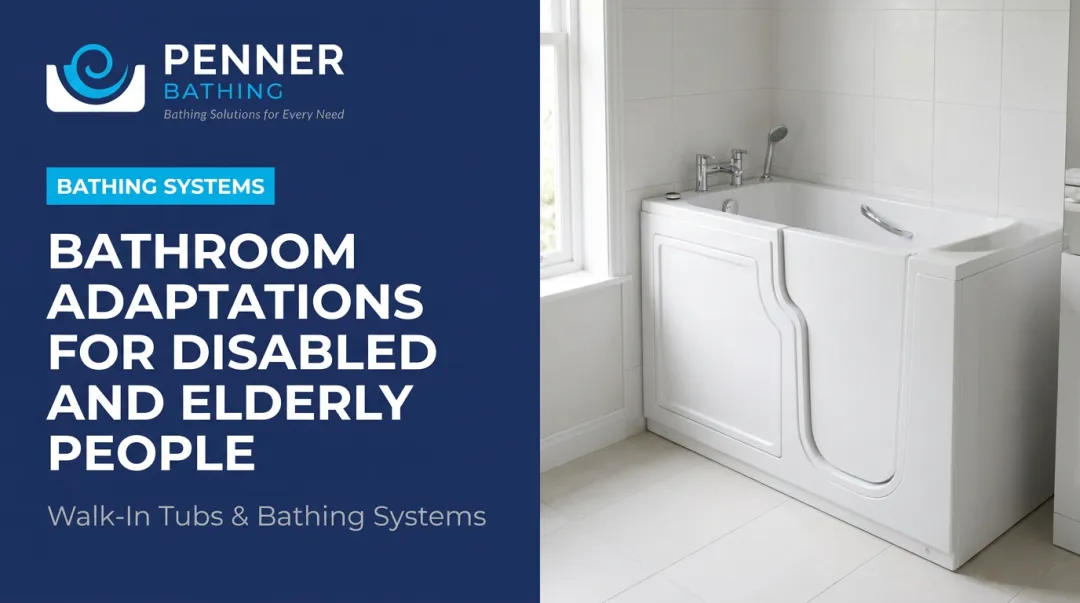
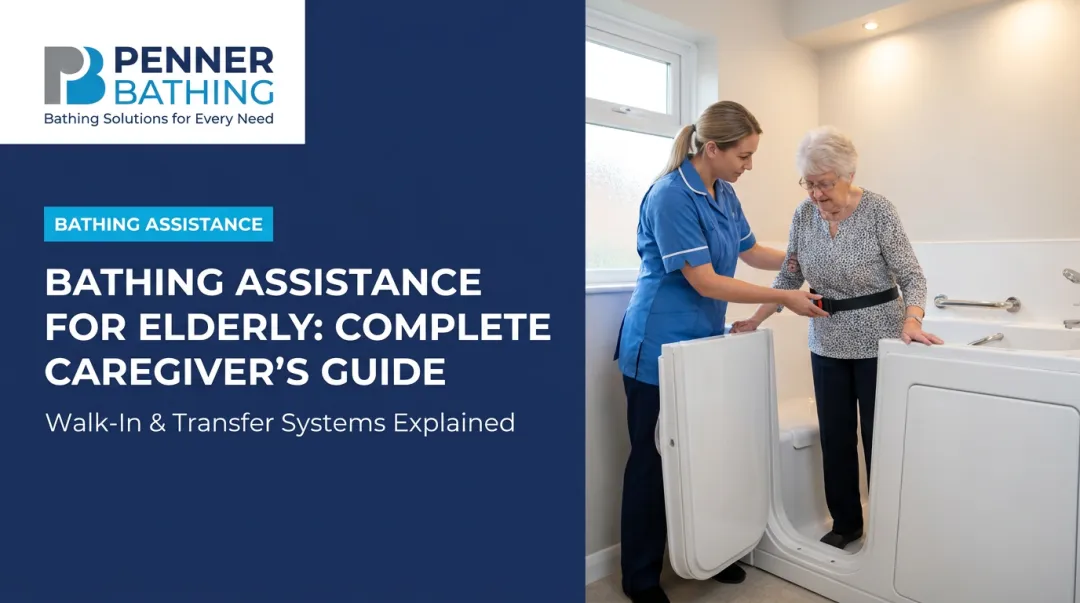
Walk-in baths take the accessibility concept further by replacing the tub-climbing motion with a door-entry mechanism. The user sits down at the tub's edge, swings their legs in, and closes the door — no high threshold to navigate.
They're particularly well-suited for seniors who benefit from therapeutic soaking, or those who find standing showers impractical. Penner Bathing's Dream Spa Walk-In Bath is built around a wide swing-out door design — a meaningful distinction from swing-in models, which still require users to step inside before sitting. The outward swing lets users sit at the edge first, then enter, removing that dangerous step entirely.
Additional features include:
- Aqua-Aire jet system for muscle and joint relief
- Handheld shower wand for full-body washing while seated
- Heated seat that maintains warmth throughout the session
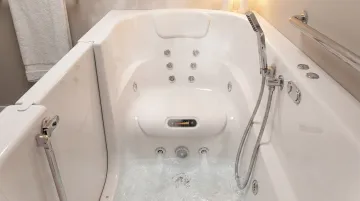
For seniors aging in place, this kind of purpose-built design handles both the safety and comfort sides of bathing — without requiring a full shower remodel.
Essential Safety Features Every Senior Shower Solution Should Have
Falls, scalds, and infection exposure are the three most preventable risks in senior bathing. Every solution you evaluate should address all three — here's what to look for.
Low or Zero-Threshold Entry
The entry threshold is the single most critical safety point in any bathing setup. Any threshold requiring a significant leg lift creates a fall opportunity. Walk-in showers eliminate this; walk-in baths minimize it through door mechanisms. Treat threshold height as a hard specification, not an aesthetic preference.
Properly Rated Grab Bars
Decorative towel bars are not grab bars. Any bar used for support must:
- Be rated for full body weight (ADA minimum: 250 lbf)
- Be mounted into structural supports, not drywall alone
- Be positioned at the entry point, along the bathing wall, and near any seating
Anti-Slip Flooring
Wet tile without surface treatment is a hazard regardless of other safeguards in place. Options include:
- Textured acrylic or slip-resistant tile with DCOF ≥ 0.42
- Non-slip mats covering the full shower floor zone
- Textured surface treatments applied to existing flooring
Anti-Scald Temperature Control
Aging skin is thinner and more vulnerable to scalding. Seniors with diabetes or neuropathy often have reduced temperature sensitivity, which means they may not feel dangerously hot water until damage has already begun.
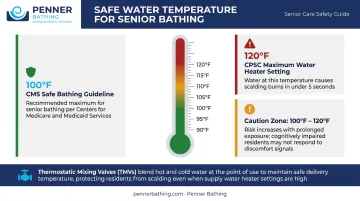
- The CPSC recommends setting residential water heaters to 120°F — at this temperature, third-degree burns can occur in approximately 5 minutes, rising sharply as temperature increases
- CMS long-term care guidance references 100°F as a safe bathing temperature, noting that sensitivity varies significantly by individual
- Thermostatic mixing valves provide the most reliable protection by controlling delivered water temperature independent of supply fluctuations
Hygiene and Antimicrobial Protection
Shared or frequently used bathing systems accumulate bacteria between cleanings. This matters most in care settings, but applies in residential use too for seniors with compromised immune systems.
Penner Bathing builds BioCote® antimicrobial protection into every product as a standard feature — embedded into surfaces at manufacturing, not applied as a coating. It provides continuous bacterial inhibition 24/7 for the lifetime of the unit. Importantly, BioCote® complements but does not replace regular cleaning protocols; it's a supplementary layer between cleaning cycles, not a substitute for them.
Safe Bathing Practices and Environmental Considerations
The right equipment only works when paired with smart habits and a well-prepared bathroom environment. Timing, routine, lighting, and water temperature all affect fall risk in ways that hardware alone can't address.
Behavioral Habits That Reduce Risk
- Keep bath products within arm's reach before starting — stretching or bending mid-shower is a significant fall trigger
- If mobility is substantially compromised, avoid bathing alone when possible
- Maintain a predictable bathing routine so caregivers or family members know when the senior is bathing unsupervised
Environmental Factors
- Meet 200 lux (20 foot-candles) at shower floor level, per VA healthcare design benchmarks. AARP also recommends consistent overhead illumination plus night-lights, since good lighting supports balance by giving the visual system clear spatial cues
- Remove loose rugs outside the shower zone, a common post-shower fall hazard that's easy to overlook
- Keep the bathroom warm; seniors who feel cold tend to rush through bathing, which increases the risk of missteps
Water Temperature and Duration
The American Academy of Dermatology advises older adults to use warm rather than hot water and limit bathing to 5–10 minutes. Very hot or prolonged soaking can cause blood pressure changes and dizziness upon standing, a secondary fall risk even when grab bars and seating are in place. This is especially relevant for walk-in bath users, who soak rather than shower.
Common Shower Safety Mistakes Seniors and Families Make
Treating Safety Aids as Optional or Cosmetic
Many families install grab bars or mats but place them incorrectly or use under-rated products. A bar that pulls from the wall mid-transfer doesn't just fail to prevent a fall — it causes one, and it creates the additional risk of someone trusting equipment they shouldn't. The product is only as safe as its installation.
Assuming One Installation Is Sufficient Forever
A shower chair that was the right solution at 70 may be completely inadequate at 80. Mobility declines gradually, and setups that were appropriate at one stage of aging often become insufficient without anyone noticing. Regular reassessment — ideally with an occupational therapist — is as important as the initial installation.
Ignoring Near-Misses
Slips that didn't result in a fall, difficulty rising from a shower chair, or reluctance to shower at all are significant warning signs. Families and caregivers who dismiss these as isolated incidents lose the chance to intervene before an actual injury occurs. Each near-miss is a signal to reassess — act on it before the next one goes differently.
Conclusion
Shower safety for seniors is a layered, ongoing practice. It starts with choosing the right physical solution for the senior's current abilities — whether that's grab bars and a shower chair, or a full walk-in bath like the Dream Spa.
Correct usage habits, environmental checks, temperature management, and a willingness to reassess as needs change all play an equal role in keeping seniors safe long-term.
Before purchasing, consult with specialists who understand both the product and the person using it. Key questions to ask:
- Does the installer have experience with senior bathing environments?
- Is long-term parts support and service available?
- Can the solution adapt as the senior's mobility needs change?
The goal extends beyond fall prevention. Daily bathing is a cornerstone of dignity and independence — the right solution protects both.
Frequently Asked Questions
Does Medicare pay for showers for seniors?
Standard Medicare Part B does not cover walk-in showers, walk-in baths, or most shower safety equipment as durable medical equipment. However, VA HISA benefits provide up to $6,800 for veterans with service-connected conditions, and the USDA Section 504 program offers grants up to $10,000 for qualifying low-income rural homeowners aged 62 and older.
What is the best shower setup for the elderly?
It depends on mobility level. For mild balance issues, grab bars, a shower chair, and a handheld wand often suffice. For seniors with significant limitations or wheelchair use, a walk-in shower or walk-in bath provides the most complete solution, eliminating the threshold hazard and supporting seated bathing throughout.
How often should 80-year-olds bathe?
Most geriatric care guidance suggests 2–3 times per week for older adults, since daily bathing can strip natural oils and dry aging skin. Frequency should still be guided by the individual's health status, skin condition, continence needs, and care plan.
Are walk-in tubs safer than walk-in showers for seniors?
Both are significantly safer than traditional configurations. Walk-in showers are generally better for wheelchair users and those who cannot step over any threshold. Walk-in baths offer therapeutic soaking benefits and work well for seniors who can manage a low door step and prefer immersion bathing to showering.
What grab bar placements are most important for senior shower safety?
The three critical zones are: near the shower entry or threshold (to support getting in and out), along the interior wall at standing height, and adjacent to any seating. All bars must be rated for full body weight (ADA minimum is 250 lbf) and mounted into structural supports, not just drywall.
Can shower safety aids help seniors live at home longer?
Yes. Accessible bathing modifications are among the most effective aging-in-place interventions. When seniors can bathe safely and independently, they're less likely to require facility placement and better able to maintain their daily autonomy.