Institutional care covers a broad spectrum of residential settings, from independent senior communities to skilled nursing facilities providing round-the-clock medical oversight. Knowing the differences between these settings — and how to evaluate them — leads directly to better outcomes for seniors and less anxiety for the people who love them.
This guide covers the main types of institutional care facilities, key benefits, signs it may be time to make a transition, how to choose the right setting, and how to pay for it.
Key Takeaways
- Choosing the right care level — from independent senior housing to skilled nursing — is the central decision families face
- Two-thirds of family caregivers report moderate-to-high emotional stress, making caregiver capacity a legitimate factor in placement decisions
- Medicaid covers long-term nursing facility care; Medicare typically pays only for short-term skilled stays
- National median costs run $74,400/year for assisted living and $115,000–$130,000/year for nursing home care
- During facility visits, evaluate staffing ratios, infection control practices, and bathing infrastructure as concrete quality indicators
What Is Institutional Care for the Elderly?
Institutional care means residential facilities where seniors receive round-the-clock professional care — room, board, medical oversight, and personal assistance all under one roof. The defining characteristic is total care responsibility: the facility manages what a senior's home environment previously required family, home aides, or the senior themselves to handle.
This separates institutional care from home care or community-based services, which supplement an existing living situation rather than replace it. That distinction also shapes how governments define and regulate these settings — and why the specific category of care matters when financing is involved.
The Federal Definition
Under Medicaid, "institutional services" refers to a specific set of benefits authorized by the Social Security Act, including nursing facility services, inpatient hospital services, and Intermediate Care Facilities for Individuals with Intellectual Disabilities. This distinction matters when navigating insurance or government programs — not every residential care setting qualifies under this definition.
Medicaid-certified nursing facilities must meet federal standards under 42 CFR Part 483, enforced through state survey agencies. Assisted living operates differently — it's primarily state-regulated, with no uniform federal standard. In practice, this means inspection frequency, staffing ratios, and complaint resolution processes vary significantly from state to state, which families often don't discover until they're already comparing facilities.
Who Is Institutional Care Designed For?
Institutional settings are typically appropriate for seniors who:
- Have chronic medical conditions requiring ongoing clinical management
- Need 24-hour supervision that home care cannot reliably provide
- Have cognitive decline — including dementia or Alzheimer's — creating safety risks at home
- Are recovering from major surgery or illness and require skilled rehabilitative care
Types of Institutional Care Facilities
Elder care settings range from least to most intensive. Matching a senior's actual needs to the right level avoids both under-care (safety risk) and over-placement (unnecessary cost and loss of independence).
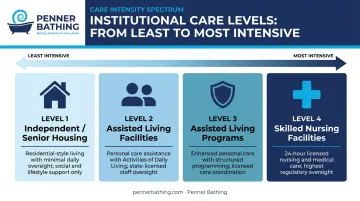
Independent/Senior Housing
Designed for older adults who can largely manage their own daily lives but benefit from community living. Services like meals, activities, or medication reminders may be available for an added cost. This is primarily a private-pay setting and does not include clinical care.
HUD's Section 202 program offers subsidized independent housing for very-low-income adults aged 62 and older, with residents typically paying 30% of adjusted income for rent — though this is not a substitute for skilled nursing care.
Assisted Living Facilities (ALFs)
ALFs provide rooms or apartments, meals, housekeeping, and help with personal care activities like bathing and dressing. There are approximately 41,465 assisted living communities in the US, with nearly 1.4 million licensed beds.
One important caution: "assisted living" is not a uniformly regulated term. Marketing language varies widely. Rather than relying on a facility's branding, families should ask specifically about:
- What care services are actually provided on-site
- What triggers a discharge to a higher level of care
- What the staffing model and coverage hours look like
Assisted Living Programs (ALPs)
ALPs are more formally regulated state programs serving individuals who medically qualify for nursing home placement but can be supported in a less intensive setting. New York's ALP is a documented example, where roughly 85% of participants are Medicaid recipients. Medicaid eligibility at this level requires meeting specific functional care criteria — it's not automatic based on income alone.
Skilled Nursing Facilities (SNFs) / Nursing Homes
SNFs represent the highest level of institutional care, providing 24-hour supervision with complete room and board, medication management, nursing treatments, and substantial assistance with all personal care. The CDC reported 14,700 nursing homes in 2022, with 1.6 million licensed beds.
The distinction between care types matters significantly for insurance coverage:
- Skilled care — medical or rehabilitative services such as wound care, IV therapy, and physical therapy; covered by Medicare
- Custodial care — assistance with bathing, dressing, and eating; generally falls to Medicaid or private pay
Intermediate Care Facilities (ICFs)
ICFs, particularly those serving individuals with intellectual disabilities (ICF/IID), are an optional Medicaid benefit providing health and rehabilitation services in a residential setting. This category serves more than 100,000 people nationally and is distinct from elder-specific nursing care.
Key Benefits of Institutional Care for Seniors
24/7 Medical Oversight
The most direct benefit of institutional care is continuous clinical access. When a resident has a fall at 2 a.m., trained staff are there. When a medication interaction causes a reaction, nursing oversight is already present. This is the gap that home care and family caregiving cannot reliably close — particularly for seniors whose conditions are medically complex or rapidly changing.
Social Engagement and Mental Health
Isolation is a serious health risk for elderly adults. Structured daily programming, peer community, and group activities in institutional settings can meaningfully reduce loneliness A 2022 meta-analysis found that loneliness interventions in long-term care settings, including exercise programs and videoconferencing, produced measurable reductions in social isolation among residents.
A separate study of nearly 800,000 nursing home residents found that 12.6% had no social engagement at all — a figure that points directly to where facility programming investment makes a measurable difference.
Coordinated, Multidisciplinary Care
Quality nursing homes and ALFs bring physical therapists, occupational therapists, dietitians, and social workers either on-site or through regular scheduled visits. Coordinating that same team through home-based services requires significant logistical effort from families. It often doesn't happen consistently.
Caregiver Relief
According to the 2025 NAC/AARP caregiving report, two-thirds of family caregivers experience moderate-to-high emotional stress, and one in four feels isolated. More than four in ten are in high-intensity caregiving situations. Transitioning to institutional care allows family members to be present as loved ones rather than primary caregivers — a shift that often improves the relationship for both parties.
Purpose-Built Safety and Resident Dignity
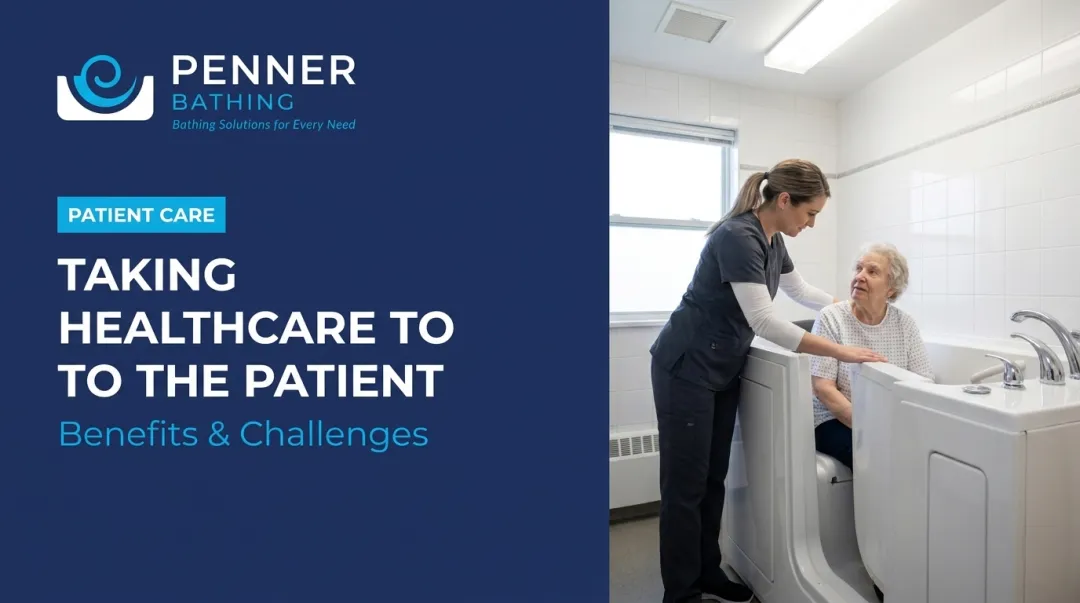
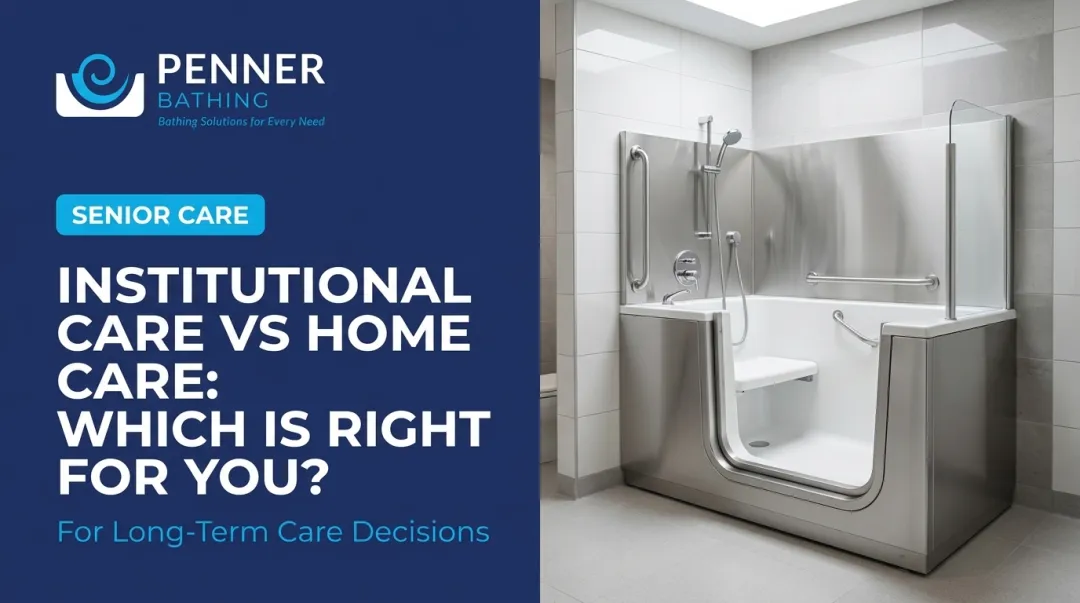
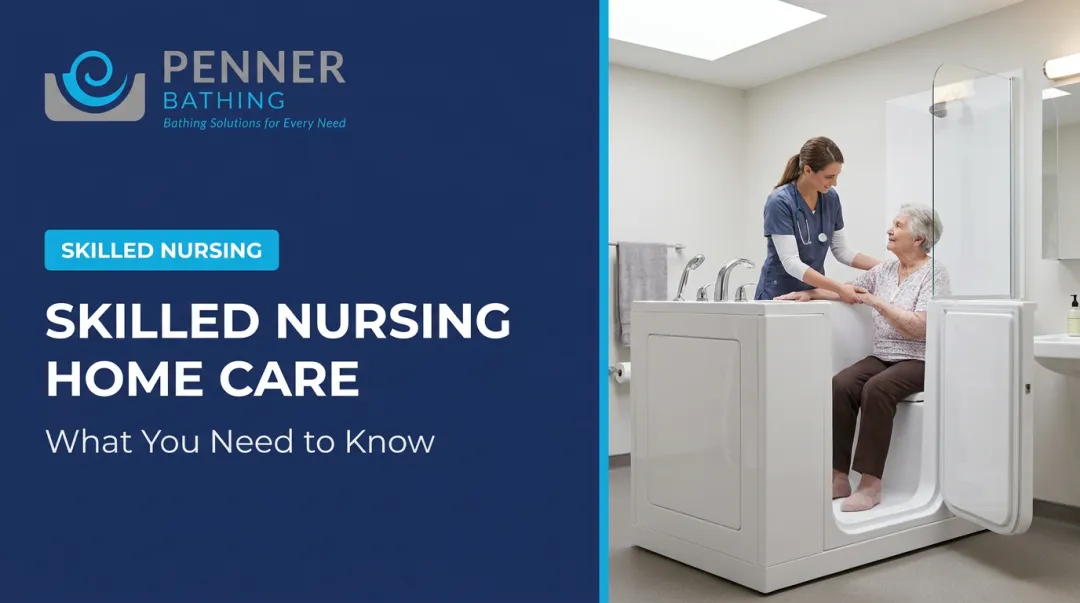
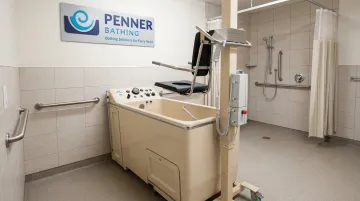
Institutional facilities are designed around the physical realities of aging: fall-prevention flooring, accessible bathrooms, emergency call systems, and specialized equipment. Bathing, in particular, is a high-risk activity for elderly residents, and the quality of bathing infrastructure varies significantly between facilities.
Purpose-built bathing systems address this directly. Penner Bathing, a Nebraska-based manufacturer with over 40 years serving the long-term care market, engineers healthcare bathing systems for nursing homes and assisted living facilities across the US and Canada. Key design features include:
- Rail-free construction and height-adjustable transfer systems for safe resident entry and exit
- Automatic disinfection and built-in BioCote antimicrobial protection for infection control
- Bariatric configurations and multiple door-entry options for residents with varying mobility levels
Signs It May Be Time to Consider Institutional Care
Watch for these patterns across three areas — any one category can signal that current care arrangements need to change:
Physical and medical signals:
- Frequent falls, or a significant fall with injury
- Difficulty managing medications safely (missed doses, dangerous combinations)
- Worsening chronic conditions that require clinical monitoring
- Post-surgical recovery needs exceeding what home support can manage
Cognitive and behavioral signals:
- Significant memory loss affecting daily function and safety
- Wandering or getting lost in familiar environments
- Inability to perform basic self-care tasks — bathing, dressing, eating
- Dementia-related behaviors that create unsafe situations at home
Caregiver capacity signals:
- Family caregiver burnout or declining health
- Home modifications have been made, and care needs have still outgrown them
- A senior's care requires more hours of attention than any household can realistically provide
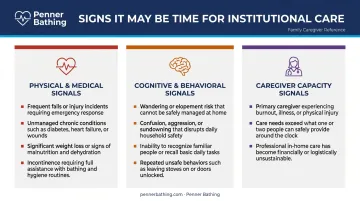
When multiple signals appear together, the question shifts from whether to consider institutional care to which setting best fits the person's specific needs. That's a practical decision, not a failure of family commitment.
How to Choose the Right Institutional Care Facility
What to Evaluate Before You Visit
Start with public data. Medicare's Care Compare tool allows families to compare nursing homes by overall star rating, health inspection history, staffing levels, and quality measures. CMS publishes separate domain ratings for inspections, staffing, and outcomes — use these as a screening filter, not a final verdict.
Key factors to research before an in-person visit:
- Staff-to-resident ratios and staff turnover rates
- Recent health inspection reports and cited deficiencies
- Available medical services and how emergencies are handled
- Dementia capability (relevant for 41% of nursing home residents who carry a dementia diagnosis)
What to Look for During the Visit
Walk through the facility at a non-peak time. Observe whether staff acknowledge residents they pass in the hallway. Note whether the environment is clean without smelling heavily of chemicals or, alternatively, masking odors. Ask to see the activity calendar and whether programming matches the resident's interests.
Specific questions worth asking:
- What does the bathing setup look like, and how is infection control managed between residents?
- How are personalized care plans developed and updated?
- What is the discharge policy if care needs increase?
Cultural and Personal Fit
Cultural fit matters as much as clinical ratings. A facility that scores well on inspections but feels alien to a resident often leads to social withdrawal and lower engagement with care — outcomes that affect health, not just comfort.
Before committing, confirm that the facility aligns with the resident's background on factors like:
- Religious affiliation or secular philosophy
- Primary language and staff language capabilities
- Daily routine and activity preferences
- Dietary traditions and meal options
How Is Institutional Care Paid For?
Private Pay
Most assisted living costs are paid out-of-pocket. According to CareScout's 2025 Cost of Care survey, national median costs are:
| Care Setting | Monthly Cost | Annual Cost |
|---|---|---|
| Assisted Living | ~$6,200 | ~$74,400 |
| Nursing Home (semi-private) | ~$315/day | ~$114,975 |
| Nursing Home (private) | ~$355/day | ~$129,575 |
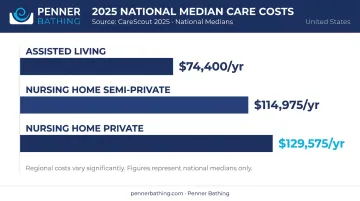
These are medians — costs vary significantly by region and facility type.
Medicaid
Medicaid is the primary public payer for long-term nursing facility care nationally. Eligibility requires meeting both financial thresholds (which vary by state) and functional criteria — typically demonstrated need for nursing-level care. Some states use different income and asset limits for institutional residents than for community-based applicants.
An elder law attorney or certified care manager can help families navigate the application process, especially asset spend-down requirements.
Other Funding Sources
- Medicare: Covers up to 100 days of skilled nursing care per benefit period following a qualifying hospital stay of at least three consecutive inpatient days. It does not cover long-term custodial care.
- Long-term care insurance: Policies vary widely in what they cover. Key factors to confirm: benefit triggers (typically inability to perform 2+ ADLs), elimination periods (commonly 30–90 days), and whether both nursing home and assisted living qualify for benefits.
- VA Aid and Attendance: An additional pension benefit for eligible veterans needing help with activities of daily living. Requires VA pension eligibility plus qualifying care needs.
Frequently Asked Questions
What is considered institutional care?
Institutional care refers to residential facilities where seniors receive comprehensive services — including room, board, medical oversight, and personal assistance — under one roof. Under Medicaid's definition, it specifically includes nursing facility services, inpatient hospital care, and ICF/IID services, as distinct from community-based care received in one's own home.
Where do elderly go if they can't afford assisted living?
Lower-cost options include Medicaid-funded nursing facilities, Assisted Living Programs (ALPs) that accept Medicaid, HUD Section 202 subsidized senior housing, and adult family/group homes. A local Area Agency on Aging or elder care manager can identify specific options in your region and help assess eligibility.
What are the main types of institutional care for the elderly?
The main categories are independent/senior housing, assisted living facilities (ALFs), Assisted Living Programs (ALPs), and skilled nursing facilities/nursing homes. Each serves a different level of care need, from minimal support to 24-hour clinical oversight.
What are the advantages of institutional care over staying at home?
Primary advantages include 24/7 professional supervision, access to on-site medical and therapeutic services, structured social programming, and relief for family caregivers. For seniors with complex or rapidly changing needs, home-based services rarely offer the same depth of clinical coverage or around-the-clock staffing.
Does Medicare pay for institutional long-term care?
Medicare covers only short-term skilled nursing care following a qualifying hospital stay — up to 100 days per benefit period, and only while daily skilled care is still needed. It does not cover long-term custodial or residential care, which is primarily funded by Medicaid or private pay.
How do I know when a nursing home is the right choice?
Nursing home care is typically appropriate when a senior requires 24-hour skilled medical supervision, has complex care needs that exceed what home care can safely manage, or has advanced cognitive decline requiring a secure, structured environment. If you're seeing several of these factors at once, consult the senior's physician and a geriatric care manager to evaluate next steps.