The physical act of washing isn't complicated. What makes it difficult is everything surrounding it: the senior's mobility, cognitive state, bathroom environment, equipment, and how the caregiver responds when things don't go smoothly.
This guide covers the full picture — why bathing gets harder with age, a step-by-step approach to providing safe assistance, the equipment that makes the biggest difference, how to handle common challenges, and when professional help makes sense.
Key Takeaways
- Safe bathing assistance depends on the right environment, proper equipment, and knowing the senior's mobility and cognitive needs
- Most bathing-related falls are preventable with the right setup and approach
- Bathing resistance is common — especially with dementia — and calls for communication strategies, not force
- Two to three full baths or showers per week works for most older adults, with daily hygiene care in between
- Walk-in bathing systems and professional services are options when family-provided care is no longer safe or sustainable
Why Bathing Becomes Challenging for Seniors
Physical Changes That Make Bathing Harder
Bathing requires balance, grip strength, range of motion, and endurance, and age gradually erodes all four. For a healthy adult, stepping over a tub edge and washing their back is automatic. For a senior managing arthritis, heart disease, or a recent hip replacement, the same sequence is a genuine physical challenge.
CDC data shows that 47.3% of adults 65 and older have diagnosed arthritis — a condition that directly limits shoulder rotation for washing hair, hip flexibility for stepping over a tub wall, and hand strength for gripping a faucet handle.
Add in general fatigue from managing chronic conditions, and a 10-minute shower can be genuinely exhausting.
The bathroom environment compounds these risks. Wet floors, sloped tub surfaces, and the need to step over a raised edge combine to create one of the most hazardous rooms in the house for older adults.
How Dementia Changes Everything
A person with Alzheimer's or another form of dementia may not recognize the bathtub, feel disoriented by being undressed, or experience the sensation of water as alarming rather than familiar. What looks like resistance is usually fear or confusion — not a behavior problem.
As the National Institute on Aging notes, bathing can feel scary, embarrassing, or physically unpleasant to someone with Alzheimer's — and that discomfort may show up as verbal or physical resistance. Understanding the underlying cause is consistently more effective than trying to push through the resistance.
Signs a Senior Needs Bathing Assistance
These signals indicate the current setup needs adjustment — not that independence is lost:
- Skipping baths with excuses, or bathing far less frequently than before
- Noticeable body odor, skin changes, or soiled clothing
- Visible hesitation or fear when entering the bathroom
- Unexplained bruising, or mentions of near-falls while bathing
- Extreme fatigue after a shower that wasn't present before
- A previously tidy person appearing consistently unkempt
Step-by-Step Guide: How to Provide Bathing Assistance for the Elderly
A consistent, well-practiced routine reduces anxiety for both the senior and the caregiver. The first few times may feel awkward — that's normal. Over time, the routine itself becomes reassuring.
Step 1: Prepare the Bathing Environment
Gather everything before the senior enters the bathroom: soap, shampoo, washcloths, towels, clean clothing, lotion. Never leave a senior unattended mid-bath to retrieve a forgotten item.
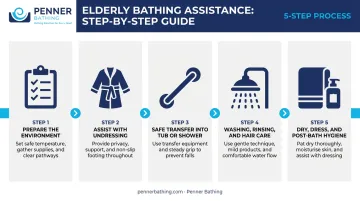
Set water temperature in advance. The CPSC recommends setting residential water heaters no higher than 120°F to prevent scalding — older adults are among those most at risk for tap water burns. Warm the bathroom itself to prevent chilling.
Quick safety checklist before bringing the senior in:
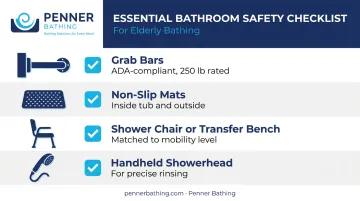
- Non-slip mat in place inside the tub or shower, and on the floor outside
- Shower chair or bench correctly positioned
- Grab bars confirmed secure
- Floor outside the tub clear and dry
Step 2: Assist With Undressing and Maintaining Dignity
Help the senior undress at their own pace, starting with items they struggle most with — buttons, overhead garments, stiff zippers. Use a robe or large towel to maintain coverage throughout and minimize unnecessary exposure.
Explain each action before doing it. Offer choices where possible: preferred water temperature, which area to wash first, which soap to use. These small decisions preserve a sense of control and reduce resistance.
Step 3: Assist With Safe Transfer Into the Tub or Shower
Position yourself at the senior's side, not in front. Instruct them to hold the grab bar, then guide their movement slowly and steadily. Rushing a transfer increases fall risk significantly, so move at the senior's pace, not yours.
Know your own physical limits. If the senior's weight exceeds what you can safely manage, a transfer belt or mechanical aid should be in place before you begin.
Extra caution is needed when:
- The senior is recovering from surgery
- There's significant balance impairment or a recent fall history
- Leg weakness makes lifting one leg over a tub wall risky
In these situations, a shower chair or transfer bench is far safer than a standard tub entry.
Step 4: Assist With Washing, Rinsing, and Hair Care
Use a handheld showerhead to direct water precisely. Work from head to toe, encouraging the senior to wash whatever areas they can safely manage independently.
Pay particular attention to areas where moisture accumulates and bacteria thrive:
- Skin folds
- Under the arms
- The groin area
- Between the toes
For seniors with dementia or high anxiety, give one simple instruction at a time and wait for them to process before moving to the next step. A distressed senior is a fall risk. Calm, unhurried conversation throughout the bath helps regulate the experience.
Step 5: Dry, Dress, and Complete Post-Bath Hygiene
Pat skin dry — never rub. Focus especially on skin folds and feet, where incomplete drying leads to skin breakdown.
The American Academy of Dermatology recommends applying a creamy, fragrance-free moisturizer within 3 minutes of bathing, while skin is still slightly damp. This is particularly important for older adults, whose skin is naturally thinner and drier.
Use the post-bath window to observe the skin for bruising, redness, rashes, or wound changes. Caregivers who bathe seniors regularly often catch early health concerns that a monthly doctor visit would miss.
Essential Safety Equipment and Bathroom Setup
The physical environment is as important as technique. Most adaptations are low-cost and don't require major renovation — but the right equipment genuinely reduces fall risk and physical strain on the caregiver.
Grab Bars and Non-Slip Mats
Wall-anchored grab bars are non-negotiable. The ADA requires that compliant grab bars and their mounting systems withstand 250 pounds of load — a threshold that suction-cup grab bars are not reliably designed to meet. Install anchored bars at the tub entry/exit point and near the toilet.
Non-slip mats should cover both the tub or shower floor and the area immediately outside.
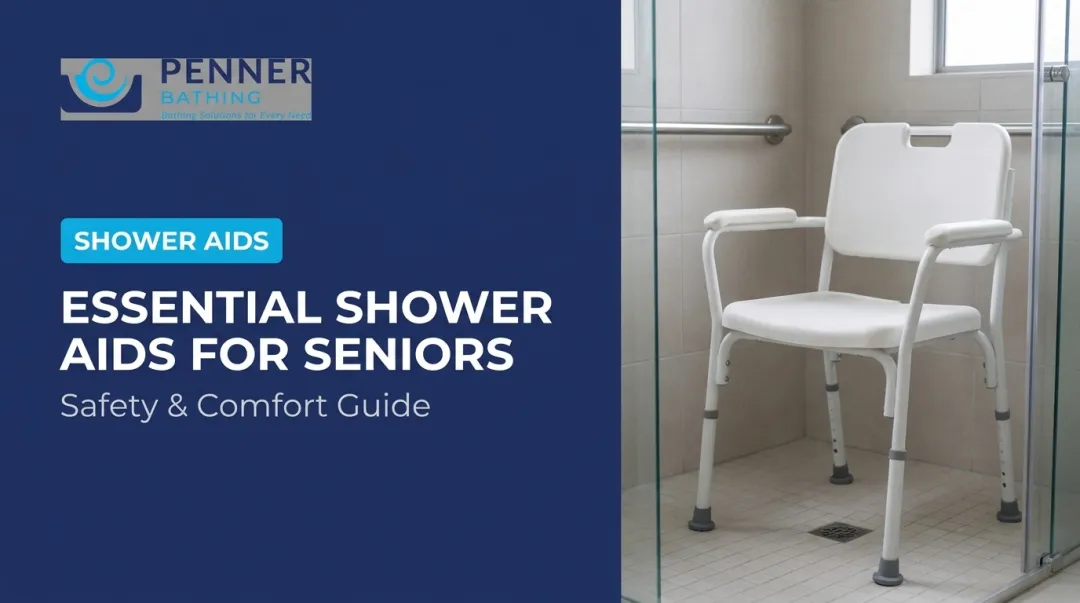
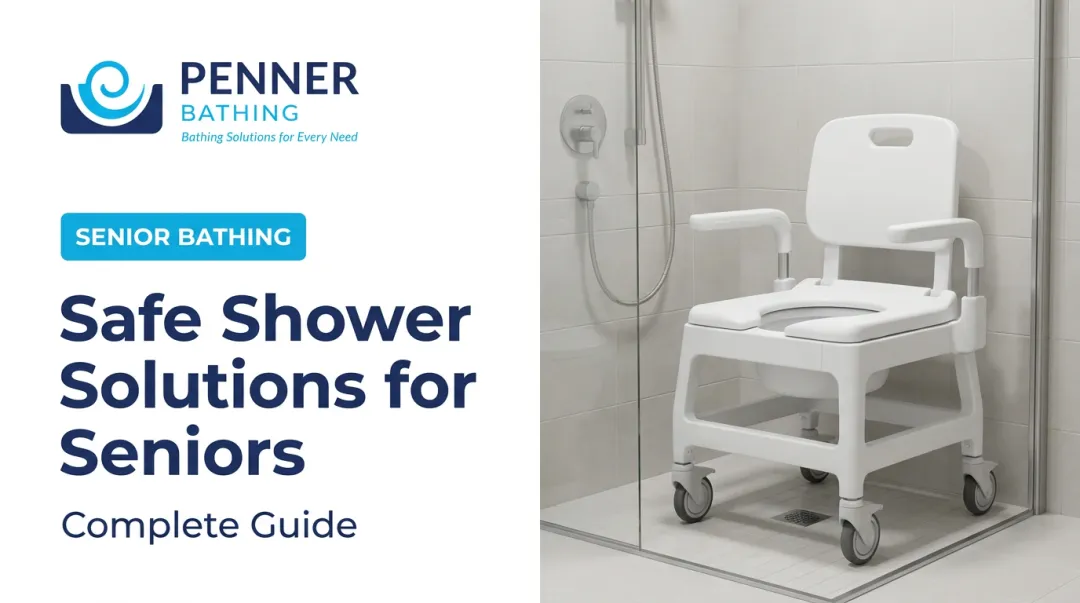
Shower Chairs and Transfer Benches
These two items serve different needs:
| Equipment | Best For |
|---|---|
| Shower chair | Seniors who can transfer into the shower independently but cannot stand for its duration |
| Transfer bench | Seniors who cannot safely step over a tub wall — the bench spans the tub edge and allows sitting and sliding in |
Transfer benches are particularly valuable for seniors with significant leg weakness, recent hip replacements, or post-surgical recovery. The Occupational Therapy Practice Guidelines identify the bathtub transfer bench with handheld shower as a go-to combination for seniors unable to stand while bathing.
Handheld Showerheads and Long-Handled Aids
A handheld showerhead allows precise rinsing without repositioning the senior and reaches areas a caregiver can't easily access. Long-handled sponges and brushes let seniors wash their own feet and back — preserving independence without requiring flexibility they may no longer have.
Walk-In Bathing Systems
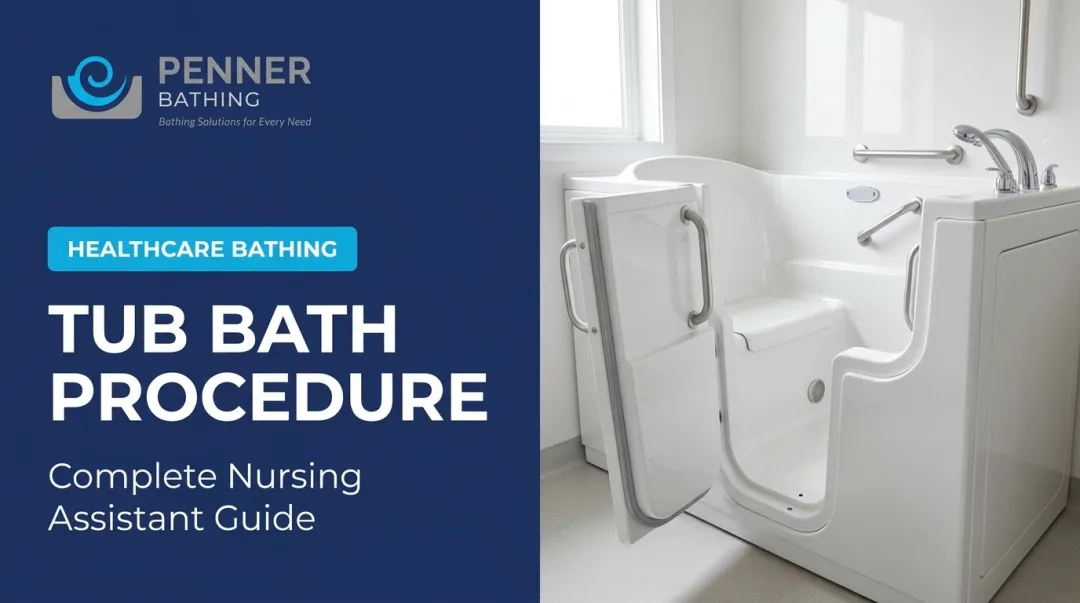
For families planning longer-term home modifications, walk-in bathing systems eliminate the step-over hazard entirely. Penner Bathing's Dream Spa Walk-In Bath, for example, features a wide swing-out door with a low-threshold entry — users sit on the edge first, then swing their legs in, rather than lifting them over a tub wall.
The Dream Spa also includes:
- Aqua-Aire Jet System — hydrotherapy delivered directly to muscles and joints
- Three heated comfort components (heated seat, heated back support, and heated air) that keep seniors warm during fill and drain cycles
- Handheld shower wand for fully seated bathing

For seniors whose muscle and joint pain makes bathing difficult in the first place, these therapeutic features go beyond access — they address the physical discomfort that often makes bathing feel like a burden rather than a routine.
Handling Common Bathing Challenges
Good preparation reduces problems, but it doesn't eliminate them. Here's how to handle the most common challenges caregivers face.
Resistance and Refusal to Bathe
Likely cause: Discomfort, embarrassment, fear of falling, cognitive confusion, or loss of perceived control — rarely actual stubbornness.
What to adjust:
- Maintain a consistent bathing schedule at the same time each day
- Use familiar music, preferred scents, or light conversation to reduce anxiety
- Offer small choices (water temperature, which soap) to restore a sense of control
- Step back and try again later rather than pushing through — forcing the issue increases distress and erodes trust
Bathing a Senior With Dementia
Likely cause: Being undressed and placed in water can be deeply disorienting for someone with cognitive decline. Noise, temperature changes, and unfamiliar environments heighten confusion.
What to adjust:
- Keep the routine identical each time to build familiarity
- Give one simple instruction at a time: "Put your feet in the tub," "Sit down," "Wash your arm"
- On high-anxiety days, consider a bed bath or sponge bath as an alternative
- Professional caregivers with dementia training are often more effective in these situations; their clinical distance removes the emotional charge that family relationships can introduce
Mobility Limitations and Transfer Difficulties
Likely cause: The caregiver's physical capability no longer matches the level of support the senior needs. This mismatch is one of the most common reasons family-provided bathing assistance becomes unsafe.
What to adjust:
- Introduce a transfer belt to improve grip and reduce injury risk for both parties
- Reassess whether the current setup (tub, shower, shower chair) still matches the senior's actual mobility level
- After any significant health event — a fall, a hospitalization, notable weakness — consult a physical therapist before resuming the previous bathing routine
Skin Integrity Concerns
Aging skin is thinner, drier, and more fragile than it used to be. Frequent bathing strips natural oils, and incomplete drying or rough handling creates conditions for skin tears and infections.
What to adjust:
- Limit full baths to two or three times per week; use warm (not hot) water and gentle, fragrance-free soap
- Always pat dry, never rub
- Apply moisturizer within 3 minutes of every bath
- Inspect skin during each session — catching breakdown early is far easier than treating an established wound
When to Consider Professional Bathing Help
Some situations clearly signal that family-provided care has reached a limit:
- The caregiver cannot safely support the senior's weight during transfers
- The senior has recently fallen or nearly fallen during bathing
- Bathing consistently causes conflict or distress that extends well beyond the session itself
- The caregiver's own health or stamina is being compromised by the physical demands
When these signs appear, professional home care aides are worth considering. They handle the full bathing process, observe and report skin and health changes, and — for seniors with dementia — often manage resistance more effectively than family members can.
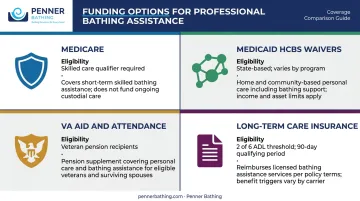
Funding options worth investigating:
- Medicare: covers home health aide bathing assistance only when the beneficiary also qualifies for skilled nursing or therapy services; bathing alone does not qualify
- Medicaid HCBS waivers: many states cover personal care assistance including bathing through Section 1915(c) programs; eligibility, hours, and waiting lists vary by state
- VA Aid and Attendance: veterans or survivors receiving a VA pension may qualify for increased benefits when help is needed with bathing, dressing, or feeding
- Long-term care insurance: most policies cover home personal care and activate when a person cannot perform at least 2 of 6 activities of daily living for 90 consecutive days
If private pay is the route, budget accordingly: private home care agencies charge a national median of $35 per hour for non-medical caregiver services, according to CareScout's 2025 Cost of Care survey, though rates differ meaningfully by region.
Frequently Asked Questions
What is bathing assistance?
Bathing assistance refers to support that helps a senior or person with limited mobility safely complete bathing. It covers transfers, washing hard-to-reach areas, safety monitoring, and post-bath drying and dressing — from standby supervision to fully hands-on care depending on the individual's needs.
What assistance is available for showering?
Options range from standby supervision for fall prevention, to partial help with specific tasks like hair washing or reaching the feet, to full hands-on support including transfers. Specialized equipment — shower chairs, transfer benches, and handheld showerheads — can reduce how much physical assistance is needed.
How do you get an elderly person to bathe?
Consistent timing, small choices, and familiar music can ease the process. Give one instruction at a time, and if resistance continues, step back and try again later — it usually signals discomfort or fear, not defiance.
How much does bathing assistance cost?
The national median consumer rate for non-medical home care services is $35 per hour in 2025, according to CareScout. Medicaid, VA Aid and Attendance benefits, and long-term care insurance may offset costs depending on eligibility — each with different requirements and limitations.
How often should an elderly person bathe?
Two to three full baths or showers per week is appropriate for most older adults, supplemented by daily hygiene care of the face, hands, and intimate areas. Daily bathing is often unnecessary and can dry out and damage aging skin.
What equipment is needed for bathing assistance for the elderly?
Core items include wall-anchored grab bars, non-slip mats, a shower chair or transfer bench, and a handheld showerhead. For seniors aging in place long-term, walk-in bathing systems like the Dream Spa Walk-In Bath from Penner Bathing eliminate the step-over hazard of a standard tub and reduce the need for caregiver assistance over time.